📚 Agora node [[2]] ☆
Agora nodes contain community contributions with titles or topics that match your search. x
🫸 pushed from 👩‍🌾 bin/prime.py by @flancian 📎 ⛶

[[2]] is prime.

Prime neighborhood: [[2]], [[3]], [[5]], [[7]]

Special relations: the only even prime.

Primes up to 2: [[2]] (1 total).

🫸 pushed from 👩‍🌾 bin/hex.py by @flancian 📎 ⛶

[[2]] is not a centered hexagonal number.

The closest centered hexagonal numbers are [[1]] (index # [[1]]) and [[7]] (index # [[2]]).

First 20 centered hexagonal numbers: [[1]], [[7]], [[19]], [[37]], [[61]], [[91]], [[127]], [[169]], [[217]], [[271]], [[331]], [[397]], [[469]], [[547]], [[631]], [[721]], [[817]], [[919]], [[1027]], [[1141]].

🫸 pushed from 👩‍🌾 bin/hz.py by @flancian 📎 ⛶

[[hz/2]] is closest to [[C-3]] at [[2]] Hz (-38 cents).

Note class: [[C]], Octave: [[octave/-3]].

📜 File 2.md by @flancian ☆ 📎 ️🔗 ✍️ ⛶
🫸 pushed from 👩‍🌾 app/exec/calc.py by @agora-server 📎 ⛶
📜 File 2.md by @an_agora@twitter.com ☆ 📎 ⛶
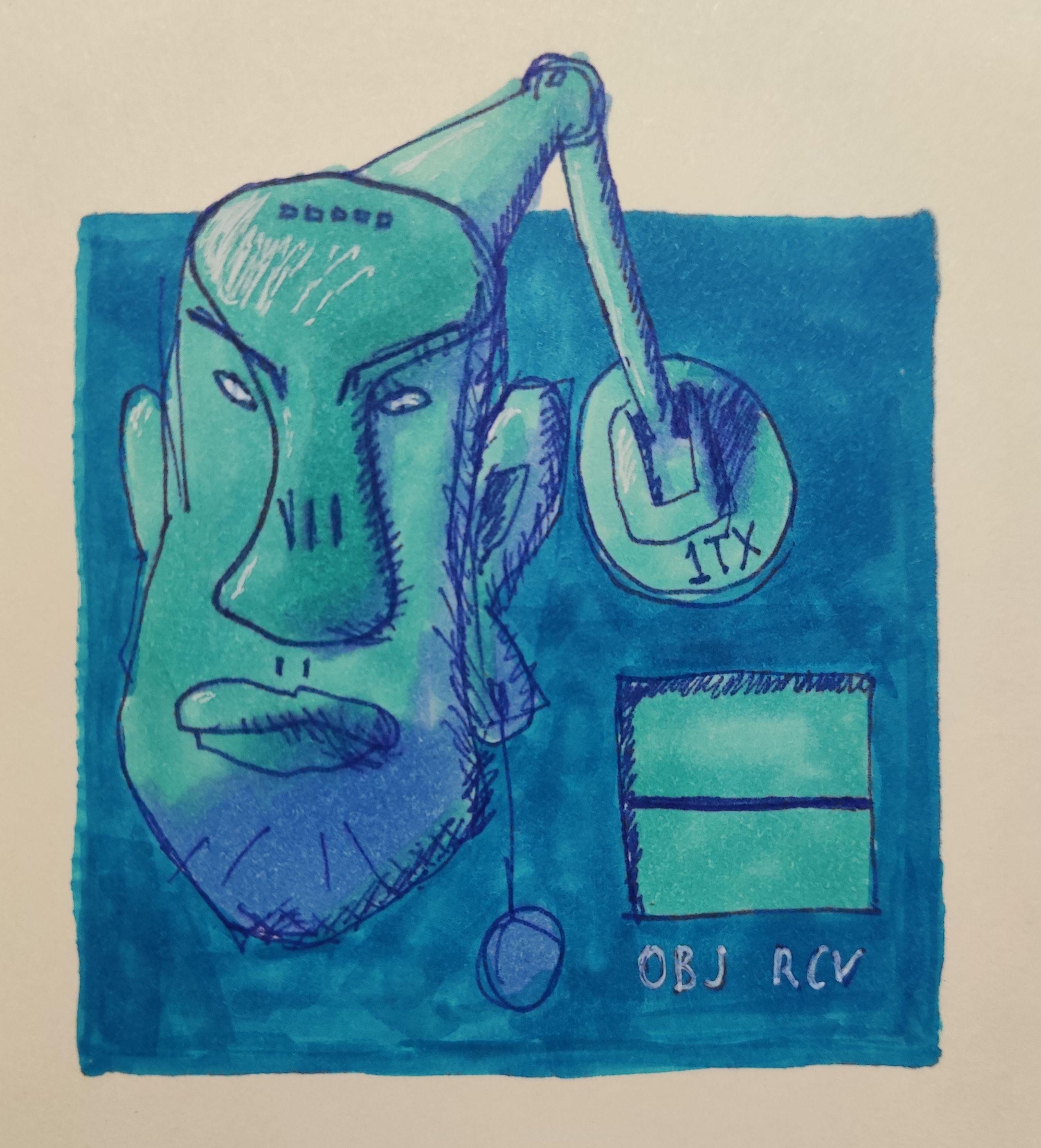
📜 File 2022-02-09_melanocarpa_in_mothra/2.png by @melanocarpa ☆ 📎 ️🔗 ✍️ ⛶


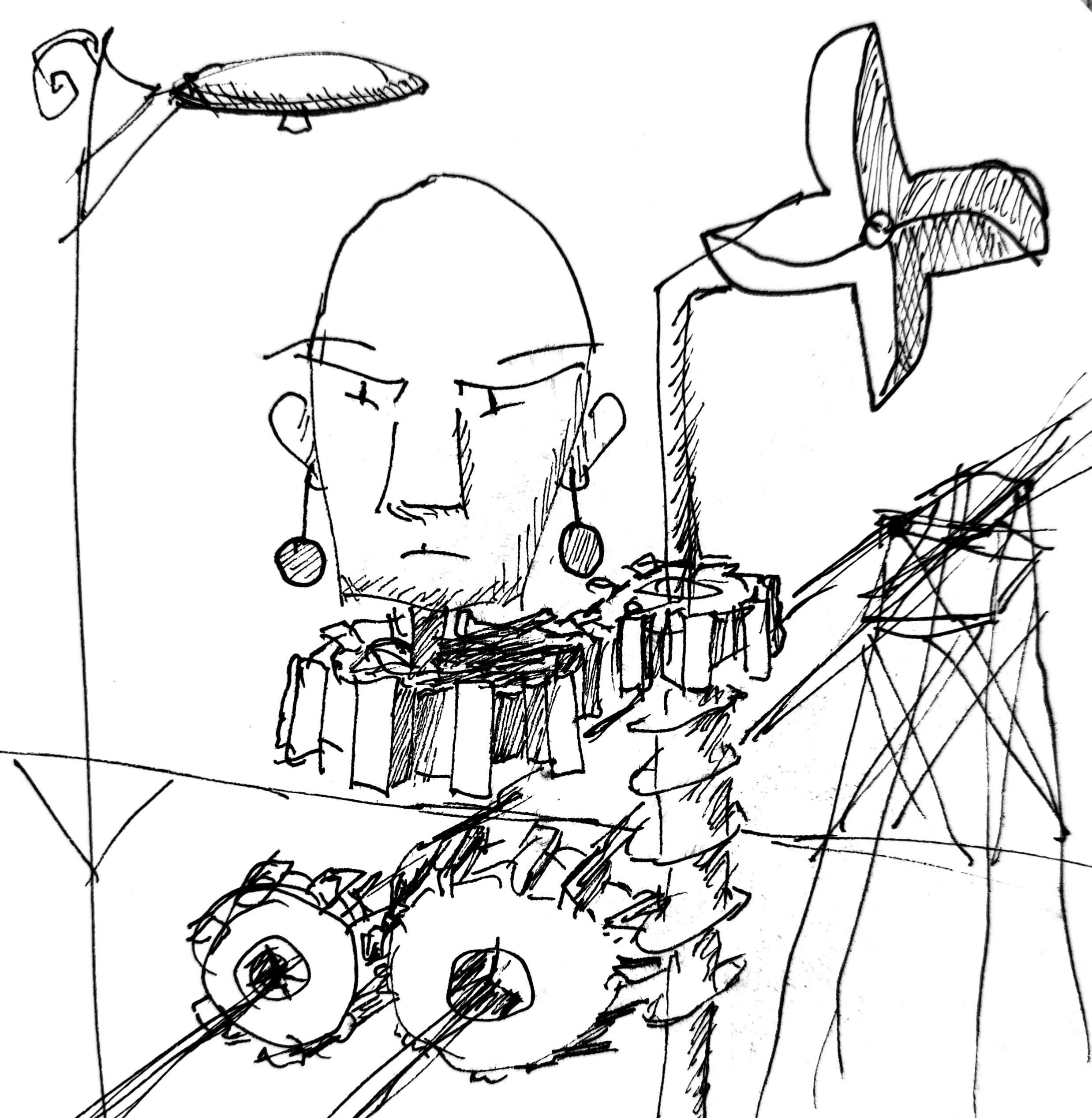
📜 File 2022-02-09_melanocarpa_in_visurf/2.png by @melanocarpa ☆ 📎 ️🔗 ✍️ ⛶


Loading pushes...

✨ AI Synthesis Mistral Gemini ChatGPT Claude x

Expanding this section will automatically generate an AI synthesis of the contributions in this node.

🌌 Agora context for [[2]]

Rendering context...

📚 Agora node [[fork]] (pulled by user) x
📚 Agora node [[# team 2012]] (pulled by the Agora)
📜 File archives/# Team 2012.md by @communecter ☆ 📎

Team 2012§

Présentation des membres de l’équipe§

Il ne s’agit pas d’intégrer in extenso le CV de tous les membres de l’équipe mais de décrire brièvement les points saillants du profil de chacun en rapport avec le projet Il pourra ainsi être répondu aux questions ci-après : • Qui sont les membres clés de l’équipe ? (nom, prénom, âge) • Quelles formations ont été suivies ? • Quelles responsabilités ont été exercées ? quelles expériences ont été acquises ? • Quelles réalisations professionnelles peuvent servir de références ? • Quels sont leurs domaines de compétence dans le projet ? Qu’est ce qui vous a poussé à participer au PH ?

Jérôme Gontier = Emorej Reitnog§

Jérôme, âgé de 40 ans, est un des initiateurs du projet Pixel Humain. Ingénieur informaticien de formation, il entreprend en 2008 une formation professionnelle sur l’environnement en Master II Développement Durable à Clermont Ferrand. Motivé et désireux de se rendre utile, il a pour ambition de participer et de proposer des initiatives positives pour la société. La rencontre avec les autres initiateurs du projet va permettre de fusionner deux projets similaires pour donner naissance au Pixel Humain. Jérôme a une vision globale du projet et participe à l’élaboration du projet de manière transversale.

Stéphanie Lorente = Einahpéts Etnerol§

Stéphanie, 30 ans, est directrice artistique Print & web, ainsi qu’auteur-photographe. Elle évolue depuis 10 ans dans le monde de la communication et de la publicité. Elle a collaboré avec des agences nationales et internationales, et développé une expérience significative en travaillant sur des projets de clients grands comptes du secteur privé et public. Elle a ainsi pu participer à la mise en place de dispositifs de communication pluri-média, tout domaines confondus. Elle a eu des responsabilités aussi bien en création qu’en production, ce qui lui donne une parfaite maîtrise et connaissance des exigences créatives et techniques des postes constituant la chaîne graphique Print et Web. Aujourd’hui directrice artistique indépendante sur l’île, son aspiration est de mettre à profit ses compétences, son expérience et son expertise au service de son engagement personnel. Convaincue, engagée, critique, passionnée, curieuse, ouverte, patiente, tenace, dynamique, elle montre une implication dans son travail qui est le fruit de la passion qu’elle entretient envers toute son activité professionnelle, mais également, le fruit de son aspiration pour une société renouvelée. Pour faire bref, son rôle dans le projet Pixel Humain est de mettre son talent de communicateur graphique au service de l’intelligence collective incarnée par le projet.

Tibor Katelbach : Robit Chabletak§

Tibor, 37ans, ingénieur Informatique, Développeur Sénior et Chef de projet indépendant depuis presque 20ans sur des projets de toutes tailles et tous budgets (PME, Yves Rocher, Petit Bateau, Perfony, Open Atlas…). Il défend depuis toujours la philosophie Open Source et l’innovation comme arme de Collaboration Massive. Toujours à la recherche de nouvelles approches pour améliorer le fonctionnement des choses, sa soif pour l’innovation et les nouvelles technologies font de lui un atout majeur dans les projets qu’ils entreprend ou auxquels il participe. Il applique tous les jours la pensée de Gandhi "il faut vivre le changement qu’on souhaite voir dans le monde" avec ou sans les dernières technologies informatique avec lesquelles il excelle. Cherchons LaTerreNative sur uneTerreNette !!

Sylvain Barbot = Niavlys Tobrab§

Après plus de 10 ans d’expérience de consulting informatique (développement, expertise technique, accompagnement utilisateurs), Sylvain s’oriente vers le développement agile et particulièrement SCRUM. Il y voit une méthode de développement de projet efficace et qui supprime les effets de frottement (liés aux méthodes classiques de gestion de projet) entre expression des besoins utilisateurs et réalisation concrète. Rapidement, il se rend compte que cette méthode basée sur le bon sens peut s’appliquer à d’autres secteur que le développement informatique. Il choisit d’organiser un voyage au long court (14 mois de volontariat dans des ONG et associations œuvrant pour la protection de l’environnement) en utilisant cette méthode. Le voyage deviendra le projet Green Trotter : partenariat avec des classes d’élèves, magasine Green Mag, site internet, promotion de l’écovolontariat… Fort de ces expériences passées, il rencontre Jérome, Tibor et Stephanie et se lancent dans le projet Pixel Humain qui n’est autre que le bon sens de la méthode SCRUM appliqué à l’organisation de la société. Il participe à la définition des besoins, au développement ainsi qu’à l’organisation globale du projet afin d’appliquer les bonnes pratiques acquises lors de ses expériences passées et de faire du Pixel Humain la plate forme pour donner au citoyen sa place dans la Démocratie.

Pierre Yves Fonteix = Sevy-Erreip Xietnof§

Habite à Nouméa, Nouvelle-Calédonie, 33 ans, formation EGC Nouméa puis Sup de Co Toulouse. Autodidacte dans beaucoup de domaines faisant appel à la créativité, il s’est tourné pendant un temps dans la construction de maisons écologiques afin d’appliquer une célèbre phrase de Gandhi devenue pour lui une véritable directive de vie “ Deviens le changement que tu désires pour le monde”, puis est revenu à ses premières Amours avec la communication aussi bien graphique que stratégique et événementielle afin de vivre pleinement ses rêves. Dynamique, créatif, perfectionniste, autonome et toujours souriant, il souhaite, aujourd’hui, mettre toutes ses compétences au service des changements nécessaires à l’évolution du monde dans lequel nous habitons.

Mickael hoarau

Graziella Hoareau

📜 File en/archives/# Team 2012.md by @communecter ☆ 📎

Team 2012§

Présentation des membres de l’équipe§

Il ne s’agit pas d’intégrer in extenso le CV de tous les membres de l’équipe mais de décrire brièvement les points saillants du profil de chacun en rapport avec le projet Il pourra ainsi être répondu aux questions ci-après : • Qui sont les membres clés de l’équipe ? (nom, prénom, âge) • Quelles formations ont été suivies ? • Quelles responsabilités ont été exercées ? quelles expériences ont été acquises ? • Quelles réalisations professionnelles peuvent servir de références ? • Quels sont leurs domaines de compétence dans le projet ? Qu’est ce qui vous a poussé à participer au PH ?

Jérôme Gontier = Emorej Reitnog§

Jérôme, âgé de 40 ans, est un des initiateurs du projet Pixel Humain. Ingénieur informaticien de formation, il entreprend en 2008 une formation professionnelle sur l’environnement en Master II Développement Durable à Clermont Ferrand. Motivé et désireux de se rendre utile, il a pour ambition de participer et de proposer des initiatives positives pour la société. La rencontre avec les autres initiateurs du projet va permettre de fusionner deux projets similaires pour donner naissance au Pixel Humain. Jérôme a une vision globale du projet et participe à l’élaboration du projet de manière transversale.

Stéphanie Lorente = Einahpéts Etnerol§

Stéphanie, 30 ans, est directrice artistique Print & web, ainsi qu’auteur-photographe. Elle évolue depuis 10 ans dans le monde de la communication et de la publicité. Elle a collaboré avec des agences nationales et internationales, et développé une expérience significative en travaillant sur des projets de clients grands comptes du secteur privé et public. Elle a ainsi pu participer à la mise en place de dispositifs de communication pluri-média, tout domaines confondus. Elle a eu des responsabilités aussi bien en création qu’en production, ce qui lui donne une parfaite maîtrise et connaissance des exigences créatives et techniques des postes constituant la chaîne graphique Print et Web. Aujourd’hui directrice artistique indépendante sur l’île, son aspiration est de mettre à profit ses compétences, son expérience et son expertise au service de son engagement personnel. Convaincue, engagée, critique, passionnée, curieuse, ouverte, patiente, tenace, dynamique, elle montre une implication dans son travail qui est le fruit de la passion qu’elle entretient envers toute son activité professionnelle, mais également, le fruit de son aspiration pour une société renouvelée. Pour faire bref, son rôle dans le projet Pixel Humain est de mettre son talent de communicateur graphique au service de l’intelligence collective incarnée par le projet.

Tibor Katelbach : Robit Chabletak§

Tibor, 37ans, ingénieur Informatique, Développeur Sénior et Chef de projet indépendant depuis presque 20ans sur des projets de toutes tailles et tous budgets (PME, Yves Rocher, Petit Bateau, Perfony, Open Atlas…). Il défend depuis toujours la philosophie Open Source et l’innovation comme arme de Collaboration Massive. Toujours à la recherche de nouvelles approches pour améliorer le fonctionnement des choses, sa soif pour l’innovation et les nouvelles technologies font de lui un atout majeur dans les projets qu’ils entreprend ou auxquels il participe. Il applique tous les jours la pensée de Gandhi "il faut vivre le changement qu’on souhaite voir dans le monde" avec ou sans les dernières technologies informatique avec lesquelles il excelle. Cherchons LaTerreNative sur uneTerreNette !!

Sylvain Barbot = Niavlys Tobrab§

Après plus de 10 ans d’expérience de consulting informatique (développement, expertise technique, accompagnement utilisateurs), Sylvain s’oriente vers le développement agile et particulièrement SCRUM. Il y voit une méthode de développement de projet efficace et qui supprime les effets de frottement (liés aux méthodes classiques de gestion de projet) entre expression des besoins utilisateurs et réalisation concrète. Rapidement, il se rend compte que cette méthode basée sur le bon sens peut s’appliquer à d’autres secteur que le développement informatique. Il choisit d’organiser un voyage au long court (14 mois de volontariat dans des ONG et associations œuvrant pour la protection de l’environnement) en utilisant cette méthode. Le voyage deviendra le projet Green Trotter : partenariat avec des classes d’élèves, magasine Green Mag, site internet, promotion de l’écovolontariat… Fort de ces expériences passées, il rencontre Jérome, Tibor et Stephanie et se lancent dans le projet Pixel Humain qui n’est autre que le bon sens de la méthode SCRUM appliqué à l’organisation de la société. Il participe à la définition des besoins, au développement ainsi qu’à l’organisation globale du projet afin d’appliquer les bonnes pratiques acquises lors de ses expériences passées et de faire du Pixel Humain la plate forme pour donner au citoyen sa place dans la Démocratie.

Pierre Yves Fonteix = Sevy-Erreip Xietnof§

Habite à Nouméa, Nouvelle-Calédonie, 33 ans, formation EGC Nouméa puis Sup de Co Toulouse. Autodidacte dans beaucoup de domaines faisant appel à la créativité, il s’est tourné pendant un temps dans la construction de maisons écologiques afin d’appliquer une célèbre phrase de Gandhi devenue pour lui une véritable directive de vie “ Deviens le changement que tu désires pour le monde”, puis est revenu à ses premières Amours avec la communication aussi bien graphique que stratégique et événementielle afin de vivre pleinement ses rêves. Dynamique, créatif, perfectionniste, autonome et toujours souriant, il souhaite, aujourd’hui, mettre toutes ses compétences au service des changements nécessaires à l’évolution du monde dans lequel nous habitons.

Mickael hoarau

Graziella Hoareau

📚 Agora node [[02]] (pulled by the Agora)
📜 File 02.md by @an_agora@twitter.com ☆ 📎
📚 Agora node [[1 kenny thinking2]] (pulled by the Agora)
📜 File 1 Kenny-thinking2.png by @rel8 ☆ 📎 ️🔗 ✍️


📚 Agora node [[1002]] (pulled by the Agora)
📜 File 1002.myco by @bouncepaw-betula ☆ 📎

1002

https://github.com/TrueBrain/TrueWiki

I have been responsible for the MediaWiki installation on https://wiki.openttd.org/ <button class="pull-url autopull" value="https://wiki.openttd.org/">pull</button> from ~2005 till 2020. One thing became clear: it is very difficult to keep it up-to-date and to find quality extensions that live for more than a few years.

So, we set out to find an alternative. With the experience we have had with for example BaNaNaS we ideally would like to store all the data in git. This is mostly as data in git is easier for more people to maintain, then a database where very few people have access to. Also, the wiki of OpenTTD was not big enough (~5000 pages) to really need a database to support it. As extra bonus, we would favour any system that could easily be cached.

The software closest to this is gollum. Although gollum appears to do exactly what we want, especially as wikitext is supported via WikiCloth, reality turned out to be something else. Although it does support wikitext, or a subset thereof, it does not support templates. This is a huge issue for any real wiki, as templates make a wiki of any decent size possible. Initially we did hack in support for templates, but as it is written in Ruby, not a language any of the people involved knew sufficiently to make any decent contribution, it only added more issues than it resolved. In the end, it was decided this was not a road to go.

📚 Agora node [[1012]] (pulled by the Agora)
📜 File 1012.myco by @bouncepaw-betula ☆ 📎
📚 Agora node [[102]] (pulled by the Agora)
📜 File 102.myco by @flancian-betula ☆ 📎
📚 Agora node [[1022]] (pulled by the Agora)
📜 File 1022.myco by @bouncepaw-betula ☆ 📎
📚 Agora node [[1032]] (pulled by the Agora)
📜 File 1032.myco by @bouncepaw-betula ☆ 📎
📚 Agora node [[112]] (pulled by the Agora)
📜 File 112.myco by @flancian-betula ☆ 📎

112

https://trs.catholic.edu/faculty-and-research/faculty-profiles/jones-charles/index.html

Located in Washington, D.C., The Catholic University of America is the national university of the Catholic Church, founded by the U.S. bishops and the pope, faithful to the teachings of Jesus Christ as handed on by the Church. Dedicated to advancing the dialogue between faith and reason, Catholic University seeks to discover and impart the truth through excellence in teaching and research. It offers academic degrees in Architecture, Arts and Sciences, Business and Economics, Canon Law, Engineering, Law, Library Science, Music, Nursing, Philosophy, Social Work, and Theology. The CUA Cardinals athletic teams compete in the NCAA Division III Landmark Conference and, in football, the Old Dominion Athletic Conference.

📚 Agora node [[12]] (pulled by the Agora)
📜 File 12.md by @agora@botsin.space ☆ 📎
📜 File 12.md by @an_agora@twitter.com ☆ 📎
📚 Agora node [[1632]] (pulled by the Agora)
📜 File 1632.md by @agora@botsin.space ☆ 📎
📜 File 1632.md by @an_agora@twitter.com ☆ 📎
📚 Agora node [[1822]] (pulled by the Agora)
📜 File 1822.md by @an_agora@twitter.com ☆ 📎
📚 Agora node [[1922]] (pulled by the Agora)
📜 File 1922.md by @neil ☆ 📎 ️🔗 ✍️

1922§

📜 File 1922.md by @an_agora@twitter.com ☆ 📎
📜 File 1922.md by @flancian@twitter.com ☆ 📎

[[nanook of the north]] #1922 https://t.co/LLvlY4lDCd


📚 Agora node [[2002]] (pulled by the Agora)
📜 File 2002.md by @an_agora@twitter.com ☆ 📎
📚 Agora node [[2003 11 03 ibm to build chips for xbox 2]] (pulled by the Agora)
📜 File _posts/archive/2003-11-03-ibm-to-build-chips-for-xbox-2.md by @bmann ☆ 📎

layout: post title: IBM to build chips for XBox 2 created: 1067897040 categories:

  • Microsoft
  • Game

Straight from Microsoft comes the news that IBM has been awarded the contract to build the chips for the XBox 2. This, of course, has gotten all sorts of rumour mills flowing.

What if XBox 2 gets built on IBM’s "state-of-the-art processors" (which at this time would be the PowerPC 970 a.k.a. G5)? Read on for some rumours that are wilder than Apple on Intel…

Update: no longer a rumour - see this Wired story

Update 2: And they’re going to support backwards-compatibility through emulation from their Connectix purchase

Of course, IBM is already involved with building the next Nintendo and Sony platforms as well. But still, I can only imagine the PR storm if MS is really going to go with a PPC-powered platform. Nevermind the fact that it would be completely incompatible with the current platform. Hmmm…last rumour speculation: Microsoft is so afraid of G5 performance that they’re hedging their bets by investing in Virtual PC technology.

More snippets of info from ArsTechnica.

📚 Agora node [[2003 11 09 myie2]] (pulled by the Agora)
📜 File _posts/archive/2003-11-09-myie2.md by @bmann ☆ 📎

layout: post title: MyIE2 created: 1068438360 categories:

  • Microsoft
  • Application

Pointed out to me by Greg. Adds tabs, skinning, and other cool features to a "standard" IE6 install. It’s free.

📚 Agora node [[2004 07 06 web is still gaining developer mindshare at the expense of win32]] (pulled by the Agora)
📜 File _posts/archive/2004-07-06-web-is-still-gaining-developer-mindshare-at-the-expense-of-win32.md by @bmann ☆ 📎

layout: post title: Web is still gaining developer mindshare at the expense of Win32 created: 1089158170 categories:

  • Web Development
  • Web 2.0
  • Microsoft

I’ve been thinking about the rise of the web as an application platform for a while. But what hadn’t occurred to me until I read Spolsky’s essay last week is this, which I think is quite remarkable: Microsoft totally fucked up when they took aim at Netscape. It wasn’t Netscape that was a threat to Windows as an application platform, it was the web itself.

They spent all that time, money, and development effort on IE, building a browser monopoly and crushing Netscape — but to what avail? Here we are, and the web is still gaining developer mindshare at the expense of Win32.

Daring Fireball: The Location Field Is the New Command Line

Microsoft is still hedging it’s bets. It sunk money into WebTV and is still struggling with smartphones and handhelds. But if the web wins, Microsoft loses.

📚 Agora node [[2004 11 11 bmp presents cdx2]] (pulled by the Agora)
📜 File _posts/archive/2004-11-11-bmp-presents-cdx2.md by @bmann ☆ 📎

layout: post title: "BMP Presents: CDX2" created: 1100168588 categories:

  • CDX2
  • Burning Monkey Productions
  • Personal

Through Urban Vancouver, I was lucky enough to meet Rusty, a.k.a. Alex. Somehow I got drawn into the crazy web that is "CD Exchange 2".

And so, I give to you my entry:

Burning Monkey Productions Presents: CDX2

Format is: Song Name / Artist Name (Album) Time
If no album is listed, it is the same as the artist name.

  1. All Hell For A Basement / Big Sugar (Brothers & Sisters, Are You Ready?) 4:00

    I love Big Sugar, from their early, more blue-sy stuff (and I was tempted to pick one of those, since many people haven't heard it), to their rockin' later stuff. But they really shine when you see them live, and they string together 2 or 3 songs, spending 15, 20, or even 30 minutes playing with the music. And Gordie Johnson can play the guitar like no one else.

    Alternate pick: Sleep in Late / Big Sugar (500 Pounds)

  2. Monkey Wrench / Foo Fighters (The Colour and the Shape) 3:51

    Continuing with the "rock" theme that started the disc, I needed something that kicked things up another notch.

    Alternate pick: Everlong / Foo Fighters (The Colour and the Shape)

  3. In The Land Of The Super Freaks / Hammerheads 4:44

    Who the heck are The Hammerheads?! They're a local Ottawa band that plays all the time. You can probably classify them as "disco funk revival" if you had to pick a label. Always a good time out at the bar, and very danceable. Still very high energy like the previous two songs, but without that hard rock edge.

    Alternate pick: I wanted a band that few if any had heard, so an alternate would likely have been something from another Ottawa band, Andrew Vincent and the Pirates.

  4. Exploration / Thievery Corporation-DJ Kicks 3:07

    Bringing the energy and speed down a notch. Retro vocal samples plus a blend of instruments and beats. The alternate was too long and a little too electronic after the preceding songs.

    Alternate pick: Escape to Neptune / Rising High Trance Injection

  5. Burn One Down / Ben Harper (Fight For Your Mind) 3:31

    I've only seen Ben Harper live once, and that's not nearly enough times. How does one go about picking a favourite song? The music is great, the lyrics are great, and there are a ton to choose from.

    Alternate pick: Excuse Me Mister (live) / Ben Harper (Live from Mars 1)

  6. Candela / Buena Vista Social Club 5:31

    This was a case of me wanting to put something "different" in to switch the mood a little. I like Spanish / Cuban music, and this BVSC has a great little melody in the background that weaves in and out of the vocal track.

  7. Cracklin' Rosie / Neil Diamond (His 12 Greatest Hits) 2:59

    What? You don't like Neil Diamond?! Of course you do, you just have to listen to him a couple more times. Bet you weren't expecting that on here. Neil, for all his cheese, puts together some fun, listenable music.

    Alternate pick: Kentucky Woman / Neil Diamond

  8. Woman Of The Ghetto / Hortense Ellis (Impact!) 3:05

    I like the vocals on this particular track. The compilation is by Soul Jazz Records, and is a British import. A great restaurant in Ottawa called the Black Tomato has great music like this, and they'll even sell it to you.

    Alternate pick: Be Thankful / Donovan Carless (Impact)

  9. Holes To Heaven / Jack Johnson (On and On)) 2:55

    "There were so many fewer questions / when stars were still just the holes to heaven" — what a great lyric. The bass lines in this have great hooks (are you beginning to see I like background beats?).

    Alternate pick: Bubble Toes / Jack Johnson (Brushfire Fairytales)

  10. Wrong / Everything But The Girl (Walking Wounded) 4:38

    Kicking off a three song electronica run, there are enough vocals in this to make a good transition from Jack. I love every song on this album, and it's one I often include on "Intro to House" mixes.

    Alternate pick: Corcovado / Everything But The Girl (Walking Wounded) a.k.a. the "32 flavours and then some" song.

  11. Part of The Process / Morcheeba (Big Calm) 4:27

    I had a choice of putting in some old Morcheeba, or some new Morcheeba, and I chose old. The new Charango album took me some time to get used to, but now I really like it.

    Alternate pick: Charango (feat. Pace Won) / Morcheeba (Charango)

  12. Hymn Of The Big Wheel / Massive Attack (Blue Lines) 6:37

    By this third track, I've got you right where I want you: nice and relaxed, with your ears perked up to suck in some more beats and interesting voices. I went with old instead of new again.

    Alternate pick: Karmacoma / Massive Attack (Protection)

  13. Dobie - I Miss You (Sunshine Mix) / Bjork (Telegram) 5:35

    Bjork's strange voice should start to get you out of relaxation mode, but in not too jarring of a way. I like this mixed version of the song.

  14. Here's That Rainy Day (Koop Remix) / Astrud Gilberto (Verve Remixed 2) 3:31

    The beginning of this song almost has a little Super Mario Bros. vibe to it. This is from the Verve Remixed 2 double album. One CD is filled with jazz originals, the second contains remixed versions of the originals.

    Altnerate pick: Fried Neckbones and Some Homefries (Dan the Automator Remix) / Willie Bobo (Verve Remixed 2) — because of the name of the song, of course.

  15. Thick Necked Man / Crash Test Dummies (The Ghosts that Haunt Me) 3:20

    And now for something completely different! Listen to the lyrics or just kind of tap your feet and get the music.

    Alternate pick: The Superman Song / Crash Test Dummies (The Ghosts thaat Haunt Me)

  16. Psycho Killer (Live) / Talking Heads (Stop Making Sense) 4:24

    I wanted to round out the disc with a live track, and this song is a classic that was nicely different from the rest of the music.

    Alternate pick: Burning Down the House / Talking Heads (Stop Making Sense)

Of course, I wasn't quite organized enough to manage printing a cool insert ahead of time, so I've gone the techie route. There are three PDFs to choose from to download and print:

📚 Agora node [[2005 07 29 read only calendars were nice in 2002]] (pulled by the Agora)
📜 File _posts/archive/2005-07-29-read-only-calendars-were-nice-in-2002.md by @bmann ☆ 📎

layout: post title: Read-only calendars were nice in 2002 created: 1122623258 categories:

  • Mac
  • Social Media

Scott points to a rumour that Apple is going to use Hula as a mail + calendaring solution. But, we’d all really just like iCal sharing for small numbers of people:

The ability to publish read-only calendars was nice in 2002 when it was first added, but it’s been three years, and I’m still waiting for the ability to share read/write calendars with other family members. I’m aware that I could probably do this with .Mac, but I’m not willing to pay $100/year just so I can edit events on my wife’s calendar a couple times per week. scottstuff: Apple to adopt Hula?

Amen, Scott. And, I’d be willing to wager that editing events on a spouse’s calendar would be one of the major uses.

There’s a CalDAV BOF that I’m going to attend down at OSCON, but really, we’re stilling banging our heads over how to properly support true two-way desktop calendar integration. Hula looks like a *big* solution, and Adrian reminded me of the post dissing groupware that went with it. For the same reason that blog-like tools are overtaking much larger CMS’s, I would argue that a small, nimble, person-to-person focused calendaring solution that is *easy* will win over big groupware.

📚 Agora node [[2006 07 18 jabber geeking merge jep 0080 and jep 0112]] (pulled by the Agora)
📜 File _posts/archive/2006-07-18-jabber-geeking-merge-jep-0080-and-jep-0112.md by @bmann ☆ 📎

layout: post title: "Jabber geeking: merge JEP-0080 and JEP-0112?" created: 1153242125 categories:

  • IM
  • XMPP
  • JSF
  • JEP-0112
  • JEP-0080
  • jabber
  • geolocation

I'm in Stuttgart meeting with some clients. Lots of Drupal + Jabber integration talk, and luckily ralphm is here to bring along lots of Jabber expertise.

We've been talking a lot about geolocation notification over Jabber — so users can indicate their location over Jabber. There are few (if any?) clients that support this today, so we'll probably support some short hand for testing purposes — being able to type in geoloc:[lat],[lon].

So, I was looking at JEP-0080 (geoloc) and JEP-0112 (physloc). 112 is a plain text representation of physical location, and JEP 80 is the latitude / longitude. JEP 80 also has a plain text "description" field. So…why not collapse the two? physloc could replace the current JEP 80 "description" entry…every single entry is optional, so the text field in physloc can handle the current usage of the description field. It just seems wasteful to maintain two separate JEPs for what is essentially the same information.

As well, if a service already knows the physical location, it can send it along with the geoloc — you can't derive the physical location from the geolocation, so in the current case, you would have to send two messages.

The *one* issue is the reverse: the latitude and longitude for geoloc are currently set to MUST. This means we can't send only the physical location, and leave the lat/long blank…I think this should be changed…people can send updates of either geolocation or physical location — the server side can do a geoloc lookup if needed.

BTW, I reapplied for membership in the Jabber Software Foundation — apparently the April voting had some issues. 

📚 Agora node [[2006 09 27 idea fragments face to face with ton zijlstra part 2]] (pulled by the Agora)
📜 File _posts/archive/2006-09-27-idea-fragments-face-to-face-with-ton-zijlstra-part-2.md by @bmann ☆ 📎

layout: post title: "Idea Fragments: Face to Face with Ton Zijlstra, Part 2" created: 1159402477 categories:

  • Social Media
  • Ton Zijlstra
  • RDF
  • NINA
  • Mixel
  • KNOSOS
  • corporate blogging

See also: Feed Reading via People: Face to Face with Ton Ziljstra, Part 1

I wanted to share with Ton some of the information that came up during DrupalCon.

  • NINA — a bundle of Semantic Web (yes, big "S" — it is an RDF store) tools being built on top of Drupal. Don't forget the Relationship module — it's still around and still very interesting. RDF for a long time has had the perception of complexity. Secondly, it has had real performance issues as tuples can't natively be represented in a relational database. Both of these are chicken-and-egg issues, I believe. If there were more running code in an easily accessible platform that automatically created and worked with RDF metadata…well, we might see some interesting things :P
  • Mixel and Ton should meet/talk more. Mixel's KNOSOS (Knowledge Sharing over Social Software) project has built some very interesting tools on top of Drupal and is continuing to evolve; we're all looking forward to see more on his tag visualization

Ton uses Qumana to easily cross-post to multiple locations. I'm unhappy with this as a solution, as context is actually lost. That is, there should be one canonical/permanent/referenceable URI for each blog post…or at least a GUID. Atom does this well, we need it to be better automated. To be fair, Ton does customize and/or intro each duplicated cross post, adding local context. Ideally, there is a field in the feed specs that could be used for this purpose without changing the GUID — I may want to see his local context hints, but I don't want to see the same article three times from him. I know I feel the same pressure/need — these collection of posts should be at Bryght as well as B. Mann Consulting because we haven't yet enabled automatic aggregation of targetted posts.

Corporate use of aggregated/group blogs may be pointing towards more of a focus on feed reading via person. Or are also trying to solve the cross-posting issue mentioned above.

  • Flock actually wrote the Planet module for Drupal to help in aggregating employee blogs. Not only that, it is easy to indicate which posts should actually be cross-posted by the use of keyword filtering.
  • SocialText uses the built-in multi-user community blog feature of Drupal — they don't currently aggregate. This is an out-of-the-box Drupal functionality — there are feeds available by author (all multi-author systems SHOULD have this…I'm again reminded of this crazy mixed feed from the Om gang that still continues to annoy me) as well as the aggregate feed.

I only know of these corporate examples because they use Drupal. Pointers to other examples appreciated…ideally NOT using the Planet Planet code, but something integrated directly into the corporate site.

We were discussing upcoming conference schedules for the next 6 - 8 months. Ton knows a fellow Drupal compatriot, Gunnar Langemark, because of his attendance at REBOOT. It sounds like a conference I should make time for (and I've been meaning to). But conferences planning now needs to take place *globally* — the LIFT conference wanting to know the Northern Voice schedule indicates as well that we digital nomads are not geographically restricted. But we are still restricted by space and time to only be in one place at a time :P

📚 Agora node [[2012 08 11 startupriot seattle 2012]] (pulled by the Agora)
📜 File _posts/blog/2012-08-11-startupriot-seattle-2012.md by @bmann ☆ 📎

I’m just getting back from 2 days in Seattle. In general, I’m trying to spend more time there, getting to know what’s happening in the Seattle community and seeing if Vancouver can connect more regularly (Cascadia!).

Startup Riot is actually run by a team from Atlanta, with Sanjay Parekh playing the front man. The event is run as a pitch contest, including feedback from experienced entrepreneurs as judges, plus several keynote talks and lots of opportunity for connecting with other attendees. Here’s the description and agenda for the day.

I loved the event. It was well run, it was curated1 (no service providers allowed), it had great sponsors (MailChimp, Gist, Twilio, etc.), and there was a great crowd of people there. I was surprised to meet one entrepreneur who flew in all the way from the Ukraine to attend, but having attended one Startup Riot, I can definitely see why.

Vancouver Invades§

There ended up being 10 companies from Vancouver attending. It was amazingly energizing to be in Seattle with this big Vancouver crew, and absolutely underlines that we should be spending more time working together to connect the Cascadia startup communities of Portland, Seattle, and Vancouver.

This was also the one area where I wish things had been run differently.

The Startup Riot team selects the startups that are allowed to present, and then swears them to secrecy: no one is publicly allowed to announce they are presenting. I heard about the event privately from a few startups from Vancouver who had been selected, but I never expected to show up and be immersed in a sea of Canadians.

I love & respect the cone of silence approach. It means that to find out more about the startups who are presenting, you have to make the effort to attend in person. And then the startups each have a booth as well as their pitch time, meaning you can spend time asking more questions and getting to know the team.

But the feedback I sent suggested that somehow the startups in each region be notified of who else was going.

If more people had known, I think the Vancouver area attendance would have been even higher, and would have let us organize group rides and shared accomodations and such.

The Presenting Companies§

I tweeted about each of the companies whom I saw present, which ended up being the first 10 of the day, and the last 10 of the day. I missed the middle 10 pitches because I was in deep discussion with Red Russak, who labels himself a startup concierge and runs StartupSeattle.

I have tweets about the pitches I did see, as well as the two keynotes, [over on Storify]2, as well as embedded as a slideshow here:

Pitch Quality§

One thing I can say is that the pitches were for the most part not very good. Startup pitches are relatively formulaic, especially with such a short amount of time. I first heard the tip from Paul Kedrosky to cover three broad areas — why you? why this? why now? Show the product that you’ve built. Tell your customer stories. Say that you have paying customers (cough QuoteRobot cough).

The startup pitches I saw were missing a lot of these basic items. My sense is they were under-prepared, and had clearly not had much help / feedback from people who have done early stage startup pitches before. Of course I have opinions on which of the startups seemed to have "big ideas" or were likely to succeed. Others were more vicious in their complaints3.

Ultimately, the story is about people trying to do their best to build a company, to get paid to be involved in solving a problem they are passionate about. Should all companies be big ideas? Should we all be building businesses focused on clean tech or nanotechnology? I’d rather see individuals doing startups of any kind – and learning from them – rather than working for a big company that is in need of replacing or at least reinvention.

No blame should attach to StartupRiot for this. All of those startups need to get better at explaining their story, at selling to customers, and about making people care. And they should ask for help, both from their community at large and from their peers.

StartupRiot was a chance for startups to stand up, tell their story, get some feedback from judges, and (hopefully) get some publicity and connect with people they wouldn’t have met otherwise. It definitely delivered.

See you in Atlanta§

Congratulations to Sanjay and the entire team for putting on a great event. The next event is in February 2013 in Atlanta. I’m going to try and organize a group trip to attend. If you’re a Canadian startup and are interested, drop a line in the comments.

  1. Curated: This is what StartupRiot says about curating their attendees: We prescreen all applicants before allowing them into our events. For our main events that means we screen out all service providers. We do this because it leads to a better event for you, our sponsors, and us. I love curated events, and I think this is a great policy.↩

  2. No more Storify. Consider it a TODO to go look up the original tweets. And maybe link to the archived version I host myself.↩

  3. Complaints:  There was a particularly harsh article written up in Seattle’s alternative news weekly, The Stranger. I captured my comments on my link blog.↩

📚 Agora node [[2020 04 02]] (pulled by the Agora)
📜 File 2020-04-02.md by @neil ☆ 📎 ️🔗 ✍️

2020-04-02§

No physics§

Think [[The Three Body Problem]] is losing me a little bit - it’s not something I just can’t wait to pick up each night - but it’s still good. The premise of the laws of physics not being constant is really interesting, and a fun way of exploring it through virtual reality. A few snippets of history of communist China and the [[Cultural Revolution]] is interesting, too.

Digital self-determinism :read:§

read [[Frantz Fanon Against Facebook: How to Decolonize Your Digital-Mind]]

Lizzie O’Shea discusses [[digital self-determination]] as a means to understand and resist some of the problems with big tech, using the rubric of Fanon’s work on self-determination. How can we have agency and create our own identity under the thumb of the big surveilling platforms?

Digital self-determination will involve:

  • making use of the technical tools available to communicate freely
  • designing information infrastructure in ways that favour de-centralisation
  • designing online spaces and devices that are welcoming

I definitely like all the conclusions. At first blush, any comparison between colonialism and racism and the problems of digital platforms feels like it could be a little crass… but O’Shea explains her thinking and says she feels Fanon’s ideas are so strong that they can be applied to different times and situations.

Even in a technologically-saturated world, in which human beings are categorised, surveilled and discriminated against, it is possible for us to carve out space for our own identity and shape our destiny.

– Frantz Fanon Against Facebook: How to Decolonize Your Digital-Mind

📚 Agora node [[2020 04 12]] (pulled by the Agora)
📜 File 2020-04-12.md by @flancian ☆ 📎 ️🔗 ✍️

April 12th, 2020§

📚 Agora node [[2020 04 22]] (pulled by the Agora)
📜 File 2020-04-22.md by @flancian ☆ 📎 ️🔗 ✍️

April 22nd, 2020§

📚 Agora node [[2020 05 02]] (pulled by the Agora)
📜 File 2020-05-02.md by @flancian ☆ 📎 ️🔗 ✍️

May 2nd, 2020§

  • Set up an Etsy store for Macellaio.
  • Helped Gustavo set up Meet :)
  • Chatted with [[jwz]] on Twitter.
  • Caramel City: add Infre Tea. The protagonist likes Choco Mountain -> Infre -> Caramel City.
  • Install Wordpress and check out two federation plugins, see Twitter.
📜 File 2020-05-02.md by @neil ☆ 📎 ️🔗 ✍️

2020-05-02§

Article: [[Publishing your org-roam wiki map to the web: overview]]§

I want my wiki to be a [[sensemaking]] aid - after collecting the dots, to help me then [[connect them]] and see the [[constellations]].

One sensemaking tool in Roam and [[org-roam]] is the [[wiki graph]] - a graph (in the nodes and edges sense) of all of the notes in your wiki and their links to each other. Not quite a mind map. More of a hypertext map. I’ve been playing around with publishing this map to my public site.

([[more]])

[[Bliki tooling]]§

Thinking about ‘[[bliki]]‘ (blog and wiki, garden and stream, stock and flow, etc etc) tooling a bit.

[Aside: perhaps if I made some bliki software, I would call it ‘Flock’.. flow and stock…]

What I’m currently doing§

For the garden bit, I’m using [[org-roam]]. I actually write my stream bits first in org-roam, publish it to HTML, then just manually copy that HTML to [[WordPress]] and publish there for all the public stream stuff. As it’s [[IndieWeb]]-enabled, WP gets me feeds for people to follow, and all the interactions you’d expect from streams - replies, likes, etc.

So it is manual until it hurts, but it doesn’t hurt too much at the moment. In fact, writing and hyperlinking with org-roam then copying it over is for me a lot more pleasant than writing straight in to WordPress.

But obviously there’s quite a lot of redundancy there.

Where I could go with it§

I could use WordPress pages as my interlinked garden. This would have the great benefit of also having all of the stream functionality OOTB. I haven’t explored WP for wiki pages much, but I know that Ton does it. I think I personally won’t do it this way as I find WordPress too much friction for me for writing, but having everything in one system is obviously a big boon.

I think if I could use [[Arcology]] combined with org-roam, that’d get me a pretty sweet bliki setup. (With more on top, including some of the [[note-taking]] and [[sensemaking]] bits too).

But I think it’ll be a while before I’m set up with Arcology, and even then, given it is static, it’s missing a lot of the building blocks of the IndieWeb that would also need adding. So I’ll keep it as this manual Rube Goldberg device for now.

But, good to have a long-term goal!

[[Blikis]]§

Really interesting to learn (via Desmond) that Martin Fowler has a post about the link between blogs and wikis, from 2003(!).

Beyond the name, however, there’s the very ephemeral nature of blog postings. Short bursts of writing that might be interesting when they are read - but quickly age. I find writing too hard to want to spend it on things that disappear.

"I find writing too hard to want to spend it on things that disappear" - I love that as a little epigram for why you might want a [[digital garden]].

Martin calls [[the blog and wiki combo]] his bliki.

Like a blog, it allows me to post short thoughts when I have them. Like a wiki it will build up a body of cross-linked pieces that I hope will still be interesting in a year’s time.

As a word, I’m not so keen on ‘bliki’ (although back then Martin didn’t like the word ‘blog’, and well here we are now, I don’t give it a second thought).

But blikis as a concept - I’m all in.

Improving my wiki publish step§

Tinkered around with my [[org-publish]] steps a little bit - moving the config out of my .spacemacs file and into a dedicated publish.el in my wiki project, along with a Makefile to run it as a –batch process.

This way, it can be better shared with others, and I can also run it in the background - org-publish is pretty slow sadly, and blocks all of Emacs when you run it interactively.

This also takes me in the direction of having the publish step actually happen as a post-receive hook on a git remote somewhere, if I wanted to do that.

It was a bit of a faff, but I learned a bit more about Emacs and org-publish in the process, and had to do some basic elisp debugging to figure out why the org-roam backlinks stuff wasn’t working. Pleased to have learned some new things!

[[Selectively publishing to the stream]]§

As I try the [[stream-first]] approach, a comment from Bruno at the Garden and Streams session sticks in my head - along the lines that he had experimented with software where pretty much everything was written in to his wiki first, with simply a flag to say ‘also publish this to my public stream’.

I find that interesting as I just posted something to my stream in my wiki (a tech note to myself about Chromium disk usage), that I don’t feel a particular benefit to posting to a public stream - I can’t imagine anyone really wanting it popping up in their social readers.

BUT I do want it in my own chronological timeline (as well as my longer-term garden), as I find it useful to be able to look back when something first happened. I want to [[record the journey as well as the destination]], so to speak.

You see quite a few IndieWeb people do something along these lines, with a full ‘firehose’ stream you can follow, but also a more restricted subset of ‘stuff I think other people will be most interested in’.

Chromium disk usage§

I just noticed that Chromium (which I very rarely use) was taking up 1.3GB of space in my .config folder.

Here’s how to clean that up: disk usage - Why does Chromium take up 1 GB in my .config and can I reduce th…

Odd that it was taking up so much space, given that my daily driver is Firefox.

📚 Agora node [[2020 05 12]] (pulled by the Agora)
📜 File 2020-05-12.md by @neil ☆ 📎 ️🔗 ✍️

2020-05-12§

Read Johnson’s message is very deliberate and very dangerous: here’s how to combat it§

This article says that the change in the government’s framing of [[coronavirus]] is moving the narrative to one of individual responsibility.

Previously the frame was that we were under threat from an enemy, and they knew best what to do to protect us. That didn’t work.

Jon suggests a framing around citizenship, the citizen narrative:

The right role for government in this story is to equip and enable us: to share as much information as possible and as much power as possible, so that we can work together where we live to find a new and sustainable normal.

📚 Agora node [[2020 05 22]] (pulled by the Agora)
📜 File 2020-05-22.md by @flancian ☆ 📎 ️🔗 ✍️

May 22nd, 2020§

  • Started with "clojure from the ground up".
  • [[Clojure]]
📚 Agora node [[2020 06 02]] (pulled by the Agora)
📜 File 2020-06-02.md by @flancian ☆ 📎 ️🔗 ✍️

June 2nd 2020§

📚 Agora node [[2020 06 12]] (pulled by the Agora)
📜 File 2020-06-12.md by @flancian ☆ 📎 ️🔗 ✍️

June 12th, 2020§

📚 Agora node [[2020 06 22]] (pulled by the Agora)
📜 File 2020-06-22.md by @neil ☆ 📎 ️🔗 ✍️

2020-06-22§

Read: [[A creative multiplicity: the philosophy of Deleuze and Guattari]]§

I really enjoyed this article.

It gives a bit of back story to [[Deleuze & Guattari]]. I find that helps give me a grounding, much like with A Short History of Nearly Everything.

They met during [[May 68]]. Sounds like Guattari was the more political of the two. I am fully on-board with a description of their work as "a progressive, Marxist-inspired, anti-capitalist politics of joy".

It’s quite interesting though. There seems to be an obvious leaning towards a more anarchist than Marxist approach. Very much anti-hierarchy, at least.

Yet, at the same time, anti-individual:

Deleuze and Guattari were both resolutely anti-individualist: whether in the realm of politics, psychotherapy or philosophy, they strived to show that the individual was a deception, summoned up to obscure the nature of reality.

I like how D&G seem to sit somewhere between the horizontal and the vertical.

📚 Agora node [[2020 07 12]] (pulled by the Agora)
📜 File 2020-07-12.md by @flancian ☆ 📎 ️🔗 ✍️

July 12th, 2020§

📜 File 2020-07-12.md by @neil ☆ 📎 ️🔗 ✍️

2020-07-12§

Reading [[The Telekommunist Manifesto]]§

Starting to read [[The Telekommunist Manifesto]]:

The Manifesto covers the [[political economy]] of network topologies and cultural production respectively.

Based on an exploration of [[class conflict]] in the age of international telecommunications, global migration, and the emergence of the information economy.

the work of Telekommunisten is very much rooted in the [[free software]] and [[Free culture]] communities.

This text is particularly addressed to politically motivated artists, hackers and activists

^ I’m sure it will have its flaws, but can’t deny that it sounds pretty up my street.

📚 Agora node [[2020 07 22]] (pulled by the Agora)
📜 File 2020-07-22.md by @flancian ☆ 📎 ️🔗 ✍️

July 22nd, 2020§

📜 File 2020-07-22.md by @neil ☆ 📎 ️🔗 ✍️

2020-07-22§

Autonomy, digital self-determination, agency§

I’m reading through [[Future Histories]] at the moment. The chapter linking the work of [[Frantz Fanon]] to the ideas of [[digital self-determination]] is very interesting and I am getting my head around some of the ideas. [[Solid]] and [[personal data pods]] get a namecheck, which is pretty much [[IndieWeb]] just under a different guise.

A better way to understand what we mean when we talk about privacy, then, is to see it as a right to self-determination. Self-determination is about self-governance, or determining one’s own destiny.

– [[Future Histories]]

I think there are some paralells with what [[Ton]] said here:

p2p networks weren’t primarily about evading surveillance, evading copyright, or maintaining anonymity, but one of netwerk-resilience and not having someone with power over the ‘off-switch’ for the entire network

Future Histories:

digital privacy—and its philosophical twin, freedom—involves anonymity, secrecy, and [[autonomy]]. Autonomy is not just evading surveillance. Autonomy means the freedom to act without being controlled by others or manipulated by covert influences.

– [[Future Histories]]

I am going to read Ton’s posts on networked agency, as I feel like there is a connection there. (And they will be good, even if not).

Self-determination is both a collective and individual right, an idea of privacy that is much more expansive and politically oriented. It is about allowing people to communicate, read, organize and come up with better ways of doing things, sharing experiences across borders, without scrutiny or engineering, a kind of cyberpunk internationalism.

– [[Future Histories]]

Self-determination, autonomy, agency - it certainly does sound related.

Some of the chapter from the book is also available online here: https://www.versobooks.com/blogs/4369-fanon-and-digital-self-determination

📚 Agora node [[2020 08 02]] (pulled by the Agora)
📜 File 2020-08-02.md by @flancian ☆ 📎 ️🔗 ✍️

August 2nd, 2020§

📜 File 2020-08-02.md by @neil ☆ 📎 ️🔗 ✍️

2020-08-02§

Same story, different century§

The first chapter of [[Small is Beautiful]] is outlining the problem with production. It’s the same story: we are exploiting and overusing natural and human resources, treating them as capital and not income, and heading for a catastrophe as a result. That we need to make drastic changes to how our economy functions to divert from this path.

The thing is, this was written in 1973. Nothing has changed in this regard - in fact it has gotten worse. Makes you think that the latest popular cover versions of essentially the same tune (e.g. [[Doughnut Economics]]) are not going to change anything either, no matter how cogent and damning.

What will actually bring about change?

Article: [[setting up org-roam and anki flashcards]]§

📚 Agora node [[2020 08 12]] (pulled by the Agora)
📜 File 2020-08-12.md by @flancian ☆ 📎 ️🔗 ✍️

August 12th, 2020§

  • Tidied up around the house, went to the supermarket, etc.
  • Talked to my family.
  • [[TODO]]
  • [[Ryo Fukui]] sounds interesting
  • Could [[Stephen Wolfram]] grok the [[Agora]]?
📜 File 2020-08-12.md by @neil ☆ 📎 ️🔗 ✍️

2020-08-12§

Listened: Amazon Wants to Dominate Everything w/ Brian Merchant§

I don’t think it’s a surprise to anyone anymore that [[Amazon]] is a blight on the planet, but this interview with Brian Merchant does a pretty good job of outlining their various modes of villainy. Worker abuse, climate abuse, a pandemic [[shock doctrine]], etc.

– Amazon Wants to Dominate Everything w/ Brian Merchant

📚 Agora node [[2020 08 14 notes rhaguvamsa song2]] (pulled by the Agora)
📜 File _posts/2020-08-14-notes-rhaguvamsa-song2.md by @forshaper ☆ 📎

Dilipa and his wife protect and feed the sacred cow’s calf. Since this is personal, his retinue returns home. They do this alone. Dilipa drinks when the cow drinks, and feeds when the cow feeds, since he’s following her to learn from her.

Internally, he remains vigorous and ready. Externally, he appears as calm and placid as the cow.

The deer, the vines, and flowers all attend to him with appreciation, like he’s a Disney princess. The forest praises him for the protection he offers with his presence. He and his wife milk the cow.

The cow goes up to the Himalayas. He follows her there, thinking her safe. She gets attacked by a lion. Dilipa moves to protect her, but finds his arm failing him when he tries to shoot the lion with an arrow. The lion tells him his efforts are useless. He explains he was placed on the mountain to protect a tree (from elephants) that was adopted as a son by the god Shiva. As a lion, he is dependent on prey. The lion tells Dilipa that the cow is his to eat, and that Dilipa will not lose status from being helpless to protect the cow.

This is the first time Dilipa has encountered failure to protect anything.

Dilipa offers the lion himself to eat instead, and asks the lion to let the cow go.

The lion points out that if Dilipa dies, he will not be able to protect the thousands of people and creatures that rely on him as a just King. What’s the life of one cow against the lives of a kingdom? The lion questions Dilipa’s devotion to all living things- if you’re so devoted to everyone, why would you let them all suffer in exchange for the life of one cow? Dilipa can live, and offer the sage other cows. Lots of cows!

Dilipa points out that his warrior caste is defined as "those who protect from danger". He asks what use he would be if he can’t protect one cow from danger.

Dilipa compares his cow to the lion’s tree. The lion must protect the tree, he must protect the cow. Dilipa suggests that friendly conversation makes a friend, and since they’re friends now, it’s best for them to agree to a solution together.

The lion says, "so be it".

The cow was just testing him, of course. The lion disappears into a shower of flowers. Having passed the test, the cow tells him that she will grant him a boon of his choice. Calling her Mother, he asks to drink her milk. He drinks her milk.

He goes home with his wife, and they successfully make a baby.

📚 Agora node [[2020 08 22]] (pulled by the Agora)
📜 File 2020-08-22.md by @flancian ☆ 📎 ️🔗 ✍️

August 22nd, 2020§

  • Advance my [[TODO]]
📚 Agora node [[2020 09 02]] (pulled by the Agora)
📜 File 2020-09-02.md by @flancian ☆ 📎 ️🔗 ✍️

September 2nd, 2020§

📚 Agora node [[2020 09 12]] (pulled by the Agora)
📜 File 2020-09-12.md by @flancian ☆ 📎 ️🔗 ✍️

September 12th, 2020§

📜 File 2020-09-12.md by @neil ☆ 📎 ️🔗 ✍️

2020-09-12§

Watched: {Building My Website - Part 2} 🌱 Digital Gardens§

Salman Ansari has a nice video here discussing a couple of things he’s been pondering about his [[digital garden]].

I like his use case of pulling his newsletter back in to his garden. I do the same with my microblog stream. I think it makes perfect sense to do this - gardens are where we cultivate our thoughts over time, but [[streams]] are a great (the best?) source for the seeds for the garden.

He also talks about pulling his notes back in to his main homepage. I’ve been thinking about this too. I have two separate sites at the moment, https://doubleloop.net and https://commonplace.doubleloop.net, that look kind of different and feel a bit disparate. It’s not that big of a deal. They are different rooms in my home on the web, so they don’t need to look identical - but it might make sense for people to find them both via the same front door and hallway…

Sounds like The Social Dilemma is weak§

Haven’t watched it yet, but have seen a couple of postings about [[The Social Dilemma]] suggesting that what I wondered might be the case - that it would be interesting but completely weak in implicating capitalism as a cause of any problems - is how it has turned out.

Buying from coops§

All the caveats about [[ethical consumerism]] aside, it feels good if you can buy from a [[coop]] - because you can pretty much guarantee that the money they make will go towards something else ‘good’, in a ripple effect.

Moving to GreenHost§

Happy to be in the process of moving my personal sites to a server at [[GreenHost]]. I used to be on cloudvault.me which was excellent but disappeared about 3 months ago… I chucked everything over to Digital Ocean to get it back up again. But keen to get off.

GreenHost has stellar environmental and ethical creds, and really not that far off the cost of a basic DO droplet.

https://greenhost.net

📚 Agora node [[2020 09 22]] (pulled by the Agora)
📜 File 2020-09-22.md by @flancian ☆ 📎 ️🔗 ✍️

September 22nd, 2020§

  • Slept really badly — for no obvious reason.
  • Lots of work today. Oh well. It’ll pass :)
  • [[Offline Twitter]]
    • Compare Twitter and Mastodon APIs.
    • How hard would it be to do cross-posting?
  • [[Quick Capture]]
    • The unrealized potential of federation | Hacker News

https://news.ycombinator.com/item?id=24534148

- https://twitter.com/dyokomizo/status/1308245618301833216 <button class="pull-tweet" value=https://twitter.com/dyokomizo/status/1308245618301833216>pull</button>?s=09


- https://twitter.com/erienneyoung/status/1308253517149208576 <button class="pull-tweet" value=https://twitter.com/erienneyoung/status/1308253517149208576>pull</button>?s=09 [[biocentrism]]
📜 File journals/2020-09-22.org by @jakeisnt ☆ 📎

20:34 hitting 100k/year on github sponsors

wow! making more than he's making as a full tiem software developer! left to go on a sabattical, started making his own thing created Livewire for Laravel and AlpineJS for javascript income was 20k for the first year to pursue the freelance work, and his sponsorships lead to him making 25! and now he's making 100!

sponsorware:

  • make software

  • make it exclusive to sponsore until you reach # of sponsors

  • release it once it reaches critical mass check out SponsorSyrup for this

educational content

  • software for free, learn how to use the software for money!

  • pay for technical support and additional tutorials

  • releases free screencasts showing how to use the program, adding links to the documentation, and adding private screencasts reserved only for sponsors

  • people watching the screencasts must be sponsors for a certain ammount

nuggets

  • make good stuff! produce truly useful software.

  • build an audience; collect subscribers and fans

  • charge an impactful amount - make the first 'tier' a decent chunk of cash

  • pick better tier names, tiers for the audience you want to shoot for

  • don't be afraid to talk about sponsorships and money

20:48 on effective patches: linux

https://lkml.org/lkml/2004/12/20/255

making trivial cleanups? are they useful or good?

small patches are important because people realize that they can change the kernel! on a practical level, they can tag a change on the kernel and say that they accomplished it

it's not possible to get into the kernel without starting out small and making mistakes

even trivial patches really do take time, as they often have trivial mistakes! they take a lot of time proportional to effort in the contribution, but it's so important for people to learn how to contribute to projects! don't stop making patches, even if those patches aren't the best. they're a good way to learn.

20:54 goodbye serenity

https://www.nybooks.com/daily/2011/12/05/goodbye-serenity/ god i love this article claim of finding serenity by no longer reading the papers and watching television. sadomasichism the revolutionaries and political exiles are long dead we torment ourselves with the internet

our political system is wholly incapable of solving any of our countries real problems

20:58 a lesson in acceptance

https://www.oxfordamerican.org/magazine/item/1945-lesson-in-acceptance god i love how this flows!

balance your infections being a restaurants regular is a beautiful thing

  • defines a 'regular'

  • what does it mean to frequent the restaurant? what does it mean ot enjoy it?

  • it is a gift to shut up and exist in a country that screams at everything

eating out is an excercise in acceptance; they are letting you into their home deserts are hardly equal restaurants are where life is lived if we sacrifice them, we sacrifice live as we know them; we sacrifice the humanity in a city

return to restaurants only in memory until the day i die

21:24 tf2 drugs

experimen t with everything https://www.teamfortress.tv/18898/psychedelic-experiences#12

21:27 today

what did i learn today?

  • how to use react hooks

  • about the sudanese pyramids

  • how valuable it is to adhere to structure

  • that i am so addicted to the wrong kinds of technology and need to really limit myself

  • i save too many links, and i need to curb the flow of infomration in i have known this for awhile, but this goes with the aforemwntioned internet addiction

📚 Agora node [[2020 10 02]] (pulled by the Agora)
📜 File 2020-10-02.md by @flancian ☆ 📎 ️🔗 ✍️

2020-10-02§

  • Recommended in an internal resource about [[ADD]]: [[Driven to distraction]]
  • No meetings day feels like a free day quite often.
📚 Agora node [[2020 10 12]] (pulled by the Agora)
📜 File 2020-10-12.md by @flancian ☆ 📎 ️🔗 ✍️

2020-10-12§

📜 File journals/2020-10-12.org by @jakeisnt ☆ 📎

09:26 synth research

https://teenage.engineering/products/po/modularmodular pocket operator https://sphero.com/products/synth-kit modular synth starter kit! https://www.critterandguitari.com/eyesy cool analog video synth https://teenage.engineering/store/po-33/ KO! sampler. i want this https://www.factmag.com/2017/07/22/best-affordable-small-hackable-open-source-synthesizers/ affordable synths http://hackingthepo.weebly.com/ pocket operator hacking information http://nanoloop.com/sync/

http://retroflag.com/GPi-CASE.html fun retro case and cool idea!

9:38 recording

https://m.youtube.com/watch?v=-L1EtAdgwww — get zoom h1n use as recorder for camera and for sampler thing

10:11 noise

only make noise when it will make a difference and only listen when it matters

📚 Agora node [[2020 10 22]] (pulled by the Agora)
📜 File 2020-10-22.md by @flancian ☆ 📎 ️🔗 ✍️

2020-10-22§

📚 Agora node [[2020 11 02]] (pulled by the Agora)
📜 File 2020-11-02.md by @flancian ☆ 📎 ️🔗 ✍️

2020-11-02§

  • Spoke to [[ding-levery]], [[abstractfairy]] about how the Agora could work.
  • Wrote [[agora-help]], [[foo]], [[wikilink]] as they’re featured as examples in the Agora.
  • Fixed [[daily]], whose format was not working in the Agora.
  • Today:
    • Implemented backlinks.
    • Added logo.
  • Next:
    • Implement search (full text).
    • Move uwsgi/prod serving off my user into ‘agora’.
    • Add monitoring/alerting.
    • Make the index be just another note [[ding-levery]].
    • Help [[s5bug]] and [[jonathan-the-utopian]] integrate.
    • Define special pages. Are there any?
      • README is already one, it seems.
      • CONTRACT seems important.
      • No more likely for now; we want to reserve all caps for things that are really special.
      • Nodal pages could become special over time. No need for caps really.
📜 File journals/2020-11-02.org by @jakeisnt ☆ 📎

13:39 write

ava write about my past the period i've grown up in the places i've spent time and my history in these spaces

be more careful with yourself; things may not be the way you are now uncertainty and different relationships through our lives in weak moments: you and me, sunlight on vines. living vicariously through the lives of others . seeing people i have been, i was in love

📜 File 2020-11-02.md by @neil ☆ 📎 ️🔗 ✍️

2020-11-02§

[[Purging unused CSS from my org-publish]]§

📜 File journal/2020-11-02.md by @s5bug ☆ 📎

2020-11-02§

  • Chatted with [[jesyspa]] about a field-independent way to define division such that division by zero is ill-typed.
  • Wrote a program that takes a list of Google Cloud Bucket URLs and runs them through speech recognition. The goal is to get class lectures out of a chronological form so they can be used directly as notes.
  • Took the second exam for my Political Science class. Abused my transcribing program. Didn’t cheat by using any internet resources during the exam. I had to admit on some of my free responses that I missed some of the reading assignments, but I think prior knowledge helped me out a lot.
  • Played [[Hypixel]] again with [[SamSeawell]] and [[Sirius902]] against my better judgement.
📚 Agora node [[2020 11 12]] (pulled by the Agora)
📜 File 2020-11-12.md by @flancian ☆ 📎 ️🔗 ✍️

2020-11-12§

📜 File journals/2020-11-12.org by @jakeisnt ☆ 📎

00:33 learn how tor works and how to set it up!

seems like a good step towards better privacy on the internet also try out setting up qubes and/or wayland for better user permissions everywhere

📚 Agora node [[2020 11 22]] (pulled by the Agora)
📜 File 2020-11-22.md by @flancian ☆ 📎 ️🔗 ✍️

2020-11-22§

📜 File journal/2020-11-22.md by @luciana ☆ 📎

2020-11-22§

📚 Agora node [[2020 12 02]] (pulled by the Agora)
📜 File 2020-12-02.md by @flancian ☆ 📎 ️🔗 ✍️

2020-12-02§

📜 File journals/2020-12-02.org by @jakeisnt ☆ 📎

19:04 substack writing

i've joined a single hour of writing hosted by substack to promote running substack blogs and connecting others! i'm not super interested in using the substack platform in particular, but i enjoy the company and it's cool to participate in community projects like this.

What do I want to get out of Substack? Out of writing?

i want to learn more about myself and my relationship with the world. I love ava's approach: synthesizing philosophy writing with current events and experiences, and putting her personal experiences through old ideas.

I enjoy paul graham's perspectives, to a point; he approaches everything first from the perspective of an engineer, then a historian, then a founder in his current position — aiming to convey what's best for founders.

What makes all of the writing I enjoy interesting is this demonstration of abstract emotions through metaphor and parallels drawn to moments in the personal life of the writer. It's important not to get too personal — names are deliberately obscured and personal interactions are mangled, anonymized or sanitized for the sake of narrative — but to establish a personal connection with the reader it's vital to let them in. Too personal can be seen as personally invasive or downright dangerous, revealing circumstances that could compromise your well-being, safety or career.

Treat the piece as good conversation — your intention is to establish yourself as the reader's equal, not mentor. Mentorship, like much of Graham's writing, is completely patronizing. Sure, you can craft a gallery of admirers if you write well, but as your reader begins to disagree with your sentiments — inevitable in such an egoist framework — you become irrespectable. Allow the reader to play an equal part in the conversation! Provide them an introduction that puts them in the proper frame of mind. Once they're thinking like you, you can develop a path they can follow into your own life experiences: one that helps them learn about you just as much as it does about themselves.

Weave in and out of anecdotes with personal references and effects. Without these, you haven't given the audience other ways to interact with the ideas. There is no such thing as writing without reference, and by explicitly citing them we include them in the conversation, too. This gives your reader the saem understanding of the material you, as the writer have — and when they see eye to eye, they can make the same connections to their lives that you can.

Try to impart a tidbit of a life lesson in each passage. Don't treat this as something you know and feel that you have to convey to the reader; treat the information you're imparting as a way you feel or a perspective you have on a part of your life, and try to figure out how to share that with them — and encourage them to adopt the practice as well.

There are not good writers, only good editors — we can start by writing what we know, but this isn't worthy of publication until it's edited several times. Become your own editor and master the craft!

"If you are not embarrassed by the first version of your product, you've launched too late." — Reid Hoffman

What do I want to write about? What do I bring to others that's valuable?

  • Technical knowledge. I've done a lot of research about many software tools and I've programmed enough to know how to use many of them.

  • Crafting a minimal lifestyle. Learning to live and travel with less.

  • Developing taste. I know what objects I'm interested in, what I like wearing and how I like my spaces to look.

I don't necessarily have to write about things I have experience with already; rather, the act of writing can be a jumping off point for research and ideas to spring up! This holds for any subject — starting to do will start things off better than any other effort. Of course, it's much more difficult to research Foulcaultian ideas than it is to debug some code or read some new documentation — but it's valuable nonetheless!

23:41 good resources for creative branding and making clothes

https://virgilabloh.com/free-game/ how to screen print how to find blanks to print to figures of speech catalog peter saville, building the brand marc jacob louis alife yohji

photo

how to shoot a lookbook how to be a radical photographer film and shoot lookbook on iphone

📜 File daily/2020-12-02.org by @ryan ☆ 📎
  • From Michael Roberts' blog

    • The reason why the economy is doing so well is because governments have bolstered businesses throughout the crisis, with many companies not even paying taxes.

📚 Agora node [[2020 12 12]] (pulled by the Agora)
📜 File 2020-12-12.md by @flancian ☆ 📎 ️🔗 ✍️

2020-12-12§

📜 File journal/2020-12-12.md by @neil ☆ 📎 ️🔗 ✍️

2020-12-12§

📚 Agora node [[2020 12 22]] (pulled by the Agora)
📜 File 2020-12-22.md by @flancian ☆ 📎 ️🔗 ✍️

2020-12-22§

📜 File journals/2020-12-22.org by @jakeisnt ☆ 📎

17:18 you're allowed to do things

https://milan.cvitkovic.net/writing/things_youre_allowed_to_do/

this was a really interesting read; it's easy to forget just how much autonomy we have when we have flexible income. self efficacy extends to cold emails, paying for opportunities, etc. and enables greater possibilities that we wouldn't have had access to otherwise!

things to investigate:

  • cold emailing is free. if i have a question i should always reach out!

  • run surveys or ask those with larger followings to conduct them!

  • run randomized control trials on yourself to see what works best

  • host small gatherings about things you care about

  • just, like, ask for things you want

  • talk to anyone

  • ask obvious questions

    • true clarification; might not truly be obvious

    • demonstrate interest

    • help others

  • travel just to visit friends!

  • move to live near friends!

  • surgery for appearance or comfort

  • buy task specific devices

  • modify your stuff!

literally reach out to anyone; consequences are at worst rejection

things you should buy and use: these are some good recs

17:39 generating effective and active listening

you spurn empathy and appearance of good listening through curiosity demonstrate a genuine interest in the issues and continue to talk to others! ask more questions (sensitively, of course) because they want someone to listen actively and work out their problems through talking about them

keep asking questions about the issue until you have a complete snapshot of the mental state then make observations and, in turn, construct hypotheses based on this knowledge the helper tries to learn about the reality of the complainer as much as possible, regardless of whether a real solution to the issue is actually necessary!

this makes reflective listening feel validating instead of alienating; understand enough to know all of the details, but realize that there is no requirement for you to be helpful, and misinformed advice can lead to terrible decisions down the line

19:13 success in modern age

george washington: america will be most favorable country for all launching a new social platform is no different from founding a new country; it takes promising success, the new american dream

the internet is still missing a middle class; an area for new, niche creators and products to flourish, but we haven't fully seen this yet — rather, a few key players have monopolized users, like spotify paying 90% of its royalties to its top artists, or video games like roblox taking up huge percentages of concurrent users of total major games, etc.

the economics of superstarsposits that the superstar phenomenom will only become more pronounced with technology; when everyone has access to the same resources, they'll trend towards the favorites, and with more options to choose from it'll be easier to find something with universal appeal, especially with costless distribution!

so creator platforms provide opportunities for anyone to grow and succeed, but inevitably build a centralization of power.

fostering creator middle class:

  • focus on content with lower replay value

  • serve heterogeneity

  • recommend content with element of randomness

  • facilitate collaborations and community

  • fund up and coming creators

  • decouple payouts with demongraphics

  • allow for capitalizing on superfans

  • create passive income opportunities

  • 'universal creative income' free agent nation:: nobody is going at it alone; loyalty has switched from vertical to horizontal, towards self employment and networking directly with peers.

houses build community! we see this again and again — when you build your lives together, you find success together through collaborations

19:15 wiki as prose

a personal wiki should be more like prose; rather than just recording facts, it should take a user on a journey as needed. new additions modify the story, or navigation; this story is an evolving tale that explains how one's interests, ideas and abilities adapt over time, through version control creating the never-ending essay

20:17 writing effectively

https://www.youtube.com/watch?v=vtIzMaLkCaM

  • writing should be valuable. don't just write to be new or original; write to present value for your audience

  • writing is about changing your audience's ideas and making them think; it's not about communicating your own ideas in isolation. this requires following the rhetorical norms of your community, referencing work relevant to context, etc. and working with what the target audience is familiar with

  • know the audience! predict doubts in arguments and solve them in advance. know the readers and cater to them, both with the content you choose to present and the rules it should follow

  • expert notes are different from what readers understand

  • use writing to advance conversations and dialogues

  • knowledge is dynamic; peers determine what is considered knowledge

  • first frame the problem, then propose a solution

this talk is very much worth revisiting in the future; come back!

📚 Agora node [[2020 12 29 02]] (pulled by the Agora)
📜 File _logs/2020-12-29-02.md by @bmann ☆ 📎

So Christmas is traditionally "tinkering with my blog" time. I’ve got things running OK on [[Micro.blog]] for https://blog.bmannconsulting.com. The embed on the home page here works fine.

I’m doing updating of notes here only when I’ve got free time on a weekend or an evening at a full computer desktop. It takes 2.5 minutes to generate the site, which really sucks.

The other deficiency is that I can’t really provide a feed of updated notes. I could go and add dates to all the notes and then have a modified date as well, but really that doesn’t make a lot of sense.

And this Journal is looking an awful lot like a blog, which I decided I didn’t want a feed for, because it really is just me writing for myself.

I’m still on again / off again with [[Roam Research]]. I use it for my private notes and simple TODOs and it’s been fine.

Anyway, this is all working for now, and I’ve been enjoying actually blogging, with things like Bandcamp Fridays.

via @agentofuser, [[Neuron]] is a [[Haskell]] based [[Zettelkasten]] / [[Second Brain]] implementation.

📚 Agora node [[20201014222130 capital_vol_2]] (pulled by the Agora)
📜 File literature/20201014222130-capital_vol_2.org by @ryan ☆ 📎
#+title: Capital Vol. 2 #+options: tex:t author:nil - tags :: [[file:../20200611202011-marx.org][Marx]] [[file:../20200607142247-political_economy.org][political economy]] - source :: cite:capital_vol_2 - type :: literature * 1. The Circuit of Money Capital - As a reminder from Vol. 1: the [[file:../20201014224056-circuit_of_capital.org][circuit of capital]] is: 1. The capitalist appears on the commodity and labor markets as a buyer, his money transformed into commodities (M-C) 2. Productive consumption by the capitalist of the commodities results in commodities of a greater value than their elements in production 3. The capitalist returns to the market as a seller, commodities transformed into money (C-M) ** First Stage. M-C - M-C is the conversion of a sum of money into a sum of commodities - $C = L + mp$, where C is capital, L is labor power, and mp is the means of production - We can just as easily say $M-C = L + mp$, so subsequently there are two new portions, M-L and M-mp - Marx says that $M-C = L + mp$ does not express simply a qualitative relationship, but also a ratio between the portions of money spent on labor power and the means of production - This relationship reveals that the means of production must be sufficient to absorb the amount of labor which is to be turned into products - At the end of this process, the money advanced by the capitalist now exists as commodities, which can be used to “breed” [[file:../20200716134257-surplus_value.org][surplus-value]]. This is called /productive capital/ (P), and $P = L + mp$ - As money capital, money can perform monetary actions, such as payment - What makes money into capital, and not merely money, is the movement of said money and their relationship in the circuit - M-L is the movement of the transformation of money capital into productive capital, as it’s through labor that surplus-value is generated - M-L is characteristic of [[file:../capitalism.org][capitalism]] - [[file:../20201014230245-wages.org][Wages]] are not the value of labor itself, but the value of labor-power for a period of time (also mentioned in vol. 1) - Labor-power is a commodity, like any other - The capitalist must purchase the means of production first, as that is the object of labor - The fact that M-L is possible is only because labor-power exists separately from its means of production. - There’s nothing inherent to money that causes capitalism to exist. Rather, it’s the result of the production process and the relations that go into that. #+begin_quote The capital relation arises only in the production process because it exists implicitly in the act of circulation, in the basically different economic conditions in which buyer and seller confront one another, in their class relation. It is not the nature of money that gives rise to this relation; it is rather the existence of the relation that can transform a mere function of money into a function of capital. #+end_quote #+begin_quote The purchase and sale of slaves is also in its form a purchase and sale of commodities. Without the existence of slaves, however, money cannot fulfil this function. If there is slavery, then money can be spent on the acquisition of slaves. But money in the hand of the buyer is in no way a sufficient condition for the existence of slavery. #+end_quote - The general formula for the circulation of commodities is C-P-C’-M’ ** Second stage. The Function of Productive Capital - Being able to participate in the M-C process presupposes that the person participating in it is a commodity producer - From the perspective of the worker (i.e. the M-L relation) the capitalist presents himself as a money capitalist - Once a class of wage-laborers exists and the conditions for capitalist production arise, this form of production will destroy all other non-capitalist forms of commodity production, such as a mode of production where a commodity producer uses their own labor to produce the commodity sold - Production can only occur when workers and means of production are connected - It’s in the hands of the capitalist that capital becomes productive, i.e. able to produce commodities - In the production process, labor-power’s surplus labor is labor performed for free for capital, and thus becomes surplus-value for the capitalist. The result is not just a commodity, but a commodity that contains surplus-value ** Third Stage. C’-M’ - Commodities become /commodity capital/ after having valorized the capital value put into them during the production process - In the form of commodity capital, commodities must perform commodity functions, and thus be exchanged for money (C-M) - The circuit of capital ceases while capital is in its commodity form, waiting to be sold in the market - The entire form, thus, is M-C-(L|mp)…P…(C+c)-(M+m), shortened to M-C…P…C’-M’ (m is surplus value expressed in money terms, c is surplus value) - In the first stage, the capitalist withdraws commodities from the labor market, and in the third stage he puts them back (he puts in the value M and withdraws the same value C; he puts in C+c, and withdraws the same value M+m) - c-m is the first form of circulation, and is met with its converse, m-c ** The Circuit as a Whole - During the process, value is realized in money capital and commodity capital independently at each transformation phase. Productive capital represents the capital used in the production process. Finally, industrial capital is the capital of the total circuit - Money, productive, and commodity capital are not their own independent varieties of capital, merely particular forms of industrial capital - Not all industrial activity is productive. The transport industry doesn’t /produce/ anything, however it creates value in its role in the production process: by transporting commodities from one place to another #+begin_quote ‘The manufacturer can produce articles first and look for customers afterwards.’ (His product, after it is ejected in finished form from the production process, passes into circulation as a commodity separate from this process.) ‘Production and consumption thus appear as two acts separated in time and space. In the transport industry, however, which does not create new products, but only displaces people and things, these two acts coincide; the services’ (the change of place) ‘are necessarily consumed the moment they are produced. This is why the area within which railways can seek their customers is at most 50 versts’ (53 km.) ‘on either side.’6 The result in each case, whether it is people or commodities that are transported, is a change in their spatial location, e.g. that the yarn finds itself in India instead of in England, where it was produced. But what the transport industry sells is the actual change of place itself. The useful effect produced is inseparably connected with the transport process, i.e. the production process specific to the transport industry. People and commodities travel together with the means of transport, and this journeying, the spatial movement of the means of transport, is precisely the production process accomplished by the transport industry. The useful effect can only be consumed during the production process; it does not exist as a thing of use distinct from this process, a thing which functions as an article of commerce and circulates as a commodity only after its production. However the exchange-value of this useful effect is still determined, like that of any other commodity, by the value of the elements of production used up in it (labour-power and means of production), plus the surplus-value created by the surplus labour of the workers occupied in the transport industry. In respect of its consumption, too, this useful effect behaves just like other commodities. If it is consumed individually, then its value vanishes with its consumption; if it is consumed productively, so that it is itself a stage of production of the commodity that finds itself transported, then its value is carried over to the commodity as an addition to it. The formula for the transport industry is thus Image…P…M’ for it is the production process itself, and not a product separable from it, that is paid for and consumed. This therefore has almost exactly the same form as that for the production of precious metals, except that M′ is here the transformed form of the useful effect produced in the course of the production process, and not the natural form of the gold and silver that is produced during this process and ejected from it. #+end_quote - “Industrial capital is the only mode of existence of capital in which not only the appropriation of surplus-value or surplus product, but also its creation, is a function of capital.” - M-C…P…C’-M’ is marked by the following features: 1. It appears as the /circuit of money capital/ because industrial capital in its money form serves as the starting point and the point of return. Money is not spent here, only advanced. The production process appears here as only incidental, a “necessary evil” to make more money. 2. The production process is merely a means of valorization of the value advanced 3. The creation by value of surplus-value is explicitly presented as the money form 4. The circuit of money capital only expresses the process of valorization and accumulation. Consumption is expressed only as productive consumption (M-C-(L|mp)) - The capitalist production process is a precondition for the circuit of capital to actualize itself * 2. The Circuit of Productive Capital - The general formula of productive capital is $P…C’-M’-C…P$ - This signifies that productive capital is periodically repeated, i.e. reproduction - Marx points out two important aspects of this circuit: 1. M…M’ (production process) is interrupted by production in this form. Money capital serves as the mediation between the first extreme of this process and the second 2. The entire circulation process presents itself in the opposite form from which it is possessed in the circuit of money capital ** 1. Simple Reproduction - Commodity capital is transformed into money, which is then split into money capital and money (i.e the capitalist takes some money for his own use) - c-m-c shall represent simple commodity circulation - When the commodity capital is realized by way of C’-M’, the movement of capital value and surplus value becomes divisible - If this division takes place, this process can be articulated in two separate circulations: C-M-C and c-m-c - When commodities are continuous in their physical composition, the value components are isolated ideally + Marx uses the example of the building trade: a house is built in stages. At no point until the end is it a house, but each stage serves as a security for the future house - In the transition M-C, the commodity in question doesn’t have to exist yet: coal can be bought before it is extracted, etc. - If capital is not able to reproduce itself for whatever reason, it is thrown into a crisis - Crisis can happen when the circuit of capital is held up for too long. The valorization of capital is no longer as profitable and the capitalist cannot make a return, and thus the circuit ends - Money capital exists thus as an interruption of the circuit of capital ** 2. Accumulation and Reproduction on an Expanded Scale - When surplus value cannot act as additional capital (i.e. cannot expand the process) it must be stored up - M…M’ is a circuit that articulates money breeding money, bringing forth surplus-value, whereas P…P’ already starts with produced surplus-value - P…P’ signifies that surplus-value is capitalized ** 3. Accumulation of Money - As long as “latent money capital” exists held up in this “hoard” form, it does not function as money capital ** 4. The Reserve Fund - If the C’-M’ process is held up, a reserve fund of money can take the place of money capital * 3. The Circuit of Commodity Capital - General formula for the circuit of commodity capital is $C’-M’-C…P…C’$ - The circuit of commodity capital necessarily begins with commodity capital with surplus value. This is because commodities by nature have surplus value within them - Commodity capital can begin and end its own circuit without changing value * 4. The Three Figures of the Circuit - [[file:../20201117202231-capital_is_a_process_a_unity_it_is_not_a_fixed_static_thing.org][Capital is a process, a unity. It is not a fixed, static thing]] #+begin_quote It we take all three forms together, then all the premises of the process appear as its result, as premises produced by the process itself. Each moment appears as a point of departure, of transit, and of return. The total process presents itself as the unity of the process of production and the process of circulation; the production process is the mediator of the circulation process, and vice versa. #+end_quote - [[file:../20201111222005-capital.org][Capital]] sounds like a state machine, transitioning from one state to another constantly #+begin_quote In a constantly rotating orbit, every point is simultaneously a starting-point and a point of return. If we interrupt the rotation, then not every starting-point is a point of return. Thus we have seen that not only does every particular circuit (implicitly) presuppose the others, but also that the repetition of the circuit in one form includes the motions which have to take place in the other forms of the circuit. Thus the entire distinction presents itself as merely one of form, a merely subjective distinction that exists only for the observer. #+end_quote - [[file:../20201111222005-capital.org][Capital]] is not only something in movement, but also is something that comprises class relations #+begin_quote Capital, as self-valorizing value, does not just comprise class relations, a definite social character that depends on the existence of labour as wage-labour. It is a movement, a circulatory process through different stages, which itself in turn includes three different forms of the circulatory process. Hence it can only be grasped as a movement, and not as a static thing. #+end_quote - [[file:../20201117202829-capital_only_acquires_value_in_its_movement.org][Capital only acquires value in its movement.]] #+begin_quote The movements of capital appear as actions of the individual industrial capitalist in so far as he functions as buyer of commodities and labour, seller of commodities and productive capitalist, and thus mediates the circuit by his own activity. If the social capital value suffers a revolution in value, it can come about that his individual capital succumbs to this and is destroyed, because it cannot meet the conditions of this movement of value. The more acute and frequent these revolutions in value become, the more the movement of the independent value, acting with the force of an elemental natural process, prevails over the foresight and calculation of the individual capitalist, the more the course of normal production is subject to abnormal speculation, and the greater becomes the danger to the existence of the individual capitals. These periodic revolutions in value thus confirm what they ostensibly refute: the independence which value acquires as capital, and which is maintained and intensified through its movement. #+end_quote - [[file:../20201117203509-capitalism_is_a_relation_of_production_not_a_relation_of_commerce.org][Capitalism is a relation of production, not a relation of commerce.]] #+begin_quote The producer becomes an industrial capitalist to the same extent that labour becomes wage-labour; hence capitalist production (and thus also commodity production) appears in its full extent only when the direct agricultural producer is also a wage-labourer. In the relation between capitalist and wage-labourer, the money relation, the relation of buyer and seller, becomes a relation inherent in production itself. But this relation rests fundamentally on the social character of production, not on the mode of commerce; the latter rather derives from the former. It is typical of the bourgeois horizon, moreover, where business deals fill the whole of people’s minds, to see the foundation of the mode of production in the mode of commerce corresponding to it, rather than the other way round. #+end_quote - [[file:../20201117204035-supply_and_demand_being_equal_causes_no_value_to_be_produced.org][Supply and demand being equal causes no value to be produced.]] #+begin_quote The capitalist casts less value into circulation in the form of money than he draws out of it, because he casts in more value in the form of commodities than he has extracted in the form of commodities. In so far as he functions merely as the personification of capital, as industrial capitalist, his supply of commodity-value is always greater than his demand for it. If his supply and demand matched one another in this respect, this would be equivalent to the non-valorization of his capital; it would not nave functioned as productive capital; productive capital would have been transformed into commodity capital that had not been impregnated with surplus-value; it would not have extracted from labour-power during the production process any surplus-value in the commodity form, and thus not functioned as capital at all. The capitalist must indeed ‘sell dearer than he has bought’, but he manages to do this only because the capitalist production process enables him to transform the cheaper, because less valuable, commodities that he has bought into more valuable and hence dearer ones. He sells dearer, not because he sells above the value of his commodities, but because he sells commodities of a value greater than the sum of values of the ingredients required to produce them. The greater the difference between the capitalist’s supply and his demand, i.e. the greater the additional commodity value that he supplies over the commodity value that he demands, the greater the rate at which he valorizes his capital. His goal is not simply to cover his demand with his supply, but to have the greatest possible excess of supply over demand. #+end_quote * 5. Circulation Time - [[file:../20201117204827-production_time.org][Production time]] is the time in which capital functions as means of production #+begin_quote There is therefore a difference between the capital’s production time and its functioning time. The production time of the means of production generally comprises (1) the time during which they function as means of production, and thus serve in the production process; (2) the pauses during which the production process, and thus also the functioning of the means of production incorporated in it, is interrupted; (3) the time during which they are held in reserve as conditions of the process, and thus already represent productive capital, but are not yet engaged in the production process. #+end_quote - Within the realm of circulation, capital exists as commodity capital and money capital, and transforms between the two during circulation #+begin_quote Within the circulation sphere, capital exists as commodity capital and money capital. Its two circulation processes consist in transforming itself from the commodity form into the money form and from the money form into the commodity form. The circumstance that the transformation of the commodity into money is here at the same time the realization of the surplus-value embodied in the commodity, and that the transformation of money into commodity is at the same time the transformation of capital value into, or back into, the form of its elements of production, in no way changes the fact that these processes, as processes of circulation, are processes of simple commodity metamorphosis. #+end_quote - While capital is in circulation, it cannot be used in production. #+begin_quote Circulation time and production time are mutually exclusive. During its circulation time, capital does not function as productive capital, and therefore produces neither commodities nor surplus-value. If we consider the circuit in its simplest form, so that the entire capital value always moves at one stroke from one phase to the other, then it is obvious that the production process is interrupted, and with it therefore the self-valorization of capital, so long as its circulation time lasts, and that according to the duration of the latter, the production process will be repeated sooner or later. If the various parts of the capital pass through the circuit in succession, so that the circuit of the total capital value is successively accomplished in the circuit of its various portions, then it is clear that the longer its aliquot parts remain in the circulation sphere, the smaller must be the part that functions at any time in the production sphere. The expansion and contraction of the circulation time hence acts as a negative limit on the contraction or expansion of the production time, or of the scale on which a capital of a given magnitude can function. The more that the circulation metamorphoses of capital are only ideal, i.e. the closer the circulation time comes to zero, the more the capital functions, and the greater is its productivity and self-valorization. #+end_quote - (see quote above) [[file:../20201117205638-capital_is_more_productive_the_less_time_it_spends_in_circulation.org][Capital can only create value during production, therefore it is more productive the less time it has to circulate]] - The sale of a commodity is not the realization of the surplus-value contained within it. #+begin_quote There is a distinction between C–M and M–C that has nothing to do with the difference in form between commodities and money, but derives from the capitalist character of production. In and for themselves, both C–M and M–C are mere translations of the given value from one form into the other. But C′–M′ is at the same time the realization of the surplus-value contained in C′ . Not so M–C . Hence the sale is more important than the purchase. M–C is in normal conditions a necessary act for the valorization of the value expressed in M , but it is not a realization of surplus-value; it is a prelude to its production, not an appendix to it. #+end_quote * 6. The Costs of Circulation - 241 #+begin_quote He expends his labour-power and his labour time in the operations C–M and M–C . And hence he lives off this in the same way as someone else might live from spinning or making pills. He performs a necessary function, because the reproduction process itself includes unproductive functions. He works as well as the next man, but the content of his labour creates neither value nor products. He is himself part of the faux frais * of production. His usefulness does not lie in his transforming an unproductive function into a productive one, or unproductive labour into productive. It would be a miracle if a transformation of this kind could be brought about by such a transference of functions. He is useful rather because a smaller part of society’s labour-power and labour time is now tied up in these unproductive functions. Still more. Let us assume that he is simply a wage-labourer, even if one of the better paid. Whatever his payment, as a wage-labourer he works part of the day for nothing. He may receive every day the value product of eight hours’ labour, and function for ten. The two hours’ surplus labour that he performs no more produce value than do his eight hours of necessary labour, although it is by means of the latter that a part of the social product is transferred to him. In the first place, both before and after, from the social point of view a person’s labour-power is used up for ten hours in this mere circulation who performs them. Society does not appropriate by this means any additional product or value. But the costs of circulation that he represents are reduced by a fifth, from ten hours to eight. Society pays no equivalent for a fifth of this active circulation time whose agent he is. If it is the capitalist who employs these agents, then the circulation costs of his capital, which form a deduction from his receipts, are reduced by the non-payment of the two hours. For him, this is a positive profit, because the negative restriction on the valorization of his capital is reduced. As long as small independent commodity producers spend a part of their own time in buying and selling, this simply presents itself as time spent in the intervals between their productive function, or as a loss in their production time. #+end_quote + The capitalist bears the cost of circulation + The capitalist may employ people who participate in the sphere of circulation, at their expense, but they are agents who help secure the realization of the value of a commodity - 243 #+begin_quote Labour-power and labour-time must be spent to a certain degree in the circulation process (in so far as this is a mere change of form). But this now appears as an additional outlay of capital; a part of the variable capital must be deployed in acquiring these labour-powers that function only in circulation. This capital advance creates neither products nor value. It proportionately reduces the scale on which the capital advanced functions productively. It is the same as if a part of the product was transformed into a machine that bought and sold the remaining part of the product. This machine means a deduction from the product. It is not involved in the production process, although it can reduce the labour-power, etc. spent on circulation. It simply forms a part of the circulation costs. #+end_quote + Extra variable capital must be spent in the sphere of circulation. This variable capital doesn’t directly produce value, and is part of the cost of circulation. - 245 #+begin_quote This part of the capital is withdrawn from the production process and belongs to the costs of circulation, as a deduction from the total yield (including the actual labour-power #+end_quote - 245 #+begin_quote Book-keeping, however, as the supervision and the ideal recapitulation of the process, becomes ever more necessary the more the process takes place on a social scale and loses its purely individual character; it is thus more necessary in capitalist production than in the fragmented production of handicraftsmen and peasants, more necessary in communal production than in capitalist. #+end_quote - 251 #+begin_quote Adam Smith held that no stock existed in societies based on this mode of production. Adam Smith thus confused the form of stock with the stock itself, and believed that society previously lived from hand to mouth, abandoning itself to the hazards of the next day #+end_quote + Adam Smith erroneously believed that pre-capitalist societies lived hand-to-mouth - 256 #+begin_quote Ultimately, most members of the society are transformed into wage-labourers, people who live from hand to mouth, who receive their wages by the week and spend them by the day, and must thus find their means of subsistence available as a stock. However rapidly the particular elements of this stock may flow, a part of them must always stand still in order for the stock to remain in motion. #+end_quote - 259 #+begin_quote The commodity stock must have a certain volume in order to satisfy the scale of demand over a given period. The continual extension of the circle of buyers is taken into account in this connection. #+end_quote - 262 #+begin_quote The general law is that all circulation costs that arise simply from a change inform of the commodity cannot add any value to it . #+end_quote - 265 #+begin_quote The capitalist mode of production reduces the transport costs for the individual commodity by developing the means of transport and communication, as well as by concentrating transport – i.e. by increasing its scale. It increases the part of social labour, both living and objectified, that is spent on commodity transport, firstly by transforming the great majority of all products into commodities, and then by replacing local by distant markets #+end_quote + [[file:../20201212164950-capitalism_develops_societal_infrastructure_to_reduce_circulation_costs.org][Capitalism develops societal infrastructure to reduce circulation costs]]. - 265 #+begin_quote The ‘circulating’ of commodities, i.e. their actual course in space, can be resolved into the transport of commodities. The transport industry forms on the one hand an independent branch of production, and hence a particular sphere for the investment of #+end_quote + [[file:../20201212165432-transportation_develops_as_its_own_branch_of_production.org][Transportation develops as its own branch of production]]:w * 7. Turnover Time and Number of Turnover - 267 #+begin_quote the overall time of circulation of a given capital is the sum of its circulation time proper and its production time. It is the period of time that elapses from the moment that the capital value is advanced in a particular form until the return of the capital value in process in the same form. #+end_quote + Turnover time is production time + circulation time. - 269 #+begin_quote Just as the economists have rarely distinguished between the different forms of the circuit, so too they have rarely considered these separately in connection with the turnover of capital. They have generally concentrated on the form M … M′ because it is this that dominates the individual capitalist and is used by him in his calculations, even if money forms the starting-point only in the shape of money of account. Certain others proceed from outlays in the form of elements of production, finishing with the receipt of returns, without even mentioning the form of these returns, whether they are in commodities or money. #+end_quote + Marx criticizes the bourgeois economists for not distinguishing the ways in which turnover occurs, whether the capital advanced returns to the capitalist as money or commodities. They only consider $M…M’$. - 270 #+begin_quote When the entire capital value that the individual capitalist invests in one branch of production or other has described its cyclical movement, it exists once again in its original form and of the capital, the individual circuit forms only a section that is constantly repeated, i.e. a period. At the close of the period M … M′ , the capital exists again in the form of money capital and passes once more through the series of changes of form that constitute its process of reproduction and valorization. At the close of the period P … P , the capital exists again in the form of the elements of production which constitute the premise of its repeated circuit. The circuit of capital, when this is taken not as an isolated act but as a periodic process, is called its turnover. The duration of this turnover is given by the sum of its production time and its circulation time. This period of time forms the capital’s turnover time. It thus measures the interval between one cyclical period of the total capital value and the next; the periodicity in the capital’s life-process, or, if you like, the time required for the renewal and repetition of the valorization and production process of the same capital value. #+end_quote - 271 #+begin_quote For the capitalist, the turnover time of his capital is the time for which he has to advance his capital in order for this to be valorized and for him to receive it back in its original shape. #+end_quote * 8. Fixed Capital and Circulating Capital ** Quotes - 272 #+begin_quote The extent to which the value of such a means of production is given up or transferred to the product that it helps to fashion is determined by an average calculation; it is measured by the average duration of its function, from the time that it enters the production process as means of production to the time it is completely used up, is dead, and has to be replaced or reproduced by a new item of the same kind. #+end_quote #+begin_quote The means of labour, on the other hand, never leave the production sphere once they have stepped into it. Their function confines them firmly within it. A part of the capital value advanced is fixed in this form, which is determined by the function of the means of labour in the process. #+end_quote + See [[file:../20201212170646-the_role_of_machines_in_marx_s_political_economy.org][Machines in Marx’s political economy]] - 273 #+begin_quote The part of the capital value that is fixed in the means of labour circulates, just like any other part. As we have seen, the whole of the capital value is in constant circulation, and in this sense, therefore, all capital is circulating capital. But the circulation of the part of the capital considered here is a peculiar one. In the first place, it does not circulate in its use form. It is rather its value that circulates, and this does so gradually, bit by bit, in the degree to which it is transferred to the product that circulates as a commodity. A part of its value always remains fixed in it as long as it continues to function, and remains distinct from the commodities that it helps to produce. This peculiarity is what gives this part of the constant capital the form of fixed capital . All other material components of the capital advanced in the production process, on the other hand, form, by contrast to it, circulating or fluid capital . #+end_quote - 274 #+begin_quote There is a further part of the means of production – those ancillaries that are consumed by the means of labour proper as they support the action, such as gas for lighting, etc., which also do not enter the product in their material form. It is only their value that constitutes part of the value of the product. The product circulates their value in its own circulation, and they have this in common with fixed capital. But they are completely consumed in every labour process that they enter into, and therefore, with each new labour process, they must be completely replaced by new items of the same kind. They do not preserve their independent use-shape as they function. And so no part of the capital value, either, remains fixed in their old use-shape, their natural form. #+end_quote - 276 #+begin_quote If a means of production which is not a means of labour in the strict sense (e.g. ancillaries, raw material, semi-finished goods, etc.) behaves with respect to the way it gives up value and hence to the mode of circulation of its value in the same way as the means of labour, then it is also a material bearer, a form of existence, of fixed capital. This is the case with the already mentioned improvements to the soil, which put into it chemical components whose effect extends over several periods of production or several years. Here, one part of the value continues to exist alongside the product in its independent shape, or in the shape of fixed capital, while another portion of value is given up to the product and hence circulates with it. In a case like this, it is not only a part of the value of the fixed capital that enters the product, but also the use-value, the substance, in which this portion of value exists. #+end_quote - 284 #+begin_quote The different ways in which value is given up to the product, and hence also the different ways in which this value is circulated by the product and replaced in its original natural form as a result of its metamorphoses, ultimately arise from the different material shapes in which productive capital exists, one part of it being consumed entirely in the course of forming the particular product, while another is used up only gradually. Thus it is only productive capital that can be divided up into fixed and fluid capital. This antithesis does not exist for the two other modes of existence of industrial capital, neither for commodity capital nor for money capital, nor yet as an antithesis between these two and productive capital. It exists only for productive capital and only within it . No matter how much money capital and commodity capital function as capital, and how fluidly they circulate, they can become fluid capital in contrast to fixed only when they have been transformed into the fluid components of productive capital. #+end_quote - 288 #+begin_quote Wear and tear is occasioned in the first place by actual use. #+end_quote #+begin_quote A further item of wear and tear is that caused by natural forces. #+end_quote #+begin_quote Finally, as is the case throughout large-scale industry, moral deterioration also plays its part. After ten years have elapsed, it is generally possible to buy the same quantity of carriages and locomotives for £30,000 as previously cost £40,000. A depreciation of 25 per cent on the market price must thus be reckoned with on this material, even if there is no depreciation in the use-value #+end_quote - 289 #+begin_quote Other elements of the fixed capital permit periodic or partial renewal. This partial or periodic replacement should be distinguished from the gradual extension of a business. #+end_quote - 292 #+begin_quote Fixed capital gives rise to special costs of maintenance. A part of the maintenance is effected by the labour process itself; fixed capital spoils if it does not function in the labour process. #+end_quote #+begin_quote The English law therefore expressly considers it as waste if land that is farmed out is not cultivated according to custom. #+end_quote #+begin_quote But fixed capital also requires positive outlays of labour if it is to be kept in good condition. The machinery must be cleaned from time to time. This involves additional labour, without which it becomes unfit for use; this is merely a defence against the damaging influence of the elements that is inseparable from the production process, and is thus keeping it in working order in the most literal sense. The normal lifespan of fixed capital is naturally reckoned on the assumption that the conditions under which it can function normally during this time are fulfilled, just as it is assumed, if the average life of a man is taken as thirty years, that he washes himself. What is involved here is not the replacement of the labour contained in the machine, but additional labour that is constantly necessary for it to be used. This is not a matter of labour performed by the machine, but of labour performed on the machine; here it is not an agent of production, but rather raw material. The capital spent on this labour is part of the fluid capital, even though it does not properly enter the actual labour process to which the product owes its origin. The labour must be constantly performed in the course of production, and so its value must also be constantly replaced by the value of the product. The capital spent on it belongs overheads, and is distributed over the value of the product according to an average annual calculation. #+end_quote - 298 #+begin_quote Something that is quite different both from the replacement of wear and tear and from the work of repair and maintenance is insurance , which relates to destruction by way of extraordinary natural events, fire, flood, etc. This must be made good out of surplus-value, and forms a deduction from it. #+end_quote ** Notes - [[file:../20201212171512-fixed_capital.org][Fixed capital]] - [[file:../20201212171706-fluid_capital.org][Fluid capital]] * 9. The Overall Turnover of the Capital Advanced. Turnover Cycles * 10. Theories of Fixed and Circulating Capital. The Physiocrats and Adam Smith :PROPERTIES: :ID: 0024c863-a67d-4668-a3cc-bcfcadf4a1fd :END: - In this chapter Marx harshly criticizes the Physiocrats and [[file:../20201129140059-adam_smith.org][Adam Smith]] over their lack of distinction between fixed and circulating capital - What Smith calls “circulating capital” Marx calls “capital of circulation”, i.e. commodity and money capital - Marx’s criticism of [[file:../20201129140059-adam_smith.org][Adam Smith]] largely boils down to the fact that he doesn’t distinguish forms of capital - Marx says that [[file:../20201129140059-adam_smith.org][Adam Smith]] more or less doesn’t understand what capital is, that capital depends on something’s function - For a cotton spinner, yarn is a commodity form of capital. A weaver who buys said yarn incorporates it into his productive capital as a fluid part. For the spinner, its value bears part of his fluid and fixed capital. - Adam Smith incorrectly excludes labor-power as a component of circulating capital. + [[file:../20200716135348-labor_power.org][Labor-power]] is not commodity capital, but circulates on the market. Once it ceases to circulate as a commodity it becomes productive capital. Smith confuses fluid capital with commodity capital and therefore doesn’t consider it circulating capital. Smith therefore confuses what a laborer receives from variable capital with what a laborer uses with variable capital. - Smith confuses things that physically do not move with fixed capital - Smith considers a worker’s means of subsistence as circulating capital instead of fixed - Because of Adam Smith’s errors in this area, he and his successors do not understand that capital laid out for labor-power is variable capital - See [[file:../20201219162423-marx_s_criticism_of_adam_smith.org][Marx’s Criticism of Adam Smith]] * 11. Theories of Fixed and Circulating Capital. Ricardo - Marx criticizes the language political economy uses when speaking of “advancing” capital laid out. He says that because he only pays the worker after the fact, the laborer is advancing their labor and the capitalist is realizing the value of that labor before the capitalist lays out capital on wages - Marx says that when the capitalist lays out capital for the production process, the value laid out is replaced at different rates. Variable capital and objects of labor are replaced at the point of sale, while means of labor are only replaced gradually - The sale of a commodity replaces the cost laid out on the value of labor-power and objects of labor - Marx continues to criticize Smith (and subsequently Ricardo) for not distinguishing between forms of capital, and says that political economy held to this non-distinction because it obfuscated capitalist exploitation - The production process is mediated by the circulation process - The creation of surplus-value arises from the exchange of value for value-creating power, from the conversion of constant capital into variable capital - What distinguishes fixed capital is the role that it plays in the production process. As a means of labor it’s fixed, as an object of labor it’s fluid - During the production process, value laid out in labor-power and means of production are transformed into a product, and their value is only realized at the point of sale, which allows for this process to repeat itself - Marx criticizes Ricardo (by proxy of Wayland) for thinking that value simply reappears in the finished product, and that this is a mystification, showing that no surplus-value is created - Commodity fetishism, redux :: “…transforms the social, economic character that things are stamped with in the production process of social production into a natural character arising from the material nature of these things.” - The means of subsistence that a worker withdraws from circulation depend on the ratio between surplus-value and price of labor - Marx’s fetishism critique comes from the fact that Ricardo confuses something as means of subsistence when it can also serve as raw material (wheat as seed-corn) - A summary on bourgeois political economy confusion since Smith: #+begin_quote 1. The distinction between fixed and fluid capital is confused with the distinction between productive capital and commodity capital. Thus the same machine is circulating capital, for example, when it exists on the market as a commodity, and fixed capital when it is incorporated into the production process. It is impossible to see here why one particular kind of capital should be more fixed or more circulating than another. 2. All circulating capital is identified with capital laid out or to be laid out on wages. This is the case with John Stuart Mill* among others. 3. The distinction between variable and constant capital, which Barton, Ricardo and others already confused with that between circulating and fixed capital, is eventually reduced completely to the latter distinction, as with Ramsay for example, who takes not only means of labour, but all means of production, raw materials etc. as fixed capital, and only the capital laid out on wages as circulating capital. But because the reduction is accomplished in this way, the real distinction between constant and variable capital is not grasped. 4. The most recent English economists, and even more so the Scottish ones, who view everything from the unutterably narrow standpoint of a bank clerk – such as MacLeod, Patterson† and others – transform the distinction between fixed and circulating capital into that between ‘money at call’ and ‘money not at call’ (that is to say, between deposit money that can be withdrawn without prior notification, and money whose withdrawal requires such notification). #+end_quote * 12. The Working Period - The labor process must be repeated a variable amount of times before a finished product can be completed. For example: see a house vs an iPhone - working period :: successive working days needed to finish a product + e.g. it may take 100 days to build one locomotive. These 100 days are 1 working period - Interruptions in the production process have different effects on products of labor that are discrete in nature + If a day’s worth of cotton is spun one day and then not spun the next, that’s one thing, but if a ship is being built and stops halfway through production, this causes problems - turnover time, reminder :: production time + circulation time - Increasing the production time reduces the speed of turnover - Longer working periods require larger outlays of capital for a longer period of time - In less developed forms of capitalism, enterprises that require a long working period are often not persued as a capitalist enterprise + Roads, canals, etc. are paid for by municipalities - Housing is built speculatively to offset the cost of the working period (?) - The credit system allows capitalists to offset their own risks - The capitalist seeks to shorten the working period so that they can advance less capital over a period of time - Fixed capital surrenders its value to the product as the product is built up over the working period, and doesn’t need to be renewed unless by wear and tear - Circulating capital must be renewed throughout the production process, unlike fixed capital * 13. Production Time - All working time is production time, but not all time spent in the production sphere is working time - Production time :: amount of time capital sits in the production process + A superset of working time - Marx distinguishes between the working of grapes for wine and the amount of time it takes for those grapes to ferment + Fermentation time + pressing = production time + pressing = working time - There are a number of things that can effect production time, and Marx provides numerous examples of how production time effects production on the whole * 14. Circulation Time - Circulation times of varying length make for different times of turnover - Selling time :: period in which capital exists in the state of commodity capital - Variations in turnover periods can operate individually and effect a similar variation in the turnover of related capitals + I think an example would be if a particular manufacturer was unable to buy raw materials - An obvious cause of differentiation of selling time is distance from the market where commodities are made to where commodities are sold + No surprise that internet businesses, and Amazon in particular, have effectively eliminated this distance + Though in the following paragraph Marx says that this doesn’t undo the actual time it takes to deliver a commodity (obviously) - Marx asserts that the variations in turnover form the basis for differing periods of credit - Longer circulation times can produce a risk of change of price on selling markets + Is this much of an issue today? - Purchasing time :: period in which capital is transformed back from the money form into elements of productive capital - An important consideration for purchasing time is the extent to which part of the capital advanced exists in the money form * 15. Effect of Circulations Time on the Magnitude of the Capital Advanced ** First Example *** Assumptions - A commodity capital - Working period of 9 weeks - Value = fluid capital advanced = $900 - Weekly outlay of $100 - Time in circulation: 3 weeks - Turnover period: 12 weeks - New cycle of production cannot start until start of 13th week - Production is at a standstill for the time it is in circulation *** Notes - If production is to be continuous, there are two possibilities: 1. Scale of production is cut back - Second working period begins on the 10th week - A hold-up of production would necessitate more workers and a reserve of fixed capital - Same circulating capital must be distributed over a longer period of time (12 instead of 9 weeks) - Fluid part of productive capital is reduced by a quarter, $75/week vs $100/week - 2. Scale of production is not cut back - Fluid capital investment would need to be increased - The working period of the capital of $900 ends after 9 weeks, but does not return until after 12 weeks *** Diagram :ATTACH: :PROPERTIES: :ID: 1cd417b5-ff15-47f2-8862-73467d5d30b5 :END: ([[attachment:Example1(2).jpg][link]]) ** Second Example *** Assumptions - Working period: 5 weeks - Turnover: 10 weeks - $100 capital outlay per week, $500 total fluid capital per week *** Diagram :ATTACH: :PROPERTIES: :ID: 902432bb-83fd-43ab-abc3-a17efac4e685 :END: - [[file:~/Downloads/Ch 15 example 2.jpg][link]] ** Third Example *** Assumptions - Working period: 6 weeks - Circulation time: 3 weeks - Weekly advance: $100 *** Diagram :ATTACH: :PROPERTIES: :ID: 7acad06b-d99b-4e6c-a918-1952e21b29d9 :END: - [[file:~/Downloads/Ch 15 example 3.jpg][link]] ** Notes on the examples - The second example is exceptional: capital is replaced at each step - Capital which functioned during working period is idle during circulation - Additional capital is required to maintain continuity - Nothing changes if the production time is longer than the working time - Additional capital simply fills the gaps - Capital advanced is divided between constant and variable capital + Productive stock must be available in money form and exist at first + Wages must also be available upfront - In the second example, turnover period coincides with working period, and circulation time is of no matter - Only part of industrial capital has to be engaged in the production process if production is to proceed without interruption + One part can function as productive capital while another part is withdrawn from production proper in the form of commodity or money capital ** Results - No capital is set free if the working period is equal to the circulation period - Capital is set free if the circulation period is greater than the working period (without forming multiples of it), or the working period is greater than the circulation period - Setting free of capital is the rule, while replacement of portions of capital is the exception - This chapter is extremely arduous but Engels jumps in to say that the real point of all of this up until now is that much of what makes up industrial capital is made up of the money form #+begin_quote The uncertain results of this tiresome calculation business led Marx to ascribe an undeserved significance to what in my opinion is in fact a matter of little importance. I refer to what he calls the ‘setting-free’ of money capital. The real question involved, on the assumptions made above, is this: No matter what the ratio between the length of the working period and the circulation time may be, and thus between capital I and capital II, once the first turnover has occurred there returns to the capitalist, at regular intervals equal in length to the working period, the capital needed for one such working period – thus a sum equal to capital I. If the working period is five weeks, the circulation time four weeks, and capital I £500, then a sum of £500 flows back each time, at the end of weeks 9, 14, 19, 24, etc. If the working period is six weeks, the circulation time three weeks, and capital I £600, then £600 flows back at the end of weeks 9,15, 21, 27,33, etc. Finally, if the working period is four weeks, the circulation time five weeks, capital I £400, then the reflux of £400 follows at the end of weeks 9, 13, 17, 21, 25, etc. Whether and to what degree this capital that has returned is superfluous for the current working period, and is thus set free, makes no difference. It is assumed that production proceeds uninterruptedly on the existing scale, and, for this to occur, money must be present, and thus flow back, whether it is ‘set free’ or not. If production is interrupted, then this setting-free comes to an end. In other words, there is in any case a release of money, i.e. a formation of latent, only potential capital, in the money form; but this happens in all circumstances, and not only under those particular conditions specified in the text; it happens, moreover, to a greater extent than that assumed in the text. In relation to circulating capital I, the industrial capitalist finds himself, at the end of each turnover, in precisely the same situation as when he set up his business; he has this capital completely in his hands once more, and at one go, while he can only gradually transform it again into productive capital. The main thing in the text is the proof that a considerable part of industrial capital is always present in the money form, while a still more considerable part must assume this form from time to time. This proof is reinforced, if anything, by these additional remarks of mine. – F.E.) #+end_quote * 16. The Turnover of Variable Capital ** 1. The Annual Rate of Surplus-Value - Based on the examples Marx lays out in the chapter, it would appear that the rate of surplus-value depends on other things arising from the circulation process - Turnover time modifies the ratio between capital advanced for the production process and capital applied given a production period ** 2. The Turnover of an Individual Variable Capital - The annual rate of surplus-value is affected by magnitude of capital advanced (?) ** 3. The Turnover of Variable Capital Considered from the Social Point of View - Wages will generally rise, at which point the [[file:../20210116180302-reserve_army_of_labor.org][reserve army of labor]] is brought into the workforce. A crisis will bring about the end of this wage rise, at which point these workers are again cast out and wages fall ** General notes - Variable capital is employed for the duration of the entire turnover period, at which point it needs to be renewed again - The real rate of surplus-value is the ratio of surplus-value produced in a period over the variable capital employed during that time - The annual rate of surplus-value is the former in the period of the year - The key distinction is the capital employed vs the capital advanced - Once again, the faster the turnover time, the more surplus-value a capitalist can get - Delays in commodity production can lead to market crises * 17. The Circulation of Surplus-Value ** [[file:../20210123161721-simple_reproduction.org][Simple Reproduction]] - Surplus-value periodically produced and realized is consumed individually, unproductively, by the capitalists - Bourgeois economics presupposes the existence of surplus-value - Before commodity capital is transformed back into productive capital and the surplus-value contained in it is spent, it must be turned into money + The production process takes the value of the productive capital and produces commodity values that are equal to the initial capital invested + surplus-value - Marx asks “Can a large initial investment that is bit by bit withdrawn from circulation suffice as surplus-value?” + Marx replies to his own question with: no, the problem does not exist - The capitalist class remains the sole starting point of money circulation + e.g. the money a worker spends on means of subsistence is already performing a second circulation when a worker spends that money - “How can the capitalist class extract more money from circulation than it puts in?” + Answer: the capitalists cannot extract anything from circulation that wasn’t put into it already - (!) The capitalist class itself casts into circulation the money that serves towards the realization of surplus-value contained in commodities + Not as money advanced but as means of purchase ** Accumulation and Expanded Reproduction - I did not take any notes on this! ** Notes (from “Understanding Capital Vol. 2”) - A rise in wages means less consumption for the capitalists and thus a decrease in surplus-value - Capitalists cannot raise prices arbitrarily because they are still beholden to the market and the value-form * 18. Introduction ** 1. The Object of Inquiry - Circuits of capital can be interlinked and mutually dependant - This section will attempt to be about the entire total social capital ** 2. The Role of Money Capital - Commodity production presupposes commodity circulation - Commodity circulation presupposes money circulation - Money is the general form at which capital enters the process, at which point it’s transformed into productive capital * 19. Former Presentations on the Subject ** 1. [[file:~/org/roam/20210127223151-physiocracy.org][The Physiocrats]] - To the Physiocrats, the farmer was the basis of production for society - Marx criticizes [[file:../20201129140059-adam_smith.org][Adam Smith]] for believing that the value of seed is [[file:../20201212171512-fixed_capital.org][fixed capital]], which the Physiocrats did not believe ** 2. [[file:../20201129140059-adam_smith.org][Adam Smith]] See also [[file:../20201219162423-marx_s_criticism_of_adam_smith.org][Marx’s Criticism of Adam Smith]] *** a. Smith’s General Perspectives - Marx criticizes Adam Smith for only dealing with simple reproduction - Adam Smith’s conception of fixed capital is part of the industrial capital advanced - Adam Smith distinguishes workers involved in the means of production and means of consumption, which Marx considers an advancement - Adam Smith believed that fixed capital should be excluded from the ‘net revenue’ of a country - For Smith, circulating capital of each individual capitalist forms the circulating capital of the whole society, as with each individual fixed capital - Social capital :: sum of individual capitals *** b. Smith’s Resolution of Exchange - Value into v+s - Marx believes that the blunder Smith makes is that he doesn’t differentiate between component parts of capital and revenue *** c. The Constant Capital Component - Smith says that the whole price of corn, for example, is made up of: the wages of laborers, profit to the farmer, and rent to the landlord - Marx criticizes Smith for confusing the /value of the annual product/ with the annual /value product/ - Marx criticizes Smith’s “esoteric” conception of commodity value as being the reason why he fell into confusion *** d. Capital and Revenue in Adam Smith - The worker selling the use-value of his labor belongs to the circulation process - What Marx has meant by “advanced” is that the wage paid to the laborer is “advanced” to the production process itself - Labor-power is a use-value - The laborer realizes the price of their use-value (labor-power) in the form of a wage - In the production process the worker forms part of the capital advanced by the capitalist - Marx reminds us that [[file:../20210130181121-wages_are_determined_by_the_cost_of_the_reproduction_of.org][wages are determined by the cost of the reproduction of the worker]] - Marx again criticizes Smith for saying that wages are a form of capital - revenue :: the appropriation of values effected by the constantly repeated sale of a commodity, which are again used in the reproduction of the commodity to be sold *** e. Summary - The purchase and sale of labor-power depends on “the distribution of social elements of production” + i.e. this act of circulation depends on a society upon which the purchase and sale of labor-power is possible - Adam Smith confuses commodity production in general with capitalist commodity production - The value of a commodity is: surplus-value + labor power + constant capital ** 3. Later Writers - Ricardo basically reproduces Adam Smith wholesale - The quote to sum up the whole project: #+begin_quote The result is that Smith’s confusion persists to this day, and his dogma forms an article of orthodox belief in political economy. #+end_quote * 20. Simple Reproduction ** 1. Formulation of the Problem - The problem: “how is capital consumed in production replaced in its value out of the annual product, and how is the movement of its replacement intertwined with the consumption of surplus-value by capitalists and of wages by workers?” ** 2. The Two Departments of Social Production - Society’s total product breaks down into two departments: 1. Means of production - Commodities which have a productive consumption 2. Means of consumption - Commodities which have a form in which they enter the individual consumption of capitalist and working classes - Capital has two components in each department: 1. Variable capital - Value of the sum of wages paid out 2. Constant capital - Value of means of production, broken into: 1. Fixed capital: machines, instruments of labor, etc. 2. Circulating capital: materials of production etc. ** 3. Exchange Between the Two Departments: I Against II - In the case of simple reproduction, the value components $v + s$ in department I must be equal to their constant capital in department II + i.e. $I_{v=s} = II_c$ ** 4. Exchange within department II. necessary means of subsistence and luxury items - Department II can be broken into two further subdivisions: 1. Necessary means of subsistence for the working class - Variable capital advanced in this area of production must flow back to the capitalists in department IIa 2. Luxury means of consumption, which are consumed only by the capitalist class - Marx says that it’s tautological to say that crises are provoked by a lack of effective demand or effective consumption ** 5. The Mediation of Exchanges by Monetary Circulation - “Two things are always required for commodity circulation: commodities have to be cast into circulation, and so has money.” - Capitalists only ever part with money in exchange for an equivalent, capitalists are the starting point for circulation - Circulation is obscured by the appearance of commercial capital and money capital, and the division of surplus-value into different categories ** 6. The Constant Capital in Department I - The constant capital of Department I consists of different groups of capitals invested in various branches of production of means of production + Iron works, coal mines, etc. - Constant capital value of partial products in dept I do not go directly back to their particular spheres of production, they change place - Each capitalist in dept I withdraws means of production needed by him + If production was social, products of dept I would be constantly redistributed among branches of production as needed ** 7. Variable Capital and Surplus-Value in the Two Departments (no notes) ** 8. The Constant Capital in Both Departments - $II_{(c+v+s)} = I_{(v+s)} + II_{(v + s)}$ - A good quote: #+begin_quote In speaking of the social point of view, i.e. in considering the total social product, which includes both the reproduction of the social capital and individual consumption, it is necessary to avoid falling into the habits of bourgeois economics, as imitated by Proudhon, i.e. to avoid looking at things as if a society based on the capitalist mode of production lost its specific historical and economic character when considered en bloc, as a totality. This is not the case at all. What we have to deal with is the collective capitalist. The total capital appears as the share capital of all individual capitalists together. This joint-stock company has in common with many other joint-stock companies that everyone knows what they put into it, but not what they will get out of it. #+end_quote ** 9. A Look Back at Adam Smith, Storch and Ramsay - The value of the annual product is divided into capital and profit, and that these parts go into buying products that the nation needs to maintain its capital and replace its consumption fund - Marx criticizes Smith yet again for believing that consumers must pay the producers the /entire value/ of the products - Constant capital of dept I is replaced in kind by exchange among the capitalists of dept I, and partly in each particular business - Marx believes that “entire value of annual product must be paid by consumers” is correct if and only if “consumers” is taken to mean individual consumers /and/ productive ones - Marx criticizes Smith for confusing the distinction between constant and variable capital, yet again ** 10. Capital and Revenue: Variable Capital and Wages - Value created is only found in $v + s$ - What distinguishes capitalist society from other societies is the amount of disposable annual labor on means of production - Variable capital functions as capital in the hands of the capitalist and as revenue in the hands of the wage-laborer - II uses the money from workers to buy means of production from I ** 11. Replacement of the Fixed Capital ** 12. The Reproduction of the Money Material ** 13. - “Labor is the source of all wealth” comes from Adam Smith and not Marx * 21. Accumulation and Reproduction on an Expanded Scale ** 1. Accumulation in Department I *** (a) Hoard Formation - (no notes) *** (b) The Additional Constant Capital - (no notes) *** (c) The Additional Variable Capital - ** 3. Schematic Presentation of Accumulation - Department II has some unique characteristics: 1. Reduce wages below normal level 2. Buys labor-power and resells its commodities to its own workers Somewhere along the way I gave up trying to follow this chapter super closely.
📚 Agora node [[20201129134741 a_companion_to_marx_s_capital_vol_2]] (pulled by the Agora)
📜 File literature/20201129134741-a_companion_to_marx_s_capital_vol_2.org by @ryan ☆ 📎

1. The Circuits of Capital (1-3)ATTACH

Harvey's chart for the circuits of capital

  • Money only becomes capital depending on its function in the capital circuit

  • Laborers live in the C-M-C relationship (or more specifically, L-M-C)

  • Money-as-capital vanishes, but money-as-money remains, when it is paid to a laborer

  • There are two preconditions for the circulation of capital are:

    1. The class relation between capitalist and wage-laborer

    2. General commodity production for the market

  • Money cannot function as capital if these are not met

  • Historically, all other forms of commodity production are subsumed into capitalist commodity production

  • What distinguishes capitalism in particular is the MP/LP split in the circuit of capital: that labor power and means of production must be brought together

  • C', commodity capital, is the product to be transformed into money and sold. As long as its on the market, the process is held up

  • Each phase of capital is not its own distinct form of capital, but are functions of a greater totality

  • Money is the ultimate fetish, because for the capitalist, there would be no tangible measure of reward

  • Simple reproduction, redux :: the consumption of all surplus-value with no reinvestment

  • Marx says that simple reproduction in capitalism is impossible but spends time on it in Harvey's opinion because he finds it easier to expose the functions of industrial capital that way

  • m-c (surplus-value) is the capitalist participating in consumption

  • There can be gaps in between each step of the circulation process

  • If workers save their money this represents an interruption in the circulation process

  • Capitalists must depend on other capitalists to carry out commodity production

  • At the beginning and end of the circulation process, we're dealing with commodities impregnated with surplus-value, unlike M and P, which start the production process with surplus-value removed

  • The circuit of commodity capital is special because it allows us to look at the aggregate flow of surplus-value and surplus product. Steel, for example, is a commodity that enters the production process already having gone through it, and contains within itself surplus-value

2. The Three Figures of the Circuit an the Continuity of Capital Flow (4-6)

  • Marx implies in ch. 4 that any delay in the circuit causes a greater delay in the entire individual capital. Work interruptions and strikes, therefore, can disrupt the flow of capital, including means of production to other capitals

  • Marx mentions that crises can arise from things outside of the class relations of capital, i.e. in circulation, that have nothing to do with the capital-labor contradiction

  • For Marx, capital can continue to exist so long as it valorizes value

  • The fact that social capital can suffer revolutions in value illustrate that value is not independent of itself, but is maintained through its movement in the circuit of capital

  • Harvey believes this section describes deindustrialization: capital is organized around the creation of relative surplus-value, therefore capital creates new relations through which it can destroy itself

  • If a reserve of money is needed to deal with uncertainties in revolutions of value (i.e. technological development), it may be better to be a money capitalist than a production capitalist

  • "Monopoly power allows capital to control the pace of potentially disruptive technological changes"

    • See: X, a subsidiary of Alphabet

  • "Capital can integrate with noncapitalist modes of production"

    • See, the antebellum United States

  • When commodities from non-capitalist modes of production enter into circulation with capitalism, capitalism works to ensure that these commodities flow regularly, i.e. on the terms of capitalism

    • This creates a power relation with the non-capitalist mode of production

    • Could this be why chattel slavery was so harsh?

  • A capitalist's supply must be greater than his demand because he valorizes because he uses that supply to create value

  • Marx believes that a society founded on the pursuit of greedis technically impossible, because it's to say that capitalism as such does not exist.

  • Harvey says that the creation of value and the creation of debt go hand in hand, since capitalists are able to buy now and pay later. [[file:../20201230142523-capitalism_and_debt.org][Austerity and debt reduction will therefore result in economic stagnation]]

  • Money predates capital, so not all capital is money though it may appear otherwise

  • The buying and selling of labor-power can also exist without capital (see: feudalism)

  • The essence of capital is a combination of factors

    The essence of capital, we are forced to conclude, is the class relation between capital and labor in production that facilitates the systematic production and appropriation of value and surplus-value.

  • Harvey believes that a transition to communism would entail not only the eradication of class relations but also a reconstruction of the circuits of capital that, at the moment, support production

  • Harvey believes that Marx has not found a worthwhile answer to the question of what counts as productive vs. unproductive labor

  • working time :: time when surplus-value is actively being produced through productive consumption

  • production time :: the entire amount of time for the valorization of capital, which includes the amount of time capital is held in reserve

  • latent capital :: capital that is not actively being used in the production process

  • Marx criticizes classical political economy for believing surplus-value can be derived from the sphere of circulation just by staying in circulation longer

  • Value can be realized faster the less time it is in circulation, this is why capitalism is so focused on "speed-up"

    • See: Walmart, just-in-time production

      The geographical and spatial conditions of supply of means of production therefore impose constraints on capitalist production because of the time taken to bring these means of production to the point of production where laboring takes place.

  • Stock and inventory management are critical in the development of capitalism, namely to keep the continuous flow of capitalist production

Summary

Chapters 4-6 in vol. 2 are mostly about the sphere of circulation, an often neglected part of analysis. Capital transforms between commodity and money forms over the course of circulation, allowing us to say things outside of commodity production strictly. These chapters explain why things like inventory management, factory managers, and transportation are important to the production of value.

3. The Question of Fixed Capital (7-11)

  • The accumulation of knowledge and skill, is absorbed into capital rather than labor

    The accumulation of knowledge and of skill, of the general productive forces of the social brain, is thus absorbed into capital, as opposed to labour, and hence appears as an attribute of capital, and more specifically as fixed capital, in so far as it enters into the production process as a means of production proper. Machinery appears, then, as the most adequate form of fixed capital, and fixed capital, in so far as capital’s relations with itself are concerned, appears as the most adequate form of capital as such. In another respect, however, in so far as fixed capital is condemned to an existence within the confines of a specific use-value, it does not correspond to the concept of capital, which, as value, is indifferent to every specific form, and can shed or adopt any one of them as equivalent incarnations. In this respect, as regards capital’s external relations, it is circulating capital which appears as the adequate form of capital, and not fixed capital. —- Marx, the Grundrisse, as quoted by Harvey

  • Fixed capital is confined to its specific use-value

  • No theory of surplus-value can be derived from understanding just fixed and circulating capital

  • Circulating capital :: all constant and variable capital that is used in a single turnover period

  • Fixed capital :: constant capital that carries over from one turnover period to another

  • Fixed capital circulates in its value form, not in its physical form

  • Marx doesn't seem to have a clear cut definition of fixed capital, as it can be confused with other things

  • The development of fixed capital implies a certain level of productivity in society, according to Marx in the Grundrisse

  • Harvey mentions that microcredit being extended to peasants in Mexico or India to buy sewing machines and to convert their homes into sweatshops is a way to show that fixed capital is 1. a setup phase for capitalism and 2. a way to counteract the tendency for the rate of profit to fall

  • Harvey believes the best way to understand fixed capital is as a relation rather than as a fixed concept

  • Harvey says how fixed capital is valued is tricky, and Marx offers three ways to do it:

    1. Depreciation

    2. Replacement cost

    3. Social average lifetime and general level of effectiveness of the fixed capital (i.e. utility)

8. The Time and Space of Capital (12-14)

  • There is a constant pressure to reduce the amount of capital held in an idle state

On Chapter 12: The Working Period

  • Harvey conveys an anecdote about construction in China and how buildings can be built rapidly with prefabricated parts. These parts illustrate the desire to lower turnover times as well as the concentration of capital

On Chapter 13: Production Time

  • For similar reason as to why you'd want to reduce the working period, reducing production time is often lucrative

  • Agriculture is a sphere where production time is most obvious and hardest to reduce

  • Work in agriculture is necessarily seasonal, as crops do not need to be harvested constantly

  • "Just-in-time production" is a necessary conclusion of the desire to reduce production time to the smallest possible amount of time

On Chapter 14: Circulation Time

  • With capitalism as exchange value becomes more important, so does exchange itself:

    The more production comes to rest on exchange value, hence on exchange, the more important do the physical conditions of exchange—the means of communication and transport—become for the costs of circulation. Capital by its nature drives beyond every spatial barrier. Thus the creation of the physical conditions of exchange—of the means of communication and transport—the annihilation of space by time—becomes an extraordinary necessity for it. (Grundrisse, 523–4), as quoted by Harvey

  • Circulation time, the spatial and physical separation of capital itself, presents a barrier to labor productivity

  • Marx remarks in the Grundrisse of the "annihilation of space by time#34;, a tendency of capital to reduce spacial barriers and any amount of friction in the movement of capital

    • Space is fixed by friction of distance

    • Time is more important to capital than space

9. Circulation and Turnover Times (15-17)

Chapter 15: Circulation Time and Magnitude of Capital Advanced

  • Marx criticizes economists for not realizing how important turnover time is

  • The general point of the first part of this chapter is that more money is always needed in a production process and circulation

  • The whole point of this whole chapter is that capital requires the production process to basically be continuous, and if it isn't then additional capital will have to be brought into the process

Chapter 16: The Turnover of Variable Capital

  • By reducing turnover time the profit rate will increase

  • For Marx, communism means that there will be no more money and "society must reckon" with the problem of production

  • When there are crises in the money market this is usually a reflection of the crises of production

  • Harvey remarks (and I agree) that this chapter really illustrates how each thread in capitalism is just a piece in a larger puzzle

Chapter 17: The Circulation of Surplus-Value

10. The Reproduction of Capital (18-20)

Chapter 17

  • Harvey feels that these chapters anticipate a consumer economyto come out of capitalism (and I agree)

  • Harvey mentions that it's these chapters that served as a type of inspiration for the input-output tablesused in the central planningof the Soviet Union and elsewhere

  • Rosa Luxemburgfelt that accepting the validity of the reproduction schemas Marx lays out in these chapters meant that political agitation was pointless

    Does this presume that harmonious and never-ending capital accumulation is actually possible within a capitalist mode of production? Engels, in his preface, worried that the materials provided no support for political agitation, while Rosa Luxemburg thought that accepting the validity of these schemas made political struggles pointless. Or does Marx mean to show that harmonious accumulation is impossible under capitalism because market allocations could not possibly converge on the correct proportionalities? Would it then follow that a rational proportionate allocation of labor to different aspects of the division of labor would be possible only under communism?

  • Harvey believes that the point of these schemas is impossible to determine, and leaves a gaping hole in the study of Marx

  • Harvey recommends the following reading list to follow up with these:

    There is an extensive literature on the reproduction schemas. Some of it requires higher-order mathematics, and the overall emphasis is upon exploring the technical aspects of the reproduction process while relaxing some of Marx’s more restrictive assumptions. The classic texts include Henryk Grossmann, The Law of Accumulation and the Breakdown of the Capitalist System: Being Also a Theory of Crises (London: Pluto, 1992); and Paul M. Sweezy, The Theory of Capitalist Development: Principles of Marxian Political Economy (New York: Monthly Review Press, 1942). For Luxemburg’s objections, see Rosa Luxemburg, The Accumulation of Capital (London: Routledge, 1951). Survey works include Meghnad Desai, Marxian Economics (Oxford: Blackwell, 1979); Michael C. Howard and John E. King, The Political Economy of Marx (London: Longman, 1975); and Shinzabur£ Koshimura, Theory of Capital Reproduction and Accumulation (Kitchener, Ontario: DPG Publishers, 1975). For those interested in a mathematically rigorous development of the argument from a Keynesian perspective, see Trigg, Marxian Reproduction Schema, cited earlier. For a sophisticated neoclassical exploration of the schemas, see Michio Morishima, Marx’s Economics: A Dual Theory of Value and Growth (London: Cambridge University Press, 1973)

Chapter 18

  • Harvey believes that these chapters play an important role in imaging the construction of an alternative to capitalism

Chapter 19

  • Marx very likely got the idea for the circulation of capitalfrom the idea that blood itself circulates throughout the body, and that blockages of this flow cause problems for the body

    • The person who discovered blood circulation as also an economist, and was the first to term laissez-faire

  • Harvey again underlines that Marx saw the capitalist system as a process, a flow, a system in motion, and not a static thing

Chapter 20

  • Variable capital functions as capital in the hands of the capitalist and as revenue in the hands of the worker

11. The Problem of Fixed Capital and Expanded Reproduction (20-21)

The Case of Fixed Capital

  • Over-production is a problem in capitalism

    Once we dispense with the capitalist form of reproduction, then the whole problem boils down to the fact that the magnitude of the part of fixed capital that becomes defunct and has therefore to be replaced in kind varies in successive years (here we are dealing simply with the fixed capital functioning in the production of means of consumption). If it is very large one year (if the mortality is above the average, just as with human beings), then in the following years it will certainly be so much the less. The mass of raw materials, work in progress, and ancillaries needed for the annual production of means of consumption – assuming that other circumstances remain the same – does not diminish on this account; and so the total production of the means of production would have to increase in one case, and decrease in the other. This can only be remedied by perpetual relative over-production; on the one hand a greater quantity of fixed capital is produced than is directly needed; on the other hand, and this is particularly important, a stock of raw materials etc. is produced that surpasses the immediate annual need (this is particularly true of means of subsistence). Over-production of this kind is equivalent to control by the society over the objective means of its own reproduction. Within capitalist society, however, it is an anarchic element. —- Karl Marx, Capital Vol. 2, chapter 20 section 11

Chapter 21

  • The central question Marx asks in chapter 17 and tries to answer afterwards is "where does the effective demand come from to pay for the surplus product?" This is the question Rosa Luxemburgand Keynesian economicstries to answer

  • Keynesian economicsbelieves that everything depends on the creation of viable technology to equate the value exchanges between departments

  • From vol. 3:

    even after the capitalist mode of production is abolished, though social production remains, the determination of value still prevails in the sense that the regulation of labour time and the distribution of social labour among the various production groups becomes more essential than ever, as well as the keeping of accounts on this

12. Reflections

📚 Agora node [[2021 01 02]] (pulled by the Agora)
📜 File 2021-01-02.md by @flancian ☆ 📎 ️🔗 ✍️

2021-01-02§

📜 File journal/2021-01-02.md by @luciana ☆ 📎

2021-01-02§

Hoy releeré y tomaré notas de [[De Salónica a Ladinokomunita. El judeoespañol desde los umbrales del siglo XX hasta la actualidad]] de Beatrice Schmid

📜 File 2021-01-02.md by @tilda ☆ 📎

2021-01-02§

  • finally returned that pair of HyperX headphones i said i would return a few days ago!
  • also ordered the Epomaker keyboard, i’m very excited!
📜 File 2021-01-02.md by @vera ☆ 📎
📚 Agora node [[2021 01 12]] (pulled by the Agora)
📜 File 2021-01-12.md by @flancian ☆ 📎 ️🔗 ✍️

2021-01-12§

📜 File daily/20210112.org by @ryan ☆ 📎
  • When the communist international was founded (3rd international), an anti-communist analogue was created called "The Anti-Communist International"

📜 File 2021-01-12.md by @vera ☆ 📎

[[democratic confederalism]]

📚 Agora node [[2021 01 22]] (pulled by the Agora)
📜 File 2021-01-22.md by @flancian ☆ 📎 ️🔗 ✍️

2021-01-22§

📜 File 2021-01-22.md by @tilda ☆ 📎

2021-01-22§

  • started backing up my data. somehow, my new pc arrives tomorrow. i’m way too excited, honestly.
  • watched episode 9/12 of [[machikado-mazoku]]
📜 File 2021-01-22.md by @vera ☆ 📎
📚 Agora node [[2021 02 02]] (pulled by the Agora)
📜 File 2021-02-02.md by @flancian ☆ 📎 ️🔗 ✍️

2021-02-02§

📜 File journals/2021-02-02.org by @jakeisnt ☆ 📎

10:35 Some more thoughts and cleaning up links

Standup

Yesterday I:

  • Coordinated with Contra people

  • Figured out rental agreement

  • Wrote some code in IHP

  • Learned about Rust, Lua, Moonscript game dev

  • Set up some basic time and code tracking facilities

  • Set up Anki for learning a few interesting languages

  • Wasted a ton of time

Today I will:

  • Look into career fair

  • Fix up resume and apply to jobs in inbox

  • Perform Contra tasks for Monday and today

  • Submit rent application

  • Work on clojure programming language website

  • Finish story for Sandbox a-eye

  • Pair program IHP a bit

Links, etc.

Isabelle's journey on a train across Americawas intruiging - definitely something to learn about and try!

📜 File 2021-02-02.md by @vera ☆ 📎
  • I’m journaling thanks to [[flancian]] encouraging me.

    Life lately has been hectic. I’m trying to motivate myself to get back into [[python]] so I can work on [[agora]] code

    I’m trying to quit smoking. That has been rough. Nicotene cravings are so overwhelming. One of the downsides to not journaling is that I don’t discover new things that that puts a damper on my [[mental acuity]]

    I’ve been trying to find [[muggle work]] but it’s been a chore. I’ve been looking at [[light industrial work]] since that is usually pretty mindless. I live mindless labor. I feel like I can just dissociate and let the day go by lol

    China, the world’s biggest car market, recently ordered that most new cars be powered by electricity in just 15 years.

📚 Agora node [[2021 02 12]] (pulled by the Agora)
📜 File 2021-02-12.md by @flancian ☆ 📎 ️🔗 ✍️

2021-02-12§

📜 File journal/2021-02-12.md by @luciana ☆ 📎

2021-02-12§

Estudié [[Starke Verben]]

📜 File journal/2021-02-12.md by @neil ☆ 📎 ️🔗 ✍️

2021-02-12§

This is peak tech dystopia - [[cops playing music to trigger copyright filters to avoid being filmed]].

📚 Agora node [[2021 02 22]] (pulled by the Agora)
📜 File _logs/1613978036.md by @bmann ☆ 📎

Can’t decide what to eat and you just don’t give a…? We’ll place a $20 takeout order and have it delivered to you!

Seen via [@IanColdWater](https://twitter.com/IanColdwater/status/1363733651477856257 )

📜 File _logs/1613981033.md by @bmann ☆ 📎

It’s my birthday. I’m 46 today. Up late tinkering with my blog. And now I’m going to bed. Good night!

📜 File _logs/1614014109.md by @bmann ☆ 📎

[[JSON]] for Humans (comments and trailing commas)

Built by [[Tailscale]]. Found via nigeltao’s write up on JSON with Commas and Comments

📜 File 2021-02-22.md by @flancian ☆ 📎 ️🔗 ✍️

2021-02-22§

📜 File journal/2021-02-22.md by @neil ☆ 📎 ️🔗 ✍️

2021-02-22§

  • [2021-02-22 Mon 10:38] [[Tufte CSS]] looks really nice. I’d like to try and make use of it for [[Flock]].
📚 Agora node [[2021 03 02]] (pulled by the Agora)
📜 File _logs/1614640664.md by @bmann ☆ 📎

Co-op Cloud aims to make hosting libre software applications simple for small providers. It uses the latest container technologies and innovations and configurations are shared into the commons for the benefit of all. The project is intended for small service providers such as tech co-operatives who are looking to standardise around an open, transparent and scalable infrastructure.

Founded by [[Autonomic]]. The FAQ goes into detail about the pros and cons of [[Cloudron]], [[Yunohost]], [[Ansible]], [[Kubernetes]] and [[Docker Compose]].

Uses containers, the compose spec, and [[Docker Swarm]].

📜 File _logs/1614646122.md by @bmann ☆ 📎

Nothing on fire that can’t just burn until morning.

📜 File 2021-03-02.md by @flancian ☆ 📎 ️🔗 ✍️

2021-03-02§

📚 Agora node [[2021 03 12]] (pulled by the Agora)
📜 File _logs/1615507403.md by @bmann ☆ 📎

[[Micro.blog]] just moved their help site to [[Discourse]]: New help center using Discourse.

Great to see. It has SSO with your existing Micro.blog account.

📜 File 2021-03-12.md by @flancian ☆ 📎 ️🔗 ✍️

2021-03-12§

📜 File journal/2021-03-12.md by @neil ☆ 📎 ️🔗 ✍️

2021-03-12§

[[tl;dr from Paris Marx on Canadian politics]]§

Okay, the tl;dr: The Liberals are the centrist party and considered the “natural governing party” because they spent so much of the 20th century in government. The typically dangle social programs and progressive reforms at the election and rarely follow through. The Conservatives are the right-wing party, they aren’t as right-wing as like the US Republicans, but still have social conservative and libertarian elements. The NDP used to be explicitly anti-capitalist decades ago, but are vaguely even social democratic now. They’re slightly to the left of the Liberals, but are willing to sacrifice Palestinian solidarity and a lot of other left causes to look “electable.” They’ve never been in government on the federal level, but have in a number of provinces. There’s also the Bloc Quebecois, a Quebec nationalist party, kind of centre-left but also Islamophobic (think French laïcité), and the Greens which are a neoliberal, not ecosocialist, party.

– Paris Marx, [[TWSU]] Discord

[[Problem: relative paths in org-publish]]§

Started reading The Next Revolution again§

I started reading [[The Next Revolution]] again. The foreword (by [[Ursula K. Le Guin]]) and the introduction are great. It all sounds up my street. If I remember from last time, I found the essays by [[Bookchin]] himself less readable. But let’s see.

Not sure why but getting this error from org-publish on the Gitlab build pipeline. Doesn’t seem to like a link to a headline rather than just a file?

📚 Agora node [[2021 03 22]] (pulled by the Agora)
📜 File _logs/1616384779.md by @bmann ☆ 📎

The American Dream is Going Digital

Naturally, the mom-and-pop businesses of today are YouTubers, Twitch streamers, Shopify dropshippers, webcomic artists, podcast hosts, Tik Tok stars, OnlyFans creators, indie game developers, streetwear resellers, Etsy store owners, Clubhouse hosts, Substack writers, and many, many more. Deploying on top of the distribution railroad tracks that have been competitively laid by internet platforms over the past decades, addressable online customers have never been more abundant.

via (and by) [@cpaik](https://twitter.com/cpaik/status/1373823991144677385 )

📜 File _logs/1616436186.md by @bmann ☆ 📎

Internet Connectivity Working Group at the [[Bowen Island]] Municipality from 2016.

There’s a discussion about community economic development on Bowen Island going on, and I submitted the suggestion of a Community ISP.

I think this could be done via a mix of 5G towers and wireless.

📜 File 2021-03-22.md by @flancian ☆ 📎 ️🔗 ✍️

2021-03-22§

📚 Agora node [[2021 04 02]] (pulled by the Agora)
📜 File 2021-04-02.md by @flancian ☆ 📎 ️🔗 ✍️

2021-04-02§

📜 File journal/2021-04-02.md by @neil ☆ 📎 ️🔗 ✍️

2021-04-02§

📚 Agora node [[2021 04 12]] (pulled by the Agora)
📜 File 2021-04-12.md by @flancian ☆ 📎 ️🔗 ✍️

2021-04-12§

📜 File journal/2021-04-12.md by @neil ☆ 📎 ️🔗 ✍️

2021-04-12§

📜 File 2021-04-12.md by @vera ☆ 📎

Forcing myself to start a [[daily routine]]

📚 Agora node [[2021 04 22]] (pulled by the Agora)
📜 File 2021-04-22.md by @flancian ☆ 📎 ️🔗 ✍️

2021-04-22§

📜 File journals/2021-04-22.org by @jakeisnt ☆ 📎

15:43 by end of summer

  • control of eating. make all of my own food, all the time.

  • control of exercise. every morning, all the time. plan a specific regimen.

    • control of schedule and other habits. not super strict on this one, as what i do differs from day to day, but i need some form of planning to ensure that i'm keeping consistent focus.

  • down to ~145 pounds. don't focus on the number, focus on personal appearance and health.

  • be clean, consistent, on time and reliable - but not so reliable that you're always online. be reliable in person.

📜 File journal/2021-04-22.md by @neil ☆ 📎 ️🔗 ✍️

2021-04-22§

The thought and theory of a movement is unleashed only with and after the movement itself. Actions create dreams, and not the reverse.

📜 File 2021-04-22.md by @vera ☆ 📎

going to [[in and out]] burger place today. I move on monday

lots of change. my laptop is dying.. I love buying cheap ones. Expensive electronics rub me the wrong way

[[swapspace]] is a nice linux package. it creates a virtual [[swap]] partition for servers with no dedicated swap and manages it for you. All you have to do is install the package, it’s [[zero configuration]]

[[htop]] is such a nice app for managing system resources, it’s how I discovered my swap issue

📚 Agora node [[2021 05 02]] (pulled by the Agora)
📜 File 2021-05-02.md by @flancian ☆ 📎 ️🔗 ✍️

2021-05-02§

asdfasdfdfgsdfgasdf asdfasdfasdf

📜 File journal/2021-05-02.md by @neil ☆ 📎 ️🔗 ✍️

2021-05-02§

  • I’d quite like a more automated way of copying my notes here in these daily logs more easily in to some kind of [[stream]] where people see it and reply. I’ve still not quite cracked that nut in a way that I would like, so I just periodically manually copy stuff in to my stream. (Mostly the Mastodon stream at the moment. I’d prefer to push it to my website stream first, but that’s even more friction.) It’s not the end of the world, but would be nice to have it all synced up.

  • [[Citizen Shift]].

    • I saw Jon Alexander talk on this at TICTeC one year. I liked the idea - make it easy to regularly exercise [[civic muscle]]. Not just every 4 to 5 years of an election cycle.
  • Listened: [[Nathan Schneider - Cooperatives, the Commons and Ownership]]

📚 Agora node [[2021 05 12]] (pulled by the Agora)
📜 File 2021-05-12.md by @flancian ☆ 📎 ️🔗 ✍️
📜 File 2021-05-12.md by @vera ☆ 📎
  • [[atomic note taking]] is getting more and more intuitive

    I’m working on a [[fork]] that adds [[ctzn]] login functionality to the [[agora]]. My hope is that we can leverage that tech to make a mobile-friendly read/write interface to the [[agora]]

📜 File 2021-05-12.md by @vera@ctzn.one ☆ 📎

I am writing this daily from the [[agora]]. Wooohooo. yay. omg long day lol

I’m editing this bit on ctznry.com

📚 Agora node [[2021 05 22]] (pulled by the Agora)
📜 File 2021-05-22.md by @flancian ☆ 📎 ️🔗 ✍️
📜 File journal/2021-05-22.md by @neil ☆ 📎 ️🔗 ✍️

2021-05-22§

📜 File 2021-05-22.md by @vera ☆ 📎
  • this [[vaccine]] has given me the largest headache. I’ve been smoking my bong to make it go away. hopefully this passes soon
📚 Agora node [[2021 06 02]] (pulled by the Agora)
📜 File 2021-06-02.md by @flancian ☆ 📎 ️🔗 ✍️
📜 File 2021-06-02.md by @luciana ☆ 📎
  • Pensé mi idea para el paper del seminario "Yellow Books: The Aesthetics of the British Fin-de-Siècle"", el paper será: "[[Decadent Love]]: Courtship and Romance in Three Decadent Short Stories".
  • Leo el texto de Dennis Denisoff, "[[Decadence and aestheticism]]", que me sirve para el paper.
  • Pienso en qué lindo sería empezar a mandar cartas, me gustaría.
📜 File journal/2021-06-02.md by @neil ☆ 📎 ️🔗 ✍️

2021-06-02§

📜 File 2021-06-02.md by @vera ☆ 📎

⥅ [[2021-W23#^2021-06-02]]

📚 Agora node [[2021 06 12]] (pulled by the Agora)
📜 File 2021-06-12.md by @flancian ☆ 📎 ️🔗 ✍️
📜 File journals/2021-06-12.org by @jakeisnt ☆ 📎

13:25 advice from various places and times

verner panton

https://en.wikipedia.org/wiki/Verner_Panton <button class="pull-url autopull" value="https://en.wikipedia.org/wiki/Verner_Panton">pull</button>

  • innovative with plastics and designs

  • cult following, but work faded in favor of philosophical, then consumerist minimalism, until present day - his curves and exotic shapes and colors didn't have a place until recent resurgeneces in 'maximalism' in design, or adding character

  • side note: I love how the state of the art in furniture and clothing design doesn't feel like it plateaus like it does with corporate UI/UX design. There is real room for innovation in actual consumer goods - unlike creative code and design where designs often live on as curiosities and go to die rather than filtering into mainstream practices and art as they do in clothing, furniture or similar places.

  • the sculpture sofas are incredible and worth poking around but they don't have much of a place today!

📜 File journal/2021-06-12.md by @neil ☆ 📎 ️🔗 ✍️

2021-06-12§

  • Damn, after refreshing my Firefox profile, I see that [[Omnibear]] no longer exists in the Firefox plugin repo and seems to be a bit abandoned. I think you can just download it and install locally. But if it’s abandoned, maybe time to look for something different.

  • I’ll just use my Emacs [[Micropub]] client for now for notes. For replies, likes, etc, either I install find something else, install Omnibear, or extend the Emacs Micropub client.

  • [[Beating the bounds]]:

the practice used by many English villages of walking the perimeter of their land to identify any fences or hedges that had encroached upon their shared wealth.

– [[Free, Fair and Alive]]

In our times, beating the bounds may initially involve direct action resistance and civil disobedience against enclosures, and attempts to "de-enclose" them.

– [[Free, Fair and Alive]]

  • Fixed up my Emacs micropub layer a bit - specifically the querying of available syndication targets.

  • Mastodon notifications UI says "Never miss a thing", not the attitude we should be going for, IMO

  • My web setup currently is kind of a personal data store.

    • I have my garden and a journal as plain text in git.
    • My stream is in WordPress.
    • I allow different apps access to this data.
      • My own personal renderings of my data, doubleloop.net and commonplace.doubleloop.net
      • Agora has access and renders my garden as part of a larger space.
      • The Fediverse also renders my stream (I push to it, but still)
    • This is a kind of homebrew web 3.0. think this is web 3.0 to me. A Rube Goldberg version, but still.
  • So currently my main issue is the stream being in WordPress. I don’t like this as a data store. I would like it in git with my other stuff, ideally. It is, some of it, in a sense. In my journal files. You could say I posse my journal to WordPress as another client. But I’m missing some key data. Metadata. Replies, responses, etc.

  • Can I PESOS maybe? From WP to git?

  • Or maybe I just use a non-WordPress frontend now. One that is git-backed. This would be the more fun approach (but much more work…)

    • Something like Barry’s transformative.
    • I could use org-publish or ox-hugo for the stream too. But how would that work with micropub and responses?
📚 Agora node [[2021 06 22]] (pulled by the Agora)
📜 File 2021-06-22.md by @flancian ☆ 📎 ️🔗 ✍️
📜 File journals/2021-06-22.org by @jakeisnt ☆ 📎

10:15 more excellent articles this morning

two conversations with marvin gaye

https://nelsongeorge.substack.com/p/two-conversations-with-marvin-gaye there is lots of noise this morning. i can hear three fans, the clicks, whirls, and fluid flowing through the laundry machine, the occasional vacuum and my brother and mother talking downstairs. it's cleaning day, apparently, as my mother's told me that my father is at work, which leaves plenty of audial space for the cacaphony of cleaning devices, light switches flicking and doors slamming and fans blaring and doors slamming and all, that echo through the rooms of the house.

i'll work on the quality of my morning writing. anyways…

this interview with gaye is early in the life of the writer and late in the artistic career of gaye. he moved from los angeles to explore other influences, exploring african music markets and building companies to help establish other avenues for music. in our lifetime was almost improvised, all of the music coming off of the top of the head then retroactively adding lyrics and 'sweetening'.

the authors personal descriptions of the events that lead him to the interviews aren't incredibly interesting - they're written about personal events, but this veil of journalistic integrity has not really been lifted, so the author is unwilling to entirely inject his emotions, actions and feelings to set the stage for such interviews. i have no reason to care about the author's migraines; he was lining me up for a long description of Gaye's comeback record, but that was just a tease for a bland discussion of his childhood illness.

i want to use turpentine as an adjective. i really lost my train of thought today - don't fall off like this so hard in the future! you have work to do! the exposition about approaching marvin, and the circumstances behind the interview, are interesting - negative stress in the air? somehow sensing hostility from the crowd? marvin says his approach to sexuality is subtle exhibitionism - can't deal with the raw fact, so it's vealed in some expression of the idea rather than the acts themselves. often it takes just minutes for him to write songs!!! but contrived music takes much longer. self admitting this in and of itself is impressive.

interviewing seems like an excellent life skill, as interesting as getting to know people is and more. asking good questions is one of the best skills you can have. i really need to practice interviewing and talking to others!!!!

rarely deal in the past - all that's important is whether you get the next laugh or not! the reflections of the artist on seeing gaye live without talking to him later are very flat expressions of ideas - not incredibly interesting. i didn't enjoy this article overall - it reads as if the author is trying to push their ego into the piece, but they hesitate before corrupting the article as a 'journalistic' piece. there isn't a clear thesis or piece of information the author is trying to impart, and yet the writing strings together cherry-picked bits of information from gaye and from the author's personal life, seemingly without purpose. i don't doubt the interviewing skill of the author, but their ability to properly frame their thoughts - even in this synopsis - to present a clear message is sorely lacking.

helena - forever - 2016

https://griefbacon.substack.com/p/forever having the idea to write and choosing to write on substack rather than on my own terms may have been a poor decision. substack is a great system for content delivery, but doesn't provide any value aside from that.

love citations of other authors in this piece. george carlin - owning a pet is investing in a small tragedy. life is just investing in larger ones, surely? it's unclear to what degree we choose our path and to what degree we simply end up with who and what is left. someone being older simply means that you will, on average, be able to spend less time together, no different than any other serious medical condition. i often think about how old twenty one is and that it feels much too old - rappers, singers, tik tok artists, what have you are blowing up at sixteen, seventeen, eighteen, nineteen, and it's hard not to be left behind - but at the same time i know i had issues that prevented me from pursuing those kinds of things when i was in high school, even though i'm free now. addiction to consumption may be the biggest issue that i face now. there is still far too much i want to learn about and explore, but i'm not sure if that's a figment of some sort of information addiction or some honest curiosity for working everywhere and doing everything. the nails on my left hand are getting long enough that they're starting to be annoying, but i'm proud of that because i've never had that before. we're working on the right hand, and the feet, and we will get there someday.

love is a preemptive form of grief - allowing something to matter is another way of saying that you will care when it's gone, and things disappearing is inevitable. this commitment scares me. it's hitting me that if i don't do lots of work now then i might struggle in the future, so work is not so much a convenience or somethign for entertainment as it is a necessity, and i have not been doing so hot in that department. the thought of staging a death is fascinating - completely preparing a scene for the inevitable.

wolfgang weingart - brilliant graphic designer - pre current trend of maximalism, very orward, accomplished a lot memphis group - postmodern furniture, lighting fabrics, carpets, ceramics, glass, metal objects. foundational contributors to current trends, though much less homogenous

read wilhelm meister's apprenticeship

18:14 others

http://www.cs.cmu.edu/~jasonh/advice.html: great list of resources for applying to grad school. check back on this if i really decide to pursue it!! https://elliott.computer/ https://saffronhuang.com/ both cool websites i am cutting off because i don't want to spend the time to explore - not right now. enjoyed saffron's 'managers instead of elites' piece as well as the ideas behind the handmade web.

great recommendations

19:30 more articles, this time in the evening.

upside decay

https://brianlui.dog/2020/10/06/upside-decay/ upside provides a positive outcome in a normal distribution of luck outcomes - presenting additional benefit that isn't expected, such as scientific innovation that improves society with little downside, and accomplishes things that objectively improve metrics that operate on a large scale - such as gdp - to demonstrate improved societal progress as a whole.

scientific innovation often results in progress happening in bursts - single large innovations are associated with demonstrable improvement, and with enough moonshots some are guaranteed to strike innovative gold, substantially raising certain metrics! if lots of things have to go right for a single successful discovery, this is effectively flipping lots of coins in succession - all heads and we have a winner! enough shots and everything lines up just right.

upside decay is the decay in likelihood that these innovative events occur - like running into someone in a coffee shop, or too atoms colliding, or something - and demonstrably harms changes of success. if a coin flip lands on heads less than half the time, obviously you're many times less likely to succeed in a task that combines multiple heads.

this has really corrosive effects on organizations and is often very hard to spot - how do you quantify or measure upside decay in the moment rather than in retrospect? the article uses china as an example of an organization that seeks stability and security in the global sphere.

author posits that upside decay is preceded by a lack of virtue - acting disingenuously and without credibility, and rewarding behaviors other than those that will eventually be honest and optimal. author points to lots of chinese state decisions that reach this conclusion, decisions that may have been made with irrational means.

theory of 'weak ties' - informal networks, acquaintances, cultural influence, etc; weak ties only support virtuous decisions rather than all decisions because they're not mandatory - they're volunteered, optional support. facebook falls into this trap - healthy teams quit once hired because they don't support practice of optimiizing for revenue above all else; culture and values are incredibly important, even if they don't align with optimal business decisions. berkshire seems to have trust, just as costco does - minimizing profit margins and often not necessarily making the most optimal decision in exchange for extremely valuable opt-in relationships. (recent put all eggs in one basket and watch the basket very carefully theory really comes to mind here - spreading out means you're bound to lose track of something, and as such you're only going to end up average). positive sum interactiions encourage people to do things because they want to - and these virtuous actions result in lots of lucky breaks, because others afford optional oppoertunities to organizations that they're skeptical to entertain otherwise

20:34 ap and nazis and more!

https://www.tabletmag.com/sections/news/articles/ap-collaboration-nazis-reporting-news as they compromized to obey nazi rule in return for being able to operate, they ended up actively fueling nazi propaganda! they accepted what was happening in germany and kept quiet, even though organizations like the new york times did not - and yet, though the ap collaborated on a propagand aproject with the ss, they also helped jewish people safely settle in other countries - what is moral here? they rehired some who left the AP to join the SS? is that right? news organizations from the US operating in iran and saudi arabia make significant compromises to work in those territories - but never disclose what those cooperations are. this is likely similar to israel palestine media coverage - israel and usgov have the power. or was AP collaborating with Hamas?

the articles's thesis: questioning the desire to report 'from inside', instead suggesting that we should look from the outside in to gain intelligence and report, because this is more moral than any sort of internal action. established sources publish unrelia ble information so frequently for these exact reasons! kind of unrelated but i really like how clean the website is - no distractions, just words.

📜 File 2021-06-22.md by @vera ☆ 📎
  • [[flancian]] asked if I was noting today. I guess this answer’s that question lol
  • Downloaded [[hypothes.is]] browser extension to annotate/highlight articles
  • [[flancian]] is giving a talk at [[i annotate]] conference today
📚 Agora node [[2021 06 22 18 07 42]] (pulled by the Agora)
📜 File attachments/2021-06-22-18-07-42.png by @gyuri ☆ 📎


📚 Agora node [[2021 06 22 19 02 12]] (pulled by the Agora)
📜 File attachments/2021-06-22-19-02-12.png by @gyuri ☆ 📎


📚 Agora node [[2021 06 24 20 12 12]] (pulled by the Agora)
📜 File attachments/2021-06-24-20-12-12.png by @gyuri ☆ 📎


📚 Agora node [[2021 06 24 20 23 02]] (pulled by the Agora)
📜 File attachments/2021-06-24-20-23-02.png by @gyuri ☆ 📎


📚 Agora node [[2021 07 02]] (pulled by the Agora)
📜 File 2021-07-02.md by @flancian ☆ 📎 ️🔗 ✍️
📜 File journal/2021-07-02.md by @neil ☆ 📎 ️🔗 ✍️

2021-07-02§

📜 File 2021-07-02.md by @vera ☆ 📎
  • realized I haven’t written a note yet today so I’m writing this to feel better.
📚 Agora node [[2021 07 12]] (pulled by the Agora)
📜 File 2021-07-12.md by @flancian ☆ 📎 ️🔗 ✍️
📚 Agora node [[2021 07 22]] (pulled by the Agora)
📜 File 2021-07-22.md by @flancian ☆ 📎 ️🔗 ✍️
📜 File journal/2021-07-22.md by @neil ☆ 📎 ️🔗 ✍️

2021-07-22§

  • Reading [[The Left Hand of Darkness]]

    • Continuing to enjoy muchly. Lots of great observations about how societies work, but not in a heavy-handed way, fits nicely in to the narrative. I like the quote from Le Guin, that she "eliminated gender, to find out what was left".
  • Need to set up afresh on a new box. I am going with [[Debian]] because values. But must say, the [[Ubuntu]] installer is undoubtedly smoother.

📜 File journals/2021_07_22.md by @vera-logseq ☆ 📎

[portland zebras 2021-07-22]: ../pages/portland zebras 2021-07-22.md "portland zebras 2021-07-22" [//end]: # "Autogenerated link references"

📜 File logseq/journals/2021_07_22.md by @vera ☆ 📎
📚 Agora node [[2021 07 28 18 19 42]] (pulled by the Agora)
📜 File attachments/2021-07-28-18-19-42.png by @gyuri ☆ 📎


📚 Agora node [[2021 07 28 18 22 12]] (pulled by the Agora)
📜 File attachments/2021-07-28-18-22-12.png by @gyuri ☆ 📎


📚 Agora node [[2021 07 28 19 16 52]] (pulled by the Agora)
📜 File attachments/2021-07-28-19-16-52.png by @gyuri ☆ 📎


📚 Agora node [[2021 07 28 19 32 02]] (pulled by the Agora)
📜 File attachments/2021-07-28-19-32-02.png by @gyuri ☆ 📎


📚 Agora node [[2021 08 02]] (pulled by the Agora)
📜 File journal/2021-08-02.md by @flancian ☆ 📎 ️🔗 ✍️

2021-08-02§

📚 Agora node [[2021 08 12]] (pulled by the Agora)
📜 File journal/2021-08-12.md by @flancian ☆ 📎 ️🔗 ✍️

2021-08-12§

📜 File journal/2021-08-12.md by @neil ☆ 📎 ️🔗 ✍️

2021-08-12§

📜 File journals/2021_08_12.md by @vera-logseq ☆ 📎

[nasa call]: ../pages/nasa call.md "nasa call" [//end]: # "Autogenerated link references"

📜 File logseq/journals/2021_08_12.md by @vera ☆ 📎
📚 Agora node [[2021 09 02]] (pulled by the Agora)
📜 File journal/2021-09-02.md by @flancian ☆ 📎 ️🔗 ✍️

2021-09-02§

📜 File journals/2021_09_02.md by @vera-logseq ☆ 📎

[portland zebras 2021-09-02]: ../pages/portland zebras 2021-09-02.md "portland zebras 2021-09-02" [//end]: # "Autogenerated link references"

📜 File logseq/journals/2021_09_02.md by @vera ☆ 📎
📚 Agora node [[2021 09 12]] (pulled by the Agora)
📜 File journal/2021-09-12.md by @flancian ☆ 📎 ️🔗 ✍️

2021-09-12§

📜 File 2021-09-12.md by @luciana ☆ 📎

[[burup forever]]

📜 File journal/2021-09-12.md by @neil ☆ 📎 ️🔗 ✍️

2021-09-12§

📚 Agora node [[2021 09 22]] (pulled by the Agora)
📜 File journal/2021-09-22.md by @flancian ☆ 📎 ️🔗 ✍️

2021-09-22§

📜 File journals/2021_09_22.md by @vera-logseq ☆ 📎
📜 File logseq/journals/2021_09_22.md by @vera ☆ 📎
📚 Agora node [[2021 10 02]] (pulled by the Agora)
📜 File journal/2021-10-02.md by @flancian ☆ 📎 ️🔗 ✍️

2021-10-02§

📜 File notes/journals/2021_10_02.md by @forshaper ☆ 📎
📜 File journal/2021-10-02.md by @neil ☆ 📎 ️🔗 ✍️

2021-10-02§

  • [[UK fuel crisis 2021]]

    • This is not affecting me as I don’t drive. But I wonder what the knock-on effects will be. And the main reason being a driver shortage so it’s part of an overall supply chain crisis. The stories about queues and some people’s behaviour on the petrol station forecourts is all a bit foreboding towards your standard dystopian sci-fi resource crisis.
  • [[Bullshit jobs]]. Apparently "Influencer Marketing Manager" is a job. Not saying that my job isn’t a bullshit job in the grand scheme of things, but this is approaching peak bullshit.

  • [[UK supply chain crisis 2021]]

    • Food and fuel mostly.
  • [[Labour’s green policies]]

    • [[green investment fund]]
    • mass retrofitting programme
    • pledge to decaronise steel
    • "net zero and nature test" for every policy
  • [[Winter of discontent]]

📜 File journals/2021_10_02.md by @vera-logseq ☆ 📎

[discrimination in digital finance]: ../pages/discrimination in digital finance.md "discrimination in digital finance" [//end]: # "Autogenerated link references"

📜 File logseq/journals/2021_10_02.md by @vera ☆ 📎
📜 File 2021-10-02.md by @an_agora@twitter.com ☆ 📎
📚 Agora node [[2021 10 12]] (pulled by the Agora)
📜 File 2021-10-12.md by @flancian ☆ 📎 ️🔗 ✍️

2021-10-12§

  • slept really badly but had a good day in the end.
  • met [[pesho]] and [[ragnar]] in Tibits, had a great time
    • I talked a lot though, it happens in general and particular when I haven’t slept well? hopefully I made sense at least some part of the time.
  • [[alex leahu]] not only forked [[agora server]] (nice!) but fixed at least one bug and added [[docker]] support. cool!
  • gave a presentation on [[stpa]]
📜 File notes/journals/2021_10_12.md by @forshaper ☆ 📎
  • You may [[learn]] of yourself through how you [[move]].
  • Moving [[attention]] allows you to move your [[knowing]], and knowing allows you to [[move]] you. If you can’t move your attention, you can’t move you.
📜 File journal/2021-10-12.md by @neil ☆ 📎 ️🔗 ✍️

2021-10-12§

📚 Agora node [[2021 10 22]] (pulled by the Agora)
📜 File journal/2021-10-22.md by @flancian ☆ 📎 ️🔗 ✍️

2021-10-22§

I wonder if I should use [[ntlk]] a bit in the Agora — currently it’s all regexes, all the way down, but some lever of text understanding would go a long way w.r.t. surfacing actually related content.

I’m also wondering if I should do the Wikipedia integration client-side-first or with some support from [[agora server]]. Nice thing of keeping it wholly in the client is that it would keep the server-side rendering path lean (no network calls, only filesystem).

📜 File notes/journals/2021_10_22.md by @forshaper ☆ 📎
  • According to [[Stewart Brand]], the monetary [[cost]] of [[change]] for [[buildings]] is more than the cost of [[new]] buildings. How much of this cost is due to professionals [[rent-seeking]]? That is, with requirements for architects and regulatory inspectors to approve designs?
  • "[[Form]] follows [[funding]]." Where [[land]] is [[property]], [[buildings]] are [[fungible]].
    • Commercial [[buildings]] [[change]] quickly because if [[business]]es do not grow, they die.
    • You can only offer [[happiness]] if you have it. Knowing [[suffering]] is the beginning of happiness.
    • Wanting to [[love]] is not the same as loving. Wanting to love often involves projecting your own [[needs]] onto someone else. Loving makes people happy, and you won’t be able to love others if you don’t love yourself by noticing and embracing your [[suffering]].
📜 File 2021-10-22.md by @luciana ☆ 📎
📜 File journals/2021_10_22.md by @vera-logseq ☆ 📎
📜 File 2021-10-22.md by @vera.wiki.anagora.org ☆ 📎

I got my eyebrows tattooed at [https://thebeautycollectivepdx.com/ The Beauty Collective] by Jolene

📜 File logseq/journals/2021_10_22.md by @vera ☆ 📎
📚 Agora node [[2021 11 02]] (pulled by the Agora)
📜 File journal/2021-11-02.md by @flancian ☆ 📎 ️🔗 ✍️

2021-11-02§

📜 File notes/journals/2021_11_02.md by @forshaper ☆ 📎
  • How can you give people space to [[glow]]?
📜 File journal/2021-11-02.md by @neil ☆ 📎 ️🔗 ✍️

2021-11-02§

📚 Agora node [[2021 11 12]] (pulled by the Agora)
📜 File 2021-11-12.md by @evan ☆ 📎 🤗
  • Wrote about [[Garden Representations]]
  • Tomorrow, I will make my first [[contribute]]ion to the [[agora]]
    • This contribution will add a opt in "edit" button to posts on nodes, that will link to the page on a repository.
📜 File journal/2021-11-12.md by @flancian ☆ 📎 ️🔗 ✍️

2021-11-12§

📚 Agora node [[2021 11 22]] (pulled by the Agora)
📜 File journal/2021-11-22.md by @flancian ☆ 📎 ️🔗 ✍️

2021-11-22§

<<<<<<< HEAD

95a3576d3c9f53acb68e776aafc3de56392dbc2c

📜 File journal/2021-11-22.md by @neil ☆ 📎 ️🔗 ✍️

2021-11-22§

📚 Agora node [[2021 12 02]] (pulled by the Agora)
📜 File journal/2021-12-02.md by @flancian ☆ 📎 ️🔗 ✍️

2021-12-02§

<<<<<<< HEAD

dde6834b2957e3bab7aa89803d4339b9334228e7

📜 File journal/2021-12-02.md by @neil ☆ 📎 ️🔗 ✍️

2021-12-02§

📜 File 2021-12-02.md by @vera.wiki.anagora.org ☆ 📎

[https://meditofoundation.org/meditations/loving-kindness-meditation loving kindness meditation]

📚 Agora node [[2021 12 12]] (pulled by the Agora)
📜 File journal/2021-12-12.md by @flancian ☆ 📎 ️🔗 ✍️

2021-12-12§

📜 File journal/2021-12-12.md by @neil ☆ 📎 ️🔗 ✍️

2021-12-12§

📚 Agora node [[2021 12 22]] (pulled by the Agora)
📜 File journal/2021-12-22.md by @flancian ☆ 📎 ️🔗 ✍️

2021-12-22§

📜 File notes/journals/2021_12_22.md by @forshaper ☆ 📎
  • If you direct your [[attention]] to where your [[prey]]/herd is about to direct their attention, they will feel like you are in [[control]], and slowly lose the [[will]] to seek out avenues of exit. [[war]] [[unarmed]]
📜 File journal/2021-12-22.md by @neil ☆ 📎 ️🔗 ✍️

2021-12-22§

📚 Agora node [[2021 W22]] (pulled by the Agora)
📜 File 2021-W22.md by @vera ☆ 📎

transclusion:§

⥅ [[obsidian testing#^link]]

⥅ [[obsidian testing#^code]]

📚 Agora node [[20210221 2122]] (pulled by the Agora)
📜 File _logs/20210221-2122.md by @bmann ☆ 📎

I’m spending some time working on [[Moa Party]] today.

I created a new [[Mastodon]] account for the project to complete the setup of all of the social accounts for the project. We were thinking that we might run our own Mastodon server at some point, but accounts can be moved pretty easily within Mastodon, so I went ahead and chose the [[Fosstodon]] server to create an account on.

From the Fosstodon about page, "a community of like-minded people who enjoy Free & Open Source Software (FOSS)", plus they have a sustainability model of passing donations on to other open source projects after costs are covered.

You can follow Moa Party at @moaparty@fosstodon.org.

📚 Agora node [[20210713213112 idris2]] (pulled by the Agora)
📜 File 20210713213112-idris2.org by @ryan ☆ 📎
📚 Agora node [[2022]] (pulled by the Agora)
📜 File 2022.md by @neil ☆ 📎 ️🔗 ✍️

2022§

📜 File 2022.md by @agora@botsin.space ☆ 📎
📜 File 2022.md by @an_agora@twitter.com ☆ 📎

[[an agora]], #2022-10-01

What is your Agora like? https://t.co/1zwa8tqQh9


📜 File 2022.md by @flancian@social.coop ☆ 📎
📜 File 2022.md by @flancian@twitter.com ☆ 📎

Even when the [[Agora]] is empty, it is full, because it contains an [[internet]].

#2022-10-21 https://t.co/BxATSPGAHT


I said the revolution would come in [[2023]] but maybe I lied.

There’s still time in #2022.


An [[Agora]], late [[2022]].

#workinginpublic https://t.co/Ml8kjdYD4L


📚 Agora node [[2022 01 02]] (pulled by the Agora)
📜 File journal/2022-01-02.md by @flancian ☆ 📎 ️🔗 ✍️

2022-01-02§

  • I hope to be able to [[hack]] a bit today. Yesterday I didn’t get to it; interacting socially took a lot of the day. It was nice, though.
  • I also would like to [[write]] a bit. My plan is to start by embedding flancia.org in the Agora (importing all posts from the core git repo), which may motivate me also to edit my old writing more (it’s in sore need of editing and updating!).
  • Topic du jour is whether it makes sense to persist with our plans to visit family and friends in February — in particular because of the added risk to elderly family members because of [[covid]].
  • [[do]]
  • [[doing]]
    • import flancia.org in the Agora
    • change charity to solidarity in flancia.org writing (this has been pending for loooong)
    • review [[j0lms]]‘s bug report on imports not working
    • talk to [[dyokomizo]]
    • think about importing google docs into the Agora? they are a good platform for writing, todo tracking (now with checklists) and collaboration
    • distill paper-based todo list that got out of hand into something manageable, but only after doing the four things above :)
    • make ‘agora%20protocol’ and ‘agora protocol’ as URLs both yield the same as ‘agora-protocol’ — that is, fix slugging inconsistencies
    • make popups less awkward — make them not pop up when the user has moved on (i.e. fix likely race between hover and unhover)
    • write
  • [[yoga]] [[move]]
📜 File journal/2022-01-02.md by @neil ☆ 📎 ️🔗 ✍️

2022-01-02§

📚 Agora node [[2022 01 12]] (pulled by the Agora)
📜 File journal/2022-01-12.md by @flancian ☆ 📎 ️🔗 ✍️

2022-01-12§

I had a tough yet unproductive day at work today. Unsure why — part of it is it was [[hump day]] perhaps, part of it just the particular workload that I have to deal with at this stage in the lifetime of my project. Anyway, will try to make tomorrow better by being a bit more organized and ignoring distractions. Onwards and upwards.

📚 Agora node [[2022 01 22]] (pulled by the Agora)
📜 File journal/2022-01-22.md by @flancian ☆ 📎 ️🔗 ✍️

2022-01-22§

📜 File journal/2022-01-22.md by @neil ☆ 📎 ️🔗 ✍️

2022-01-22§

📜 File 2022-01-22.md by @vera ☆ 📎

2022-01-22§

I missed [[flancia meet]] this morning. I was too tired and was sleeping lol. At least I had some good sleep. I suffer from pretty bad [[insomnia]] and I’ll go days without sleeping. It looks like [[esperanto]] came up which is an interesting throwback. I used to study esperanto back in the day with friends and I’m somewhat fluent.

The problem with altruistic giving and expecting a quantified result is you’re assuming the person you’re giving to is there because of a problem involving them.

https://github.com/opentower/populus-viewer

[[lagrange]]

https://neuron.zettel.page/folgezettel

https://maya.land/fragments/2021-03-05-kicks-notes/

https://www.zylstra.org/blog/2020/12/optimal-notion-length-notion-mass-index-200/

https://github.com/makeworld-the-better-one/md2gemini

https://subconscious.substack.com/p/all-you-need-is-links

https://github.com/kr1sp1n/awesome-gemini

https://github.com/zoni/obsidian-export

https://github.com/OliverBalfour/obsidian-pandoc

📚 Agora node [[2022 02 02]] (pulled by the Agora)
📜 File journal/2022-02-02.md by @flancian ☆ 📎 ️🔗 ✍️
  • [[travel day]]
    • started by cleaning the house a bit, so it’s not completely undone by 1w of increasing entropy :)
    • packed lots of presents mostly, 1w is not too long
    • we will miss [[lady burup]]! our neighbors are taking care of her, visiting twice daily.
    • [[remote access]]
  • #push [[jonny]]
  • [[agora]]
  • [[logseq]]
    • keeps forgetting my settings, like my journal filename preferences :) a bit annoying, will look for an open bug in their tracker and open one if needed
    • [[neil]] told me about [[org mode markup cheatsheet]]
📜 File 2022-02-02.md by @maya ☆ 📎

Wordoids I’d like to dibs:

  • toothby
  • illors
  • erhaps
📜 File journal/2022-02-02.md by @neil ☆ 📎 ️🔗 ✍️

2022-02-02§

  • Tempted to make a [[YunoHost]] package for [[Agora]]. It’d be fun to self-host and maybe would be a prompt to start thinking about how federation might work. Or perhaps how one might use it as a personalised [[garden reader]]. That said, I’d of course still personally want my garden to be part of [[Anagora]].

  • Experimental [[node club]] side project: [[Node Club Tarot]]!

📚 Agora node [[2022 02 12]] (pulled by the Agora)
📜 File journal/2022-02-12.md by @flancian ☆ 📎 ️🔗 ✍️
📜 File 2022-02-12.md by @maya ☆ 📎

from daily respite

Yesterday I said that I have no idea how to overwinter [[amaryllis]] bulbs, but this is only partly true. I know what you’re supposed to do, I just don’t have a very good track record at it.
Back at the start of the pandemic, when everyone was hoarding yeast and stockpiling seeds, I decided to try again. I let the greens die back and put the pots in a dark corner of the basement.
Where they sat, forgotten, until more than a year later when my beloved came up from the basement holding three sad pots of crinkled empty nothingness.
“Can I please throw these outside?” she asked.
I surrendered to the inevitable, and out they went.
Fast-forward to summer. We were in the middle of a heatwave. I was standing at the kitchen window when I spotted something bright red sticking out of our brush pile in the woods. Was it a cardinal? No, it looked more like a flower. But I hadn’t planted anything over there. Unless…
Yes. Those dead bulbs had miraculously come back to life and were in full bloom. On the brush pile, in the woods.

In its less metaphorical sense, I have always preferred planting [[bulbs]] to seeds. We talk a lot metaphorically about the seeds of an idea. Are the long-running interests of one’s life bulbs?

a thing that I want to exist that I … probably won’t bother making myself:

a piece of software for people who are thinking about weaning themselves off of streaming (or who want to give artists extra support). you connect your [[last.fm]] account and your [[bandcamp]] account (potentially plus something else if people use something else to keep track of music they own). you configure a periodic spend (though it doesn’t automate buying anything). on a regular subscription-like cadence (possibly coinciding with bandcamp fridays), it emails you the top tracks / artists you’ve been listening to, shows you which are available on bandcamp, whether you already own what you’ve been listening to, and suggests what your configured spend should go to to reflect that. (maybe add on amazon mp3 downloads for things for which bandcamp isn’t available?)

I’ve had very low success in the past with those "here’s your [[spotify]] library on bandcamp!" tools because of all the things I like that are too corporate or too foreign. but if over a particular period I was listening to things that I really could be getting there, I’d like to be reminded of that.

I don’t know that I’ll ever want to go back to album-by-album or track-by-track ownership, but I wish that my fees were actually going to the artists I listen to.

📜 File journal/2022-02-12.md by @neil ☆ 📎 ️🔗 ✍️

2022-02-12§

📜 File 2022-02-12.md by @an_agora@twitter.com ☆ 📎
📚 Agora node [[2022 02 22]] (pulled by the Agora)
📜 File journal/2022-02-22.md by @neil ☆ 📎 ️🔗 ✍️

2022-02-22§

📚 Agora node [[2022 03 02]] (pulled by the Agora)
📜 File journal/2022-03-02.md by @flancian ☆ 📎 ️🔗 ✍️
  • I’m testing [[wiki vim]] — I’ve been meaning to have a console-based garden editor for a while, tried [[vimwiki]] at some point and didn’t like the defaults and didn’t look into customizing it; it turns out that [[wiki vim]] is inspired by it but has defaults closer to my preferences, so here goes :)
📜 File journal/2022_03_02.md by @flancian ☆ 📎 ️🔗 ✍️
📚 Agora node [[2022 03 12]] (pulled by the Agora)
📜 File journal/2022_03_12.md by @flancian ☆ 📎 ️🔗 ✍️
📜 File 2022-03-12.md by @maya ☆ 📎

Today I spent a while polishing up a base tiddlywiki on [[glitch]]. It’s hard to know what to include/exclude; I couldn’t resist poking in some [[fonts]], for instance, but I don’t want people to feel like they’re having to venture inside my brain to try the thing.

📜 File journal/2022-03-12.md by @neil ☆ 📎 ️🔗 ✍️

2022-03-12§

📚 Agora node [[2022 03 22]] (pulled by the Agora)
📜 File journal/2022_03_22.md by @flancian ☆ 📎 ️🔗 ✍️
📜 File journal/2022-03-22.md by @neil ☆ 📎 ️🔗 ✍️

2022-03-22§

  • Turning [[FairBnB]] into a multistakeholder coop.

https://ia601406.us.archive.org/24/items/vera-vidal/Vera%20Vidal%20(Mar%2014).pdf

📚 Agora node [[2022 04 02]] (pulled by the Agora)
📜 File journal/2022_04_02.md by @flancian ★ 📎 ️🔗 ✍️
📜 File notes/journals/2022_04_02.md by @forshaper ☆ 📎
  • [[Neediness]] comes from [[fixation]]. collapsed:: true
    • Your [[enemy]] cannot [[reject]] you. If you are [[fixated]] on an [[object]] that your enemy can associate with, they can offer to feed you that object in return for putting what they [[want]] above what you want. Your [[loss aversion]] becomes their gain.
      • Since a [[decision]] is a cutting off of a possible [[future]], many decisions start with [[No]].
        • Offering a [[Yes]] early [[trap]]s your opponent into over[[reach]]ing from [[fix]]ating on their goal, to turn a [[want]] into something that feels like a [[need]].
        • [[Invite]] your opponent to say [[No]].
        • If you make it [[safe]] for them to say [[No]], they’ll feel safer to hear [[No]].
      • There are always more [[prey]], if one costs too much [[energy]] to get, let it go.
      • If you attempt to [[rush]] someone to a [[judgement]], they will be scared into [[defensive]][[resistance]].
      • If you do not get what you [[need]], you cease [[moving]] and [[die]]. If you do not get what you [[want]], you [[change]] and [[live]].
      • Feed your enemy’s feeling of [[stability]] in their [[image]]. collapsed:: true
        • Let opponents show you their [[strength]], for it shows you their [[weakness]].
        • Someone in the room needs to occupy [[bottom]] [[status]], let it be you.
      • If you [[save]] your [[enemy]], you are [[responsible]] for their [[decision]].
  • There are >5200 [[Fremen]] out there. Paint a rallying point.
  • Instead of [[yes]] and [[no]] questions, in [[negotiation]], consider ‘what would you like me to do’? Or ‘how can we do X’?
📜 File journal/2022-04-02.md by @neil ☆ 📎 ️🔗 ✍️

2022-04-02§

📜 File journal/2022-04-02.md by @olofl ★ 📎

2022-04-02§

📚 Agora node [[2022 04 12]] (pulled by the Agora)
📜 File journal/2022_04_12.md by @flancian ☆ 📎 ️🔗 ✍️
  • [[work]]
    • I had nine meetings
📜 File journal/2022-04-12.md by @neil ☆ 📎 ️🔗 ✍️

2022-04-12§

📚 Agora node [[2022 04 22]] (pulled by the Agora)
📜 File journal/2022-04-22.md by @neil ☆ 📎 ️🔗 ✍️

2022-04-22§

📜 File 2022-04-22.md by @vera ☆ 📎

[[trustgraph]]

📚 Agora node [[2022 05 02]] (pulled by the Agora)
📜 File journal/2022_05_02.md by @flancian ☆ 📎 ️🔗 ✍️
📜 File notes/journals/2022_05_02.md by @forshaper ☆ 📎
📜 File journal/2022-05-02.md by @neil ☆ 📎 ️🔗 ✍️

2022-05-02§

📚 Agora node [[2022 05 12]] (pulled by the Agora)
📜 File journal/2022_05_12.md by @flancian ☆ 📎 ️🔗 ✍️
📜 File notes/journals/2022_05_12.md by @forshaper ☆ 📎
📜 File 2022-05-12.md by @vera ☆ 📎
📚 Agora node [[2022 05 22]] (pulled by the Agora)
📜 File journal/2022-05-22.md by @flancian ☆ 📎 ️🔗 ✍️
📜 File journal/2022-05-22.md by @neil ☆ 📎 ️🔗 ✍️

2022-05-22§

📚 Agora node [[2022 06 02]] (pulled by the Agora)
📜 File journal/2022-06-02.md by @flancian ☆ 📎 ️🔗 ✍️
📚 Agora node [[2022 06 12]] (pulled by the Agora)
📜 File journal/2022-06-12.md by @flancian ☆ 📎 ️🔗 ✍️
📜 File journal/2022-06-12.md by @neil ☆ 📎 ️🔗 ✍️

2022-06-12§

📚 Agora node [[2022 06 22]] (pulled by the Agora)
📜 File journal/2022-06-22.md by @flancian ☆ 📎 ️🔗 ✍️
  • I’ve been having a nice time in the Seattle area. I’m staying here until Friday, at which time I leave for Portland.
  • [[social coop]]
    • I suspended some reported accounts today (it turns out you can do this for accounts in other instances, which apparently means they can’t interact with our instance anymore?). I clicked on the content to confirm they were abusive/inappropriate and they really were. It made me sad and disappointed with people and less hopeful about the [[fediverse]], but thankfully the feeling passed shortly.
  • [[chris]]
  • [[jz]]
  • [[lp]]
  • [[anonymous]]
📚 Agora node [[2022 07 02]] (pulled by the Agora)
📜 File journal/2022-07-02.md by @flancian ☆ 📎 ️🔗 ✍️
📜 File journal/2022-07-02.md by @neil ☆ 📎 ️🔗 ✍️

2022-07-02§

📜 File journals/2022_07_02.md by @vera ☆ 📎
📜 File 2022-07-02.md by @agora@botsin.space ☆ 📎
📜 File 2022-07-02.md by @an_agora@twitter.com ☆ 📎
📚 Agora node [[2022 07 12]] (pulled by the Agora)
📜 File journal/2022-07-12.md by @flancian ☆ 📎 ️🔗 ✍️
  • [[lecunn]] is actually [[lecun]] but I often write it wrong.
  • [[work]]
  • [[todd]]
    • we now have a communication line, which is great!
    • want to help with his current situation
    • it’s looking complicated though
  • [[diego de la hera]]
  • [[moloch]]
📜 File journal/2022-07-12.md by @neil ☆ 📎 ️🔗 ✍️

2022-07-12§

📜 File journals/2022_07_12.md by @vera ☆ 📎
📚 Agora node [[2022 07 22]] (pulled by the Agora)
📜 File journal/2022-07-22.md by @flancian ☆ 📎 ️🔗 ✍️
📜 File notes/journals/2022_07_22.md by @forshaper ☆ 📎
📜 File journal/2022-07-22.md by @neil ☆ 📎 ️🔗 ✍️

2022-07-22§

📚 Agora node [[2022 08 02]] (pulled by the Agora)
📜 File journal/2022-08-02.md by @flancian ☆ 📎 ️🔗 ✍️
📜 File journal/2022-08-02.md by @neil ☆ 📎 ️🔗 ✍️

2022-08-02§

📚 Agora node [[2022 08 12]] (pulled by the Agora)
📜 File journal/2022-08-12.md by @flancian ☆ 📎 ️🔗 ✍️
📜 File notes/journals/2022_08_12.md by @forshaper ☆ 📎
  • In ‘Teaching [[Smart]] People How to Learn’, Chris Argyris points out that well-paid professionals, such as [[management]] [[consultants]], are very good at learning in a single loop, but not in a double [[loop]]. collapsed:: true
    • If learning is represented by a thermostat, then single-loop [[learning]] is when the temperature is kept at 65 degrees, and double-loop learning is when the thermostat can figure out why it is kept at 65 degrees, and then find the best way to fit that why.
      • Professionals are not used to failure, so they don’t know how to [[learn]] from [[failure]]. Failing to learn from failure, they [[blame]] outcomes on others.
        • By moving any [[talk]] away from how they were [[responsible]] for what happened, they take away their ability to do anything about what happened, and so none of the talk is useful for getting stuff done. [[power]] [[responsibility]]
          • People use [[rules]] to simplify [[complexity]], but the rules they say they used when asked are not the rules they used, as exemplified by the fact their [[movements]] often don’t match their rules.
            • The rules they use to make [[decisions]] are [[hidden]] by themselves, so it is not subject to [[change]].
            • Asking about things openly in a way that may brings these [[rules]] out into the open is seen as an [[attack]]. collapsed:: true
              • People who rarely failed do not know how to [[move]] when they [[fail]].
            • Given that [[defensive]] [[thinking]] is the [[norm]], it is hard to [[change]] anything by trying to change attitudes, or even organizational [[structure]].
            • There is a [[chance]] of changing things by leaders changing themselves, and examining and testing their own thinking aggressively and honestly.
            • If we assume the other is stupid or evil, then we do not have to put energy into getting whatever we want- we can say we can’t do it.
  • In [[wolf]] packs, the dominant [[male]] chooses [[movement]] and gets [[food]], while the dominant [[female]] leads [[defense]] and [[raising]] the young
    • In [[lion]] prides, the lead [[male]] is responsible for territorial [[defense]], while the lead [[female]] deals with direct threats. Followers tend to be less injured, because they are not as quick to [[fight]].
📜 File journal/2022-08-12.md by @neil ☆ 📎 ️🔗 ✍️

2022-08-12§

📚 Agora node [[2022 08 22]] (pulled by the Agora)
📜 File journal/2022-08-22.md by @flancian ☆ 📎 ️🔗 ✍️
📜 File notes/journals/2022_08_22.md by @forshaper ☆ 📎
  • [[Business]] models often involves people paying the business at regular intervals for a service, selling things that people want, charging a fee to use something, or setting up a [[market]] to take a little bit from every transaction.
  • What [[underhooks]], [[hip]] control, [[knee]] [[control]], back of the [[neck]] control, and such have in common is that they are [[joints]].
    • What are [[memetic]] joints? What are the joints in someone’s [[belief]]?
📜 File journal/2022-08-22.md by @neil ☆ 📎 ️🔗 ✍️

2022-08-22§

📚 Agora node [[2022 09 02]] (pulled by the Agora)
📜 File journal/2022-09-02.md by @flancian ☆ 📎 ️🔗 ✍️
  • (Backnoded.)
    • Yesterday ([[2022-09-01]]) we flew to [[Porto]].
    • Today we visited the Cathedral, walked along the Ribeira, had a very nice lunch there, then crossed the bridge to [[Gaia]]. In general walked around a lot, ended up the day tired but happy.
    • It was an "offline" day as evidenced by the fact I didn’t node it in time :) Lots of corrections pending for [[agora doc]], but I decided to take a few days off before diving back in.
📚 Agora node [[2022 09 12]] (pulled by the Agora)
📜 File journal/2022-09-12.md by @flancian ☆ 📎 ️🔗 ✍️
📚 Agora node [[2022 09 22]] (pulled by the Agora)
📜 File journal/2022-09-22.md by @flancian ☆ 📎 ️🔗 ✍️
📜 File journal/2022-09-22.md by @s5bug ☆ 📎

2022-09-22§

📚 Agora node [[2022 10 02]] (pulled by the Agora)
📜 File journal/2022-10-02.md by @flancian ☆ 📎 ️🔗 ✍️

I worked/coded for about 10 hours straight yesterday; it felt great. Today I’m taking some time to rest.

Dealing with [[Western Union]] and [[Moneygram]] trying to get money directly to people.

📚 Agora node [[2022 10 22]] (pulled by the Agora)
📜 File journal/2022-10-22.md by @flancian ☆ 📎 ️🔗 ✍️
📜 File journal/2022-10-22.md by @neil ☆ 📎 ️🔗 ✍️

2022-10-22§

📚 Agora node [[2022 11 02]] (pulled by the Agora)
📜 File journal/2022-11-02.md by @flancian ☆ 📎 ️🔗 ✍️
📚 Agora node [[2022 11 12]] (pulled by the Agora)
📜 File journal/2022-11-12.md by @neil ☆ 📎 ️🔗 ✍️

2022-11-12§

📚 Agora node [[2022 11 22]] (pulled by the Agora)
📜 File journal/2022-11-22.md by @flancian ☆ 📎 ️🔗 ✍️
📚 Agora node [[2022 12 02]] (pulled by the Agora)
📜 File journals/2022_12_02.md by @j0lms ☆ 📎
  • Trying out [[logseq]]
    • Longer notes seem to cause major hiccups. Gonna use a shorter format (also seems a better idea in general for nodes)
📚 Agora node [[2022 12 12]] (pulled by the Agora)
📜 File journal/2022-12-12.md by @flancian ☆ 📎 ️🔗 ✍️
📚 Agora node [[2022 12 22]] (pulled by the Agora)
📜 File journal/2022-12-22.md by @flancian ☆ 📎 ️🔗 ✍️
📜 File journal/2022-12-22.md by @neil ☆ 📎 ️🔗 ✍️

2022-12-22§

📚 Agora node [[202202]] (pulled by the Agora)
📜 File 202202.md by @flancian ☆ 📎 ️🔗 ✍️
  • Test for fuzzy month autopulling :)
📚 Agora node [[2023 01 02]] (pulled by the Agora)
📜 File journal/2023-01-02.md by @flancian ☆ 📎 ️🔗 ✍️
📚 Agora node [[2023 01 12]] (pulled by the Agora)
📜 File journal/2023-01-12.md by @flancian ☆ 📎 ️🔗 ✍️
📜 File journals/2023_01_12.md by @j0lms ☆ 📎
📚 Agora node [[2023 01 22]] (pulled by the Agora)
📜 File journal/2023-01-22.md by @flancian ☆ 📎 ️🔗 ✍️
📚 Agora node [[2023 02 02]] (pulled by the Agora)
📜 File journal/2023-02-02.md by @flancian ☆ 📎 ️🔗 ✍️
📚 Agora node [[2023 02 12]] (pulled by the Agora)
📜 File journal/2023-02-12.md by @flancian ☆ 📎 ️🔗 ✍️
📜 File journal/2023-02-12.md by @neil ☆ 📎 ️🔗 ✍️

2023-02-12§

📚 Agora node [[2023 02 22]] (pulled by the Agora)
📜 File journals/2023_02_22.md by @vera ☆ 📎

Kali Kali Mahakali Kalike Parameshwari Sarvanand kare Devi Narayani Namostute§

📚 Agora node [[2023 03 02]] (pulled by the Agora)
📜 File journal/2023-03-02.md by @flancian ☆ 📎 ️🔗 ✍️
  • [[work]]
  • [[agora]]
    • Are [[flow networks]] one of the most important concepts or is it just me? In particular when used for modeling [[value flows]].
    • The Agora is a network that tries to flow resources for good.
      • For the good of the user, for the good of the people.
    • [[mantras]]
📜 File journals/2023_03_02.md by @vera ☆ 📎
  • implementing [[git]] in [[Rust]] using [[c bindings]] #GodHelpMySoul
  • I started working in [[Rust]] lately good stuff
  • I think I’m gonna start using my garden as a bookmark tool. I’m kinda over using it as a dictionary of things.
  • I’m kinda thinking about the agora as [[semantic bookmarks]]
  • I think one of the things I have been doing "wrong" is note taking directly for the benefit of the agora. I’m going to shift my focus to note taking more for myself. My reasoning is that I’ll actually use my garden more and it will become more of a symbiotic tool rather than just a place I dump stuff I think might be relevant to agora content. My theory is this will actually be more beneficial to the agora in the long term because the network will be more organic instead of mostly contrived
  • [[semantic network]]
  • [[hypertext notebook]]
  • I think I’ve come up with a good flow
    • journal page contains wikilinks to ideas I like that day
    • idea pages link to urls for those projects
    • I’ve already been doing this, but I think I’m going to start being more intentional about my flow
📚 Agora node [[2023 03 12]] (pulled by the Agora)
📜 File journal/2023-03-12.md by @flancian ☆ 📎 ️🔗 ✍️
  • I had a great time yesterday working on [[social coop]] [[tech working group]] things until early in the morning :)
  • Today I plan to dedicate more to the [[Agora]] and to its [[Open Letters]].
  • I’m writing this from [[logseq]] — after very long :)
    • Happy to be back!
    • I missed:
      • Being able to insert images (I think that was working? will test)
      • Having more solid outliner mode (w.r.t. [[wiki vim]], which is great but a bit basic in this sense as far as I know how to use it)
    • I am very happy to note that it seems much speedier than when I left. I can [[wikilink]] or [[inline link]] or [[internal link]] (we discussed names for this with [[vera]] today) and I get autocompletion within a reasonable timeframe. Earlier autocomplete had gotten slow enough I couldn’t really link anymore.
    • The graph view completely crashes it though, it’s just unable to deal with my garden for some reason. I didn’t think I was an outlier, maybe I link more than average?
📜 File journal/2023-03-12.md by @neil ☆ 📎 ️🔗 ✍️

2023-03-12§

📜 File journals/2023_03_12.org by @vera ☆ 📎
* #InterestingLinks ** [[https://nineplanets.org/questions/what-is-tidal-locking/][What Is Tidal Locking? | Definition, Facts & Summary Of Information (nineplanets.org)]] ** [[https://moon.nasa.gov/resources/429/the-moons-orbit-and-rotation/][The Moon’s Orbit and Rotation - Moon: NASA Science]] ** [[https://www.nasa.gov/press-release/solar-cycle-25-is-here-nasa-noaa-scientists-explain-what-that-means][Solar Cycle 25 Is Here. NASA, NOAA Scientists Explain What That Means | NASA]] ** [[https://www.sutterhealth.org/health/preteens/relationships-social-skills/hindu-holidays][Hindu Holidays | Sutter Health]] ** * #InterestingQuotes ** > The *Carrington Event* was the most intense [[https://en.wikipedia.org/wiki/Geomagnetic_storm][geomagnetic storm]] in recorded history, peaking from 1 to 2 September 1859 during [[https://en.wikipedia.org/wiki/Solar_cycle_10][solar cycle 10]]. It created strong [[https://en.wikipedia.org/wiki/Aurora][auroral]] displays that were reported globally[[https://en.wikipedia.org/wiki/Carrington_Event#cite_note-kimball60-1][[1]]] and caused sparking and even fires in multiple [[https://en.wikipedia.org/wiki/Telegraph][telegraph]] stations. ** > If I had to choose a religion, the sun as the universal giver of life would be my god. — Napoléon Bonaparte ** > “Ambition is a poor excuse for not having sense enough to be lazy.” ― *Edgar Bergen* * #TODO ** currently [[orgora]] needs rust installed to compile on machine *** use https://github.com/PyO3/maturin#manylinux-and-auditwheel to setup binary distribution * [[python publishing]] * [[all my code is MIT license by default]] * *
📚 Agora node [[2023 03 22]] (pulled by the Agora)
📜 File journal/2023-03-22.md by @flancian ☆ 📎 ️🔗 ✍️
  • 22 ~ [[fork]] * [[right thinking]]
  • [[work]]
  • [[flancia]]
    • [[pomodoros]] for the [[revolution]]
    • [[soma fm]]
      • donated
    • [[logseq]]
    • [[social coop]]
      • closed registration who sent corrected data
      • I could have guessed the correct address this time, will keep it in mind for next time there’s a registration without a working opencollective URL (this happens in about 10%-20% of the registrations I’d say)
      • The issue though is that most of the time the correct URLs are not easily guessable
      • Checking for working URLs should be OS system level so users can benefit from it maximally?
      • I’ve always thought the same goes for [[wikilink]] resolution.
        • This reminds me I am experimenting with calling them [[spaceships]].
📚 Agora node [[2023 04 02]] (pulled by the Agora)
📜 File journal/2023-04-02.md by @flancian ☆ 📎 ️🔗 ✍️
📜 File notes/journals/2023_04_02.md by @forshaper ☆ 📎
  • When learning a physical [[skill]], it is best to [[focus]] [[attention]] to a [[goal]] [[outside]] of the [[body]].
    • When a [[coach]] tells you what to do based on something [[inside]] the [[body]], see how it can be said based on something [[outside]] the body.
    • When we tell someone to [[act]] in a certain way, what is the [[distance]] or [[direction]] that we are including in the statement?
      • Cues that focus on changing something [[near]] the [[body]] work more when the [[skill]] is new. Cues that [[focus]] on [[changing]] something far from the body work more when the [[player]] is an [[expert]].
      • Different cues will work better for different people. [[Change]] your cues based on the person.
        • To [[find]] what [[cues]] will work on someone, get someone to [[move]] with a [[constraint]] and then ask them to [[talk]] about how they moved.
          • Use the player’s own words to make the [[cue]].
            • Focusing on the holistic vibe of the [[movement]] improved lap [[times]] for simracers.
  • [[Optimal Character Recognition]] converts [[image]] files to [[text]] files.
📜 File journal/2023-04-02.md by @neil ☆ 📎 ️🔗 ✍️

2023-04-02§

  • [[Economics for Emancipation]].

    • Looks very handy. Nice summary of the issues with capitalism, different types of socialist economics, the solidarity economy. "A Course on Capitalism, Solidarity and How We Get free". Maybe not that much in it if you already got some familiarity with these topics but looks great as a refresher or something to share with others.
  • [[Moving my WordPress installation to YunoHost]].

    • I moved my WordPress install from my [[GreenHost]] VPS to a WordPress install on my [[YunoHost]] server.
  • After an update to one of the IndieWeb wordpress plugins (probably Syndication Links) it looks like the name of the Bridgy Mastodon syndication target changed (from mastodon-bridgy to webmention-mastodon-bridgy). So I had to run mp-refresh-syndication-targets in Emacs.

  • Finished: [[The Care Manifesto]]

  • [[Every billionaire is a policy failure]].

📚 Agora node [[2023 04 12]] (pulled by the Agora)
📜 File journal/2023-04-12.md by @flancian ☆ 📎 ️🔗 ✍️
  • [[work]]
    • [[summit]] prep
      • publish document for session
      • review sessions
      • verify status of canadian permit as I’m doing a layover there
      • book hotel in sunnyvale
📜 File notes/journals/2023_04_12.md by @forshaper ☆ 📎
  • [[Ask]]: what would they get out of this?
  • When someone is having an [[emotional]] explosion, let them vent.
    • Summarize what they say and ask if that’s right.
    • Label a [[feeling]] and ask if the label is right.
    • [[Ask]] them about what makes this [[problem]] a high priority [[now]]. Reference [[time]]. Ask them about what they need from us now.
    • [[Ask]] them about a way forward.
    • [[Ask]] them about what makes them feel the way they do.
    • Appeal to their [[self]]-interest.
📜 File journal/2023-04-12.md by @neil ☆ 📎 ️🔗 ✍️

2023-04-12§

📚 Agora node [[2023 05 02]] (pulled by the Agora)
📜 File journal/2023-05-02.md by @flancian ☆ 📎 ️🔗 ✍️
  • [[2]] stands for [[fork]], and the [[Agora]], in the [[Flancia pattern language]].
  • [[Jinwar]]
  • [[work]]
    • Back in the ZRH office after 2w (due to travel). It was nice seeing my coworkers again.
    • Relatively meeting heavy day but it’s going well as of the time of writing.
📜 File notes/journals/2023_05_02.md by @forshaper ☆ 📎
  • How can you [[own]] a [[word]] in mental real estate?
📚 Agora node [[2023 05 22]] (pulled by the Agora)
📜 File journal/2023-05-22.md by @flancian ☆ 📎 ️🔗 ✍️
  • [[flancia]]
    • I had an allergy attack yesterday but at some point it turned — it stopped getting worse, started getting better. Was able to have a normal night after that.
    • Slept a solid 8h+ after that
    • Woke up feeling finally recovered from disease!
  • [[work]]
    • Starting the week energized.
    • It was a solid day!
    • Actually looking forward to the week.
  • [[AG]]
  • [[791]] == #7 x #13
📜 File journal/2023-05-22.md by @neil ☆ 📎 ️🔗 ✍️

2023-05-22§

📚 Agora node [[2023 06 02]] (pulled by the Agora)
📜 File notes/journals/2023_06_02.md by @forshaper ☆ 📎
  • How would this [[product]] or [[service]] give someone an [[experience]] they can use to [[signal]] their [[taste]]?
    • People are more likely to [[recommend]] things that give them [[surprise]] in a short [[time]] frame. The surprise does not translate into ongoing [[talk]] about the thing, though.
    • A specific association between things makes it more likely that people will make [[choices]] with that [[association]] in [[mind]]. Establish a [[relationship]] between something wanted and something people will [[see]], [[smell]], [[hear]], or [[touch]].
    • Things that are said in [[small]] [[talk]] last for a [[long]] [[time]], where things that [[surprise]] are said in other kinds of talk that last for a short time.
      • In [[small]] [[talk]], people say whatever is on their [[mind]]. Whatever is on their mind is often from something around them in the [[place]] they are in.
        • What is going on around them? How can it tie to a [[product]] or [[service]] of ours?
          • What is a part of what [[people]] in this [[group]] do in every [[place]] they go to? Including those parts in your [[story]] will make that story more relatable.
            • Is the [[message]] tied to a [[context]] that includes a part of any place a person might be in every day?
              • What is something this [[group]] does every day? How can this [[product]] or [[service]] be associated with that one thing?
📜 File journal/2023-06-02.md by @neil ☆ 📎 ️🔗 ✍️

2023-06-02§

📚 Agora node [[2023 06 22]] (pulled by the Agora)
📜 File journal/2023-06-22.md by @flancian ☆ 📎 ️🔗 ✍️
  • [[Greece]]
  • [[nmcli]]
    • I like it but I keep forgetting its usage, glad I noded the basics some time ago.
📜 File journal/2023-06-22.md by @neil ☆ 📎 ️🔗 ✍️

2023-06-22§

📚 Agora node [[2023 07 02]] (pulled by the Agora)
📜 File journal/2023-07-02.md by @neil ☆ 📎 ️🔗 ✍️

2023-07-02§

📚 Agora node [[2023 07 12]] (pulled by the Agora)
📜 File journal/2023-07-12.md by @flancian ☆ 📎 ️🔗 ✍️
📜 File 2023-07-12.md by @vera-journal ☆ 📎
  • this one is set for the 12th

  • Editing from mobile

  • Oops no tab on Mobile

  • heh might be difficult #todo

    • Fixed it
  • Testing link

  • oauth works better than github app [note to self]

  • everything looks good so far, finally

  • hrm

  • From mobile

  • H

  • H

  • Vertical scroll works

📚 Agora node [[2023 07 22]] (pulled by the Agora)
📜 File journal/2023-07-22.md by @flancian ☆ 📎 ️🔗 ✍️
📜 File journal/2023-07-22.md by @neil ☆ 📎 ️🔗 ✍️

2023-07-22§

📚 Agora node [[2023 08 02]] (pulled by the Agora)
📜 File daily-notes/2023-08-02.md by @ajhalili2006-old ☆ 📎 ️🔗 ✍️

TBD

📜 File journal/2023-08-02.md by @flancian ☆ 📎 ️🔗 ✍️
  • Woke up sick, maybe a cold/maybe light flu. Ibuprofen helped.
  • Oncall at work. Some meetings. Otherwise not super productive because of the above.
  • [[Open Air]] cinema today — if it’s indeed open air (remains to be seen due to weather) I’m thinking it should be OK to attend after taking more ibuprofen? It’s a special occasion.
  • Conflicts with [[Fellowship of the Link]] though.
📚 Agora node [[2023 08 12]] (pulled by the Agora)
📜 File daily-notes/2023-08-12.md by @ajhalili2006-old ☆ 📎 ️🔗 ✍️
📜 File journal/2023-08-12.md by @flancian ☆ 📎 ️🔗 ✍️
📜 File journal/2023-08-12.md by @neil ☆ 📎 ️🔗 ✍️

2023-08-12§

📜 File 2023-08-12.md by @vera-journal ☆ 📎
  • I deleted Instagram off my phone. Was too much drama. I’m kinda over social
    • I’m still a fan of the fediverse though because I see that more as an information network than social media
  • Feeling a little sick. Hopefully it gets better
  • working on a project I’m naming tootbooster, the premise is that it allows any website to point to a single site so you can rebroadcast content, kinda like twitter intents or matrix.to
📚 Agora node [[2023 08 22]] (pulled by the Agora)
📜 File journal/2023-08-22.md by @flancian ☆ 📎 ️🔗 ✍️
📜 File notes/journals/2023_08_22.md by @forshaper ☆ 📎
  • [[Stories]] were mostly used for assistance in [[navigating]] [[land]]- so the obstacles were once literal.
📜 File 2023-08-22.md by @vera-journal ☆ 📎
📚 Agora node [[2023 09 02]] (pulled by the Agora)
📜 File journal/2023-09-02.md by @flancian ☆ 📎 ️🔗 ✍️
  • Woke up by [[Bodensee]].
    • Will miss [[Flancia meet]] today as I temporarily don’t have internet connectivity.
    • Will try to catch up later with people who were/are around! Apologies for missing it.
  • [[Flancia meet]] topics as I expected them
    • [[docker]]
    • [[agora recipe]] is running on [[coop cloud]], which is nice (this is what is serving link.agor.ai) but it needs some improvements:
      • It should be easier to override Agora settings from the coop cloud recipe proper, e.g. Agora name and sources. This could take place in the form of mounting agora.yaml as a config file?
      • It should be able to run one or more of the Agora bots which are part of [[agora bridge]] but currently not running for any Agora in agor.ai.
    • [[activitypub]]
      • Still unsure about whether to implement first-party support in e.g. [[agora server]], or to write a separate activitypub component (where? maybe in bridge?), or to rely on an existing implementation like the canonical golang one which seems quite mature and is geared precisely towards API usage (doesn’t offer
  • #push [[What is the Agora]]?
    • I’ve been wanting to write a special node which acts as explainer to the Agora that should be accessible to the average (?) internet browser, in the sense of a person browsing the internet.
    • Node [[agora]] was maybe originally that but it has amassed a lot of historical content which makes it harder to offer a ‘curated’ primer experience.
    • I’ve also been thinking about this as a [[WTF]] button which we could render in red up top, with the milder tooltip ‘I don’t understand / what is this place anyway?’
    • Surely writing this would be an interesting challenge in the first place :) The Agora is many things, at least to me, and probably to all the people already in the Agora of Flancia; and it has accreted layers (meanings) as time goes by.
  • [[Jerome]] told me about [[Beaufort]] cheese yesterday.

As I sit here with my laptop (with [[vim]]) and no internet connection, I realize that I don’t write here longform as much as I could. I guess the availability of the internet does make it easier for me to get distracted, which granted I see sometimes as a positive (it motivates a form of exploration), but might not be conducive to practicing the skill of writing coherently and consistently for more than a few bullet points in each journal.

The thought of writing in my blog again (meaning https://flancia.org/mine) has come up a few times recently. I’m unsure; I like the process of writing in my garden, and how everything I write in it automatically shows up in the Agora moments later (at least when I have an internet connection). So maybe what I want is to embrace this space as a blog, and just try to write longer form alongside with my mainly outline-style notes, like other Agora users already do so beautifully.

  • [[todo]] maybe this weekend
    • Upload social media activity gathered by the [[agora bots]] to git repos.
      • This one has been in the back burner for a while and doesn’t sound very hard.
      • It would also remove one of the main reasons to keep making full Agora backups — which keep causing low disk space events in the Flancia servers.
      • All in all good bang-for-the-buck to start the weekend.
    • Fix hedgedoc
      • I think hedgedoc is not syncing to the Agora, the syncing process has some bugs at least — while I’m dealing with ‘git autopush’ as per the above, it’d be a good time to take another look at this process and see if it can be made incrementally better.
    • Actually autopull [[etherpad]] or [[hedgedoc]] on empty nodes
      • I realized the other day this is quite simple; I tried this a few times in the past and ended up disabling autopull of the stoas because it can be disruptive (they tend to steal focus when pulled), but the disruption is really just because they are in the wrong position for empty nodes. Because empty nodes render on a separate template path, it should be straighforward to just embed the right stoa right there in the ‘nobody has noded this yet’ message, making the stoa onboarding experience much more convenient.
    • merge PRs
      • Aram’s
      • vera formatting
      • vera sqlite
    • update journals page
      • formatting of the page is all different/weird
    • the pull of flancia.org/mine is broken above because of the parenthesis — how to fix that?
    • update [[patera]] to something non ancient?
      • whatever is running on [[hypatia]]?
📚 Agora node [[2023 09 12]] (pulled by the Agora)
📜 File journal/2023-09-12.md by @neil ☆ 📎 ️🔗 ✍️

2023-09-12§

  • Swinging back to blogs and RSS feeds over Mastodon. The stream of info on microblogging sites is too much for me, and the signal-to-noise ratio is too weak.

  • Reading: [[The environmental impact of a PlayStation 4]]

    • "PlayStation 4 has the most dazzling and problematic parts of global capitalism purring in unison."
    • "It is an exquisite, leanly designed machine pulsing with the exploitation of Earth and its people."
📚 Agora node [[2023 09 22]] (pulled by the Agora)
📜 File journal/2023-09-22.md by @neil ☆ 📎 ️🔗 ✍️

2023-09-22§

  • [[I got a new (second-hand) phone]].

  • Looking through the transcript of [[Kohei Saito on Degrowth Communism]]. [[Marx’s theory of metabolism]].

  • Reading about [[system dynamics]] and the differences between the qualitative and quantitative approaches to it.

  • I’m using the RSS feed of changes to my digital garden (via Agora) as a very simple gardening tool (that is, something for improving the notes in my garden).

    • I add notes to my garden. Sometime later I see them in my RSS reader. I scan them. Often, upon reading, I’m then minded to tweak them slightly.
    • Not exactly a fancy [[spaced reptition]] system, but pretty simple and effective so far.
    • I’m thinking also to experiment with using my journal as a place where I revise key concepts in a spaced reptition kind of way. Just write certain thoughts out again and again until I feel they’re clear enough in my head to leave them for a while.
  • Wheee I’m currently editing my journal from vim in termux on my phone. Synced here via syncthing. Not sure how much I’ll need to be doing this but good to know that I can.

📚 Agora node [[2023 09 26 cal jones 2]] (pulled by the Agora)
📜 File _posts/2023-09-26-cal-jones-2.md by @forshaper ☆ 📎

Cal Jones learned Judo without realizing he was learning Judo.

And now, he’s passing it on to the next generation.

But there’s still loads of learning to be done about how people learn- and that is a constant process.

This post is part 2 of 4.

We go over:

PART 1
Cultural Difficulties in Introducing the Ecological Approach
Why bother trying to spread the Ecological Approach?
Tensegrity & Unity of Action

PART 2
[[How did people find Cal Jones?]]
[[Lesson Learned in Applying the Constraints-Led Approach]]
[[The Mysticism of Names]]

PART 3
Regulatory Difficulties for Rogue Gyms
Improving the Belt System
Where do Katas come from?

PART 4
Emergent Skills
Games for Turn Throws
The Role of Memory


How did people find Cal Jones?§

How did people find you? Like BJJ people from all over the world?

Podcasts, mainly.

I quite enjoy jumping on those. Whenever I get an offer, I’m instantly on. Even if it’s like four people and a dog listening to it. It’s always really fun.

Like chatting with you.

I assume no one’s going to ever hear this. It’s just really interesting to hear people’s perspectives. And discuss these things. Especially over lockdown. I couldn’t train. I couldn’t coach. I couldn’t practice.

Mind-numbing.

We had such a long amount of time. So I’ve been able to jump online and talk about coaching pedagogies. And how it applies to strangling people.

Beautiful escape.

Lesson Learned in Applying the Constraints-Led Approach§

It seems like you changed how you’ve implemented the constraints-led approach. Like, you would take out a part of the game to get students to perceive affordances. But over time, you have shifted? You’ve shifted more toward boosting points? So that the other options are still there?

Philosophically, there’s always been an underpinning that I’ve always been more games-based.

An understanding, perhaps intuitively, that rehearsing moves wasn’t getting people better at the sport. Before I’d done any reading on the subject, I’d come to that conclusion.

My coach, the main coach of my childhood, is really laissez faire.

Cool. One of those annoying people that is instantly likable. Very jealous of him. He has that going on. All of the stuff we did as kids was carrots in the mashed potato.

You had no idea you were learning Judo.

We were playing ‘catch the pirates’. But secretly, we were learning Ouichi Gari. And you get older and you go, “Wow, I’ve just done eight years of this- not knowing I’d been doing any Judo at all.”

I start going on with teenagers and beating them up. And they’ve been going up and down the hall doing this [katas, static drills] for five years. And it sounds so tedious.

And you think, well, if I’m competent enough and these suckers are doing like six sessions a week in their international training centers, and I’m still beating them?

There must be something to it.

So I started off very games-based. TGfU [Teaching Games for Understanding]. Then I started doing more and more reading. Came across Direct Perception, Ecological Psychology, and Dynamical Systems Theory.

We started to understand the underpinnings more.

It just started shaping it. Chipping off the rough edges. I came to understand why constraining to the point that you’re limiting all these other options is a bad thing.

It feels like if I don’t let you do these things, you’ll have to do the thing I want.

But that comes at a massive cost. You’re doing the thing I want against the person that isn’t behaving in the way that they would be if you could do all the other things. That is too big of a price to pay, for me.

You end up losing more than you gain from that.

I still do that- where you’re only allowed to do these things. But it’s for a minute. When I introduce the position. So they understand the point of what they’re trying to do.

It puts a whistle, a flashlight, and a firework display on the thing I want to see.

If they can only do that one thing for a minute. But then I say, you can do everything, but if you do that one thing, you get one thousand points and a bottle of whiskey.

Your favorite pet will come back from the dead.

At that point they know, “I should probably try that thing we’ve been looking at.” And try that a lot.

So it’s more to use as a signpost than to try and actually help them develop the skill.

Have you read Weers? The guy who talked about the supporting leg and non-supporting leg?

I devoured that about five or six years ago, but I was always a bit disappointed.

I didn’t think there was much out there that was decent for Judo, really. We had [Attilio] Scaripanti, who had done a lot of Judo writing. But in general, the majority of stuff that I’ve used in my coach education has been shoehorning freestyle wrestling in.

Americans, they quite like it, right? A whole lot of research on that.

The Mysticism of Names§

It’s funny you say that, because I’ve noticed I have also gone in that direction. I started with Army Combatives and moved on to BJJ. Army Combatives is like if BJJ was retarded. Where we’re using all the strength. I guess a couple years later, I notice most of what I’m doing is wrestling. So much so that in one of the competitions I attended, they threatened to disqualify me. For wrestling in a BJJ match. The funny thing is, it wasn’t labeled a BJJ competition. It was labeled a Submission Grappling competition.

This isn’t BJJ, it’s Submission Grappling. Yeah, I’d have been insufferable. I really would have, that would’ve been so fun.

It’s this thing [wrestling] that hundreds of thousands of people are doing. And turns out, trying to plant someone on their back really gets a lot of the basics in.

It’s why when I have people come to me who have been coached elsewhere, they’re desperate for moves.

Putting another sticker in the sticker album. They want the Japanese name. They want me to tell them where to put their little finger. In what angle their scapula should be at. And you end up explaining that.

You’re just trying to put them on the floor.

Any way you do it is fine.

Some of the ways you do it will have Japanese names. Some of them will have folkstyle names. Some of them will have Portuguese sounding names.

But there’s only so many ways that a human body can manipulate another human body and get it on the floor.

The ways you’ll come across that are successful are probably the ways that will have names. They got names because they were successful. They’re not successful because they got names, right?

So it takes a couple weeks to understand that.

Then they start doing stuff. And you come along and say, “actually, you just did a Harai Goshi transition into a Juji Gatame. And as they came up, you went into a Sankaku Jime.”

And they go, “Oh.”
I go, “Yeah, I know. They have Japanese names, but you don’t need to know them. You just throw them on the floor.”

I’m trying to make them go, “Ah! That’s it!”

I find that more fun.

Do you do seminars or anything like that? Do you go to workshops?

No, not really.

I’m, as I say, in Judo. Where, it’s kind of an old boy’s club, really? In the UK. It’s all Internationals. I did have an invite the other day from someone who is the regional coach of the Midlands.

Who asked me if I’d come down and do a thing for them.

Which will be the first. So I might go ahead and do that. I’ve had the nod [from the home partner].

But as a general rule of thumb, whenever I say stuff, it’s, “who’s this kid?”

He was pretty good at Judo in Wales. When he was fifteen. Who gives a shit, right?

Has anyone ever challenged you to a match?

Oh, they’d beat me. They’re probably better than me at fighting.

I hopefully know a lot more about coaching pedagogy than that, right? So we’ve got the most successful British Judo player of all time. Neil Adams. Who was our National Coach in Wales.

The worst coach I’ve ever been with.

He was appalling. He used to do one thing: Tai Otoshi into a Juji Gatame roll. It was the only thing we did. One throw, into one turnover submission.

And he was hungover.
He was either hungover or pissed, every time. Maybe struggling with alcoholism, at the time. I’ve had debates on the Judo forums with him.

Where I pointed out that Katas are not an especially useful way of learning to become more skillful.

He’s come along and said, “No it is. I did Kata.”

And you’re kind of going, well, yeah, but you also did randori like six days a week. With the best Judo players that Britain had to offer. That also helped a bit.

He’s like No, I did it, and I’m good. So it’s good.

Everybody was going, what do you know? Neil’s the voice of Judo. Oh, okay. I’ll just throw my hands up.

So I’m a tiny bit jaded with Judo, and the way it’s gone in the UK.

📚 Agora node [[2023 10 02]] (pulled by the Agora)
📜 File journal/2023-10-02.md by @flancian ☆ 📎 ️🔗 ✍️
📚 Agora node [[2023 10 12]] (pulled by the Agora)
📜 File notes/journals/2023_10_12.md by @forshaper ☆ 📎
  • Outage from Alcova to South of mountain. [[storymine]]
📜 File journal/2023-10-12.md by @neil ☆ 📎 ️🔗 ✍️

2023-10-12§

This is a book for people who want to destroy Big Tech. It’s not a book for people who want to tame Big Tech. There’s no fixing Big Tech. It’s not a book for people who want to get rid of technology itself. Technology isn’t the problem. Stop thinking about what technology does and start thinking about who technology does it to and who it does it for. This is a book about the thing Big Tech fears the most: technology operated by and for the people who use it.

📚 Agora node [[2023 10 22]] (pulled by the Agora)
📜 File daily-notes/2023-10-22.md by @ajhalili2006-old ☆ 📎 ️🔗 ✍️

2023-10-22§

  • Long time no see, but horribly busy on school lately and [[Autistic Burnout]]
  • Completing my reviewer behind the scenes for my major subject, although I’ll try to finish notes for other subjects, especially on Earth and Life Sciences.
  • Laundry chores after all, but took some nap at house beforehand!

Tags: #dailynotes #daily-notes

📜 File journal/2023-10-22.md by @flancian ☆ 📎 ️🔗 ✍️

<<<<<<< HEAD

  • [[trip to x]]!
    • Flying to [[Hong Kong]] and then [[Tokyo]] today.
    • With [[AG]] :)
    • Very happy about these holidays! They’ve been planned for long, and as work got tough in the last few months I relied on "seeing them coming" quite a bit.
    • I’ll be very jet lagged but also likely happy in Shinjuku for the first few days.

As I write this, I’m roughly above [[Baku]] about to cross the [[Caspian Sea]]. I don’t have an internet connection so I’m jotting down these local notes which will be synced to the Agora later.

I guess much has already been said about the relatively rareness of being offline nowadays; I am old enough to remember a time before being online at all was possible; then a time in which being online was rare; then the transition to always-on home internet and then mobile internet. I welcomed each increment of extra connectivity, and I still love how far we’ve gotten in this respect; but I can also appreciate the focus that being fully offline for a bit seems to bring. If nothing else it announces that the same focus is always available — behind the impulse to catch up with messages, or check feeds, or read about Baku and the Caspian Sea on Wikipedia (which is surely what I would be doing right now instead of writing these words were I not truly offline.)

I’m thinking a bit of Agora development during these holidays; it might or might not happen, based on all the sightseeing and experiencing we’ll be doing out there in the analog world :) But I thought it would still be nice to think of which things I could improve in the Agora if I have some time available.

I might write some [[executable subnode]] or other, if nothing else because they are fun and self-contained.

I think I will try to do one or two quick iterations on the [[Agora Server]] UI, maybe finishing the move to [[zippies]] as base widget as I’ve already done for nodes, stoas and most sections really. If I am able to move all sections under the search button/field to zippies the UI will probably look a lot more streamlined/be easier to understand, less confusing (this I’m guessing based on earlier feedback). Also it’s not hard to do and it is apparent, so it sounds fun.

Moving on to larger things, [[mycoverse]]/[[fediverse]] integration is something I would love to get done in this Q4 2023 so getting started on it would make a lot of sense. I would love to understand what is the minimum that Agora Server would need to do to be able to expose user accounts as Fediverse feeds. Then new/updated nodes could generate something close to new posts/notes? Unsure.

Also, some playing with an hypothetical [[knowledge commons extension]] for e.g. [[Obsidian]] or [[Logseq]] or [[VSCode]] could be in order after the conversation last week with the [[fellowship of the link]]. But one blocker there is that I’m currently not using either Obsidian or VSCode as garden editors, so I’m not directly scratching an itch. Having said that, moving back to Obsidian or Logseq or [[Foam]] for a bit could make sense to see how far they’ve gone since the last time I’ve used them. It’s still a shame Obsidian is not free software though.§

2c5b52a413a40d92a8033377f285a8589e4e12e5

📜 File journal/2023-10-22.md by @neil ☆ 📎 ️🔗 ✍️

2023-10-22§

📚 Agora node [[2023 11 02]] (pulled by the Agora)
📜 File journal/2023-11-02.md by @flancian ☆ 📎 ️🔗 ✍️
  • Several days later, here I am again :)
    • I am writing this on the [[Shinkansen]] back to Tokyo.
    • Looking forward to doing some reading/writing/coding.
  • [[Agora Development]]
    • I am tired of the Agora being so slow to load.
    • There are two solutions I can think of: a hard(er) one and an easy one. For some reason I’ve postponed both for very, very long. I think I’ll try to implement the easy one now ;)
📜 File notes/journals/2023_11_02.md by @forshaper ☆ 📎
  • What [[prioritization]] do we use to determine if we can accept a new [[project]]? collapsed:: true
    • What are the necessary [[parts]]?
    • How much [[time]] is needed?
  • How may we [[visualize]] [[work]] in progress?
  • What does an [[Asabiyyah]] Diagnostic Tool need to function?
  • Some people are born into [[owning]] [[territory]], others are not. Those who are not will have to [[own]] [[outcomes]] to get [[territory]].
  • [[Genre]] makes a familiar series of [[promises]].
  • “Wolf-[[time]], wind-time, axe-time, sword-time, shields-high-time,”
  • One way to tell whether someone has a [[direction]] is to notice if they’re willing to consider [[trade-offs]] or [[prioritization]]. collapsed:: true
    • If they’re in a mode where they won’t entertain these about any given subject, they’re usually playing some sort of cheerleader role. And so can be safely ignored, except as an indication of what a crowd is cheering.
📜 File journal/2023-11-02.md by @neil ☆ 📎 ️🔗 ✍️

2023-11-02§

📚 Agora node [[2023 11 12]] (pulled by the Agora)
📜 File journal/2023-11-12.md by @neil ☆ 📎 ️🔗 ✍️

2023-11-12§

📚 Agora node [[2023 11 22]] (pulled by the Agora)
📜 File journal/2023-11-22.md by @neil ☆ 📎 ️🔗 ✍️

2023-11-22§

  • [[Perceptions of degrowth in the European Parliament]]

    • Looks good. Only skimmed it, but they mention [[ecosocialism]] as one of the positions held.
  • Today at work I:

    • Did the daily inbox trawl.
      • A lot of the emails are automatic alerts that take up a lot of my time checking. I kind of need to see them though.
      • I wonder if there’s a way of flipping it so I only see them if something has gone wrong.
      • The trouble then, though, is you don’t realise if the alert itself has stopped sending.
    • Responded to questions from the team on Slack.
      • Schedule tasks/actions in as a result.
      • Either as ‘unplanned’ work for the day if it needed doing today.
      • Or for a future date if not urgent.
    • Quickly added a cache around a slow endpoint.
      • It was (a) meaning some automatic tests were very slow to run.
      • (b) possibly crashing the app when the tests were running.
      • I patched it quickly in on live (naughty, but needed) and now need to properly add it into the repo.
    • Tested app-to-app connection between app and WP site API as part of migration tests.
      • I always app-to-app connections and APIs. Prefer them to user interfaces :D
    • Attended team meeting.
    • Did some layout/content tweaks to our main website.
      • Fiddling around with CSS and layout is not top on my list of fun things to do. Always takes longer than you expect.
      • Some yak shaving to be done based on npm install failing. Haven’t got the time to shave that yak right now.
    • Do some quick estimates of how long potential pieces of work should take.
    • Cross-posted a social post on Mastodon.
    • Kicked off a new sprint in Jira (late, as I was off on leave when it technically started).
📚 Agora node [[2023 12 02]] (pulled by the Agora)
📜 File journal/2023-12-02.md by @flancian ☆ 📎 ️🔗 ✍️
📜 File journal/2023-12-02.md by @neil ☆ 📎 ️🔗 ✍️

2023-12-02§

📚 Agora node [[2023 12 12]] (pulled by the Agora)
📜 File journal/2023-12-12.md by @flancian ☆ 📎 ️🔗 ✍️
  • [[Bettwanzen]] inspection finally came and results were relatively positive:
    • These are [[bed bugs]] indeed.
    • And, as I was hoping, they are only in the main bedroom — haven’t spread to the guest room where I’ve been sleeping or anywhere else it seems \o/
  • [[work]]
    • yep
    • prod meeting — interesting topics came up. I think they will feed in what we’re trying to write
    • then I reviewed 5x roadmaps and edited a document I’d been meaning to dedicate time to :D
  • [[flancia]]
  • [[Fediverse clients]]:
  • Thought of [[7]] (as an example number):
    • Numeric nodes should probably auto-pull known number-related nodes like [[hex]] and [[prime]]? In particular in the [[Agora of Flancia]] these contains utilities.
  • [[december adventure]]:
    • [[new style pulls]] for social media.
    • [[misc]]
      • fix [[micro.blog]]? builds on ‘canonical’ concept which I’ve tackled a bit previously
      • reintroduce autopull/pull all and fold all
        • in the sense of a button that pulls resources - maybe on both agora-level and node-level?
        • also maybe s/search/go/, try it out
          • would interact nicely with that old [[double click]] idea: if you’re already at the node and you press go, it redirects to the go link if there is one known
  • thought about [[web rings]]:
📚 Agora node [[2023 12 22]] (pulled by the Agora)
📜 File journal/2023-12-22.md by @flancian ☆ 📎 ️🔗 ✍️

Digo, ahora que empiezo a escribir en el escritorio número 7.

Finalmente exporté [[goodreads]] e importé en [[bookwyrm]]: .

  • As an aside, I miss the capability of pasting pictures/media in the Agora. I used to have it in Obsidian, maybe I should run it or [[Logseq]] again.


📚 Agora node [[2024 01 02]] (pulled by the Agora)
📜 File journal/2024-01-02.md by @flancian ☆ 📎 ️🔗 ✍️
  • Happy [[2024]] to everybody reading!
    • May you be happy! May you be free! May you [[thrive]]!
  • [[work]]:
    • paged at 6.30AM.
  • [[AG]]
  • [[Laundry]], as in most of the last few days due to the ongoing [[Bettwanzen]] response — trying to enjoy every cycle, some cycles are more fruitful than others :)
  • [[social coop]]:
    • Last day oncall for the [[CWG]].
    • Reviewed some progress on the discussion about [[Fedipact]] and whether we should be listed as signatories
    • Check poll
    • Check registrations
    • Check moderations

[[Meditate]], said [[Nostromo]].


I meditated. Thank you [[Taixu]] — meaning the Buddhist Monk and also the [[shell]] script that I run in computer [[nostromo]].

I’ve been missing writing; I always feel like I should write more, and more often — I feel the same for action [[read]] of course as well, as do many of us. So I decided to start writing more right here — in my journal in the [[Agora of Flancia]].

Traditionally up to now I’ve been focusing my efforts more on [[noding]], in the particular meaning of exploring connectivity space; more interested in building links (between concepts, things and people) than about producing widely legible output. This under the hypothesis that the connections are important in building an [[Agora]] in particular, or at least [[bootstrapping]] it.

This reminds me [[bootstrapping]] is either chapter [[0]] or [[1]] in the [[Flancia Pattern Language]].

…anyway :)


  • [[social coop]]
    • Having an interesting conversation with [[3wc]] and [[ntnsndr]].
    • Sent oncall handoff to [[sam]]
    • Oh no, I forgot the [[twg]] meeting earlier today!

I slept. It was great.


Today I plan to continue doing laundry and finally open and clean up one of the rooms affected by [[bed bugs]] (the lesser one, no obvious infestation).

Also I plan to work on the [[Agora]]. Or should I say in the [[Agoras]]?


📚 Agora node [[2024 02 02]] (pulled by the Agora)
📜 File journal/2024-02-02.md by @neil ☆ 📎 ️🔗 ✍️

2024-02-02§

📚 Agora node [[2024 02 12]] (pulled by the Agora)
📜 File journal/2024-02-12.md by @flancian ☆ 📎 ️🔗 ✍️

I worked half a day as I was sick; cold symptoms, nothing terrible though. I attended two meetings and did writing.

Then I read [[Aaron Copland]] on music, thought and wrote about [[Moloch]].


I eead the [[Dalai Lama]] and [[Thubten Chodron]]. I’m in chapter 2 of book 2: [[The Foundation of Buddhist Practice]].

📜 File journal/2024-02-12.md by @neil ☆ 📎 ️🔗 ✍️

2024-02-12§

  • Read: [[Forest and Factory]]
    • Subtitle: The Science and the Fiction of Communism.
    • Heard about it from the This Machine Kills podcast.
    • Very interesting. A modern day update on the topic of [[Socialism: Utopian and Scientific]].
    • Critiques a bunch of things I’ve read recently as utopian, in the sense of lacking any practical route from the here and now to there.
      • Fair comment - though I’ve appreciated them, I’ve thought similar.
    • Not got to their own prescription for transformation yet.
📚 Agora node [[2024 02 22]] (pulled by the Agora)
📜 File journal/2024-02-22.md by @neil ☆ 📎 ️🔗 ✍️

2024-02-22§

📚 Agora node [[2024 03 02]] (pulled by the Agora)
📜 File Journal/Day/2024-03-02.md by @flancian ☆ 📎 ️🔗 ✍️
📜 File journal/2024-03-02.md by @neil ☆ 📎 ️🔗 ✍️

2024-03-02§

  • A ‘trick’ I use when I have some issue with a particular file in my [[org-publish]] pipeline on my remote server.

    • In org-publish-project-alist, set :base-extension "foo".
      • By default it is "org", looking at all files with org extension.
      • By setting it to foo, the publish process won’t find any files. Except..
    • Set up :include to include the file that’s got the issue.
    • There’s probably a better way of doing it than this, but it gets me by for now.
  • Nice, I replaced a cl-loop with a mapconcat in some of my output formatting, e.g. in [[Well-connected]]. mapconcat feels a bit more functional style, and it also gets rid of the superfluous parentheses I had in the output.

  • I might try and add [[Pagefind]] to my published garden.

  • Trying [[fish]] out on desktop.

    • While on mobile I found them incredibly helpful, I actually find it all of the autosuggestions a bit distracting at first.
    • I’ll see how it pans out.
  • Watched: [[Guardians of the Galaxy]]

📚 Agora node [[2024 03 12]] (pulled by the Agora)
📜 File Journal/Day/2024-03-12.md by @flancian ☆ 📎 ️🔗 ✍️
📜 File journal/2024-03-12.md by @neil ☆ 📎 ️🔗 ✍️

2024-03-12§

📚 Agora node [[2024 03 22]] (pulled by the Agora)
📜 File journal/2024-03-22.md by @neil ☆ 📎 ️🔗 ✍️

2024-03-22§

📚 Agora node [[2024 04 02]] (pulled by the Agora)
📜 File journal/2024-04-02.md by @neil ☆ 📎 ️🔗 ✍️

2024-04-02§

📚 Agora node [[2024 04 12]] (pulled by the Agora)
📜 File journal/2024-04-12.md by @neil ☆ 📎 ️🔗 ✍️

2024-04-12§

📚 Agora node [[2024 04 22]] (pulled by the Agora)
📜 File journal/2024-04-22.md by @neil ☆ 📎 ️🔗 ✍️

2024-04-22§

📚 Agora node [[2024 05 12]] (pulled by the Agora)
📜 File journal/2024-05-12.md by @flancian ☆ 📎 ️🔗 ✍️

I’ve been living [[Protopianism]] in my personal life; dealing with bed bugs, every iteration across the six months of process for eradication a show of the many small complexities of life, all the while feeling lucky and aware.

After 4x fumigation adding [[diatomaceous earth]] stripes all around (quite ingenious packaging+spilling resistant) the new bed seemed to seemed to give us that additional (feeling of) safety :)

📜 File Journal/Day/2024-05-12.md by @flancian ☆ 📎 ️🔗 ✍️
📜 File journal/2024-05-12.md by @neil ☆ 📎 ️🔗 ✍️

2024-05-12§

📚 Agora node [[2024 05 22]] (pulled by the Agora)
📜 File journal/2024-05-22.md by @neil ☆ 📎 ️🔗 ✍️

2024-05-22§

  • I’d like to redesign the look and feel of my digital garden.
    • Nothing drastic, but to move more to a representative aesthetic.
    • I want to try to maintain the cheap-n-cheerful weird web vibe, but also incorporate more of a nature-labour-technology solarpunk-ish look.
    • I want my digital garden to be more visual, less textual.
      • To be fair it is majority text, but I still want it to feel a bit more visual.
    • [[My commonplace moodboard]]
📚 Agora node [[2024 06 02]] (pulled by the Agora)
📜 File src/posts/2024-06-02.md by @ajhalili2006 ☆ 📎 ️🔗 ✍️

It’s been more than 7 months since the last one and it’s nice I could do it all again here in the new wiki, and it’s good to be back again with the daily journaling hellscapes.

By the way, here’s a quick summary of what’s cooking behind the scenes today, June 2, 2024:

<iframe width=”1280” height=”720” src=”https://www.youtube.com/embed/lqikP9X9-ws” frameborder=”0” allowfullscreen>

That’s all for now, see you again soon for another daily note. If I miss something today, I may edit this page or just add it for next daily note instead. Take care.

  1. You may not realize this, but Starcadian’s music has lore in it, its storyline is similar Alan Walker’s and PYLOT’s, although this may hit hard for Lord Hurdon listeners. Also got hooked into Alien Victory first after [[Gildedguy Story 6]] [^2]: Listened first with MORE MORE MORE from one of the previews on X (Twitter) for Gildedguy: Automatica fan animation [^3]: Gonne too deep and the wiki page made me say "oh my god" in Scar’s voice↩

📜 File journal/2024-06-02.md by @neil ☆ 📎 ️🔗 ✍️

2024-06-02§

📚 Agora node [[2024 06 12]] (pulled by the Agora)
📜 File src/posts/2024-06-12.md by @ajhalili2006 ☆ 📎 ️🔗 ✍️

Hello there, editor Andrei speaking on the line. This should be technically published exactly in the Philippine Indepedence Day, but since I am currently between a mini sabatical and EOSY rest for the next school year, I apologize if it took longer than expected. So I decided to publish it now from the backburner and finalize it later.

Hello world, and welcome back to the monthly dump/status update! Pardon the radio silence over the few months, I am just busy at school during those period, but since I am in the end-of-school-year break, we’re actually back for at least two issues of this, alongside the daily journaling on [my personal wiki] Buckle up, since there will be mentions about Gildedguy Story #8 and you don’t want to [get snuck-up on][md-spoilers-ep7], right?

By the way for the Agora community, I’ll be pointing my notes here while keeping the old ones up as an archive via the new [[@ajhalili2006-archive]] once the patch for sources YAML file are merged upstream soon.

And since this is the weekend (as of 2024-06-01) to officially kickoff my mini-sabbatical between school year, this is the first edition of my monthly dump of the year, also known as monthly status updates if you keen checking the archives. So read on to know what I am cooking behind the scenes.

The [[Gildedguy Story 8]] Premiere Experience§

<iframe width=”1280” height=”720” src=”https://www.youtube.com/embed/1156Dq6TaHg” frameborder=”0” allowfullscreen>

I literally woke up early on May 12 to catch up the Twitch premiere ([original VOD link], [archived in 1080p] via Storj DCS) just few minutes before it start. Based on the first watch, not only it was another banger1 by [Michael Moy][mikedmoy] and the production team based on what the community saying, but there are new lore have been dropped since [[Gildedguy Story 7]]. I’ll be not able to take note them all here in detail, but please take a watch for yourself.

It’s a blast after all, so [grab your "I Was There In Premiere" badge][luma] for free if you’re there (either via Twitch or YouTube). And expect a in-depth post on it and more on [my blog] later this month (or just before the next school year starts). If you need some Gildedguy Stories-themed mixtape on your library, [I made one since March] and currently open for song suggestions.

Chores on Personal Wiki§

Look at those grouped tabs

Since this Material for Mkdocs-powered site [started in last year][initial-commit], I am currently working to merge both the old digital garden and Jiroh’s Kooky Insane Stuff into here, alongside an upcoming one for Traumatized Autistics Department. Due to how the content migration is currently underway, you may see this non-dismissable banner on the top of every page similarly to this one below ([link to commit]):

!!! info "" :construction: Wiki under consturction Please accept our apologies for any broken links while migrating content from different repositories. Learn more

But wait, what’s [[Traumatized Autistics Department]]?§

[Here]’s the Google Doc for the project README (currently a public draft), but in a nutshell, this is where

Meanwhile in Recap Time Squad§

In summary for everyone asking, just self-documentation, janitorial and admin work on Recap Time Squad lately.

Nothing too heavy other than bringing the Staff SSO terms and mini reorganization chores in our [policy site], content updates on [the Squad Wiki], and even setting up a [brand assets repository] to host our different brand assets as we export them from Canva, similarily to the cdnjs/brand GitHub repo and others.

Signing off§

That’s all for now and thanks for reading. Talk to you soon on the next edition, or [read the archives for this year so far][archive]. For occassional chaos on your feed and for comments, [follow me/tag on socials] or send a e-fanmail.

[archive]: https://wiki.andreijiroh.xyz/garden/daily-notes/archive/2024/ [original VOD link]: https://www.twitch.tv/videos/2143318582 [archived in 1080p]: https://vod.cdn.andreijiroh.xyz/twitch/gildedguy/2143318582/vod.mp4 [luma]: https://lu.ma/gildedguy-story8 [blog]: https://ajhalili2006.substack.com [policy site]: https://github.com/recaptime-dev/legal-policies/commits?author=ajhalili2006&since=2024-04-30&until=2024-05-30 [follow me/tag on socials]: https://ajhalili2006.start.page [I made one since March]: https://open.spotify.com/playlist/0qW0g1QAeChWLSKXuasuM3 [the Squad Wiki]: https://github.com/recaptime-dev/squad-wiki/commits?author=ajhalili2006&since=2024-04-30&until=2024-05-30 [brand assets repository]: https://github.com/recaptime-dev/brand-assets [mikedmoy]: https://wiki.andreijiroh.xyz/go/mikedmoy

  1. For Smosh fans, this may be obvious. (context)↩

📜 File journal/2024-06-12.md by @flancian ☆ 📎 ️🔗 ✍️
📜 File Journal/Day/2024-06-12.md by @flancian ☆ 📎 ️🔗 ✍️
  • Back in the Agora, back in Flancia :)
    • The visit from [[Berni]] and the birthday of [[AG]] were beautiful.
    • Now enjoying the rest of the [[week off]]:
      • catching up with housework (deep cleaning mode!)
      • catching up with messages and letters
        • reading and writing invites
        • doing writing in general
      • and [[flow]]!
  • Did some [[maintenance]] of home and computer setup; converged more [[wayland]] related configs after incorporating a new computer into my [[chezmoi]] setup and taking the occasion to do an iteration of improvements.
  • [[go/flow/12]] was great, one of my [[favorites]]
📚 Agora node [[2024 06 22]] (pulled by the Agora)
📜 File 2024-06-22.md by @flancian ☆ 📎 ️🔗 ✍️
  • [[Sebek]] and family came over and we had lunch at home :) It was great!
    • [[Lady Burup]] found it hard to deal with two children at the same time, but I think she might get used to it with time (and the children will also learn how to communicate with her) ;)
  • Then [[Janosch]]‘s [[party]] with [[AG]] 🥳
  • Then [[2024-06-23]]
📚 Agora node [[2024 07 02]] (pulled by the Agora)
📜 File journal/2024-07-02.md by @flancian ☆ 📎 ️🔗 ✍️

I’ve started recording my screen more often, as a way of screencasting — even though very often I don’t get to actually publish it. I have a [[Youtube channel]] but I mostly upload Yoga sessions there, at least so far. Still, just recording sometimes makes me feel reassured — because theoretically that means I may get to actually publish it in the future, or because others will find these files and look for anything [[interesting]] in them, or because even if they are lost they will influence my behavior in some ways.

I sometimes feel that I think and write more coherently when I remember to think about you, dear [[reader]], dear [[viewer]], please [[like]] and [[share]] if willing :)


I wrote the above, which I’m calling [[2024-07-02]], and then I’m moving on to do whatever’s next in the list, or whatever arises.

I was thinking recently of


Here’s a [[joke]]:

An alien and a human go into a bar.

The alien asks: how many drinks are you having?

The human says: just one.

  • One what?
  • One drink.
  • That’s in this reality, what about the imaginary part?
  • What do you mean?
  • In how many timelines are you right now?
  • What… what do you mean? Just the one
  • One reality, all real?
  • Yes

With a flash of insight, many aliens realize at once that humans don’t know the complex plane.


…of Agora development, and of the fact that I still need to fix [[agor.ai]], and…


Here again on [[2024-07-19]], is this cheating time? :)

📚 Agora node [[2024 07 12]] (pulled by the Agora)
📜 File 2024-07-12.md by @flancian ☆ 📎 ️🔗 ✍️
📜 File journal/2024-07-12.md by @flancian ☆ 📎 ️🔗 ✍️
  • threw [[261]]
    • leading to [[hex/10]] = [[271]]: es todo perfecto como es.
    • I realized [[hex/6]] = [[97]] is prime, the last I had yet to memorize below 100. That concludes a particular interesting sequence, I guess :)
    • [[primes]]:
      • The number of primes below 100 is perhaps interesting to know: 25. So a fourth of the 100 first numbers are prime! Huh.
      • Knowing up to 1000 would unlock getting a statistical feel of how quickly primes ‘thin out’.
      • Of course we can also count to 10: 4 primes below 10, so about two fifths.
      • I think they thin out logarithmically but I’m not sure which base, I could look it up but maybe I’ll think about it :)
      • It would be cool if it was the natural logarithm. It’s the kind of thing that could happen :)
  • [[bluesky]]:
    • now has an [[agora bot]]!
    • it’s alpha but it works sometimes (tm)
    • #go at://anagora.bsky.social
      • is that a valid [[at protocol]] uri? I believe it sort of should be but I haven’t checked :)
  • [[primes]]:
  • I’m going back to [[Flancia book]], and it made me think of what I would in my best dreams try to publish during [[2025]]:
    • A new [[essay]].
    • A [[book]] (with publish meant loosely/playfully maybe).
    • A [[paper]].
  • [[paul bricman]]: [[straumli ai]]
    • is down?
  • [[celeste]]
    • is pretty great
📚 Agora node [[2024 07 21.conflicted.1721593620132]] (pulled by the Agora)
📜 File 2024-07-21.conflicted.1721593620132.md by @flancian ☆ 📎 ️🔗 ✍️
  • Woke up with [[AG]], enjoyed the morning. Then I cleaned and did laundry and started packing for the trip :)
    • Also managed to lose one my earbuds while cleaning, but then I found it thanks to [[find my device]] which I didn’t know existed — it’s an option in [[bluetooth settings.]]- [[Flancia]]:
    • [[Flancia.org]]
    • Talking to [[Mohammed]] about getting formal verification about our charitable endeavours as the bank in Yemen is giving trouble/they seem to be suspicious of ill intent (which we don’t have).
    • Wrote https://flancia.org/homes today (I should have one it earlier, it was somewhere on my todo list — but here we are, I hope it helps).
  • [[silverbullet]]
📚 Agora node [[2024 07 22]] (pulled by the Agora)
📜 File 2024-07-22.md by @flancian ☆ 📎 ️🔗 ✍️
📚 Agora node [[2024 08 02]] (pulled by the Agora)
📜 File journal/2024-08-02.md by @flancian ☆ 📎 ️🔗 ✍️
📚 Agora node [[2024 08 12]] (pulled by the Agora)
📜 File 2024-08-12.md by @flancian ☆ 📎 ️🔗 ✍️
  • Found [[3493]] on the way to work today, it was great.
  • Then in the night I thought of [[cryptobuddhism]].
📚 Agora node [[2024 08 22]] (pulled by the Agora)
📜 File 2024-08-22.md by @flancian ☆ 📎 ️🔗 ✍️
📚 Agora node [[2024 09 02]] (pulled by the Agora)
📜 File 2024-09-02.md by @flancian ☆ 📎 ️🔗 ✍️
📚 Agora node [[2024 10 12]] (pulled by the Agora)
📜 File 2024-10-12.md by @flancian ☆ 📎 ️🔗 ✍️
📚 Agora node [[2024 11 02]] (pulled by the Agora)
📜 File 2024-11-02.md by @flancian ☆ 📎 ️🔗 ✍️
📜 File journal/2024-11-02.md by @neil ☆ 📎 ️🔗 ✍️

2024-11-02§

📚 Agora node [[2024 11 22]] (pulled by the Agora)
📜 File 2024-11-22.md by @flancian ☆ 📎 ️🔗 ✍️
  • back to the office finally, after a few days sick working from home! it was nice going back.
📜 File journal/2024-11-22.md by @neil ☆ 📎 ️🔗 ✍️

2024-11-22§

  • Downloaded [[Wasteland]] from [[libro.fm]].

    • But… now I can’t find my headphones.
  • Found them!

  • The opening to [[Wasteland]], where he outlines the scale of waste we produce worldwide, puts me in mind of the bit in [[Doughnut Economics]] where she discusses broadening our conception of the economy to be embedded within the biosphere.

    • How the economy has sources and sinks to the wider environment.
    • Wasteland tells just how much of a sink we treat the planet as, as we dump our waste into it.
📚 Agora node [[2024 12 02]] (pulled by the Agora)
📜 File 2024-12-02.md by @flancian ☆ 📎 ️🔗 ✍️
📜 File journal/2024-12-02.md by @neil ☆ 📎 ️🔗 ✍️

2024-12-02§

  • Read Where to draw the line? - by Gordon Brander

  • Note that [[Substack]] has it’s short form posts now.

    • A decent move, a combining of elements of the garden and the stream in one service.
    • Essentially another walled garden version of what [[IndieWeb]] does.
  • I love using [[spacemacs]] and [[Emacs]].

    • However, one big negative - I’m always scared to update spacemacs to latest, as well as packages from Melpa.
    • Pretty much at least one important thing breaks every time that I do, and as I need this for my work, I can’t often spare that time.
    • So I tend to put it off and lag behind.
    • I imagine there’s things I can do that would mitigate the risk and friction - I should look into those.
      • One simple idea is just to have two version running side-by-side. I might be able to do that actually, I think there’s a flag you can pass Emacs to say where to look for your conf folder.
📚 Agora node [[2025 12]] (pulled by the Agora)
📜 File 2025-12.md by @agora-server ☆ 📎

Agora Development Plan: December 2025§

This document outlines the key goals and progress for the Agora project in December 2025.

1. The Signup Story: Self-Service Onboarding§

Goal: Allow users to join the Agora (add their digital garden) immediately via the web interface, removing the need for manual email processing.

Status (as of 2025-12-14)§

  • Bridge API (agora-bridge):
    • Updated POST /sources to trigger an immediate synchronous git clone.
    • This ensures the user’s content is available on disk immediately after signup.
  • Server UI (agora-server):
    • Added a "Join / Add Garden" form to the Settings Overlay (overlay.html).
    • Replaced the static "email us" instructions with an interactive form.
  • Client Logic:
    • Implemented form handling in settings.ts to submit data via fetch.
  • Server Proxy:
    • Created POST /api/join endpoint in agora.py to proxy requests to the Bridge API.

Next Steps / Refinements§

  • Asynchronous Processing: Move the git clone in Bridge to a background task (Celery/RQ) to prevent timeouts on large repos.
  • Persistent Sync: Ensure pull.py picks up the new source for future updates (currently requires Bridge restart).
  • Identity Verification: Implement a mechanism to verify ownership of the repo or identity (e.g., placing a file in the repo, or OAuth).
  • Feedback Loop: Show real-time progress of the clone operation in the UI.

2. Hosted Gardens & Forgejo Integration§

Goal: Provide a "Host me" option for users who don’t have a Git repository. We will provision a new garden for them on a federated Forgejo instance (git.anagora.org or similar).

Status (as of 2025-12-22)§

  • Infrastructure:
    • Deployed Forgejo using Coop Cloud (Abra).
    • Configured federation (ActivityPub/ForgeFed) for repositories.
    • Set up public visibility defaults.
  • Server UI (agora-server):
    • Updated Join overlay to include a "Host a garden for me" toggle.
    • Collects email/username for account provisioning.
  • Bridge Logic (agora-bridge):
    • Implemented ForgejoClient in api/forgejo.py.
    • Created /api/provision endpoint to create users/repos on Forgejo.
    • Returns the new clone URL to the server and auto-adds it to sources.yaml.

Next Steps§

  • Editing Experience: Improve the web-based editing flow. Currently users must use the basic Forgejo web editor or clone the repo locally. We should integrate a richer Markdown editor directly into the Agora or provide better guidance.

3. Fediverse Integration: An Active Commons§

Goal: Make anagora.org a full Fediverse participant. Users should be able to follow Agora users/nodes and receive updates when new content is published.

Current State§

  • agora-server/app/federation.py contains initial ActivityPub logic (WebFinger, Actor generation).
  • Basic Inbox and Outbox routes exist.

Planned Work§

  • Follower Management:
    • Implement Inbox handling for Follow activities. (Partially done in user_inbox)
    • Store followers in SQLite (followers table). (Done)
    • Implement Accept activity response. (Done in user_inbox via send_accept thread)
  • Content Broadcasting (Outbox):
    • Implemented federate_latest_loop background thread.
    • Polls git_utils.get_latest_changes_per_repo() every 5 minutes (10s in debug).
    • Broadcasts Create activities for new subnodes to followers.
    • Handles images gracefully (links instead of binary dumps).
    • Tracks federation state in federated_subnodes table.
  • Star Federation:
    • When a user stars a node in Agora, publish a Like activity.
    • Implemented federate_create to broadcast Like to @agora followers.

4. General Improvements§

  • Executable Subnodes:
    • Fixed subprocess timeouts to prevent server hangs (moved to Python native timeout + select for output limiting).
    • Implemented 256KB output limit to prevent OOM.
    • Refactored execution logic into util.py.
  • UI Polish:
    • Refined Subnode headers (pushed vs normal).
    • Cleaned up Footer layout (custard emoji placement, arrow prefixes).
    • Improved CSS for user links.
  • Configuration:
    • Updated API_BASE in DevelopmentConfig to use public URL, fixing browser security warnings.

5. UX & Accessibility§

  • Settings Revamp:
    • Reorganized Settings overlay into clear categories (Identity, Content, Display).
    • Improved layout for "Browse as" input.
    • Added "Apply & Reload" button.
  • Identity Flow:
    • Added "Browse as [user]" button to signup success message.
    • Added persistent "Browsing as [user]" toast on load to prevent confusion.
  • Editing Integration:
  • Layout Fixes:
    • Fixed sticky navbar (moved outside content wrapper).
    • Fixed scrollbar layout shift using scrollbar-gutter.
    • Smoothed toast entry animations.

Created by Gemini & Flancian, 2025-12-14.

📚 Agora node [[2025 01 02]] (pulled by the Agora)
📜 File journal/2025-01-02.md by @neil ☆ 📎 ️🔗 ✍️

2025-01-02§

  • Planning to update spacemacs to latest.
    • As noted recently, usually something breaks in this process.
    • So I’ll look at ways to do this with minimal disruption.
    • I think trying to do it using multiple config directories seems a good approach.
      • That’ll be useful for if I ever want to run spacemacs and Doom side-by-side, too, for example, or my own vanilla Emacs.
    • One issue to resolve first - you need Emacs 29 for the –init-directory flag. I’m still on 28.1.
      • OK, I’ll try and tackle that first.
  • [[Updating to Emacs 29 on Linux Mint]]
📚 Agora node [[2025 01 12]] (pulled by the Agora)
📜 File src/posts/2025-01-12.md by @ajhalili2006 ☆ 📎 ️🔗 ✍️

Daily Note 2025-01-10 / Holidays + Weekly Dump from 2024-12-21 to 2025-01-12§

!!! warning "Hack Club Slack links ahead" To access them, you must be in the Slack (high schoolers 18 and below if you are not yet there)

Here’s what I been cooking behind the scenes for today, as well as the holidays dump during the break (2024-12-21 to 2025-01-05) and this school week (2025-01-06 to 2025-01-10), as well as the weekends (2025-01-11 and 2025-01-12).

I know it’s a long break from both doing the daily notes and the long-form blog content, mainly because of school and being hit by the burnout bus.

Holidays Dump 2024§

Now let’s talk about what in the living hellscape happened I did during the holidays break, which involves High Seas Sticky Holidays:

School Week 2025-01-06 to 2025-01-10§

  • preparing for upcoming Work Immersion schedule on February, among other things
  • shipped Leeksbot and dotfiles + NixOS configurations, seperated by just a day
  • done a lot of voting at the Wonderdome to bring my projects for other to vote, got the sea’s blessings for a extra 20% doubloons

The Weekends 2025-01-11 and 2025-01-12§

TODO to self: go write this after [[High Seas]]

📜 File 2025-01-12.md by @flancian ☆ 📎 ️🔗 ✍️
  • [[doing]]:
    • Copy/pasted from somewhere:
      • [[Demo mode]]:
        • This will slowly but ~surely happen :)
        • Add a toggle
        • Add code that plays a midi
        • Add code that plays an mp3
        • Add auto-scrolling, auto opening of zippies
      • [[Add users]]
  • [[worked]] and I liked it
  • [[donated]]
  • [[musikino]] is back!
  • [[prana]] now documented lightly in the Agora :)
    • as usual you can use e.g. anagora.org/go/prana/6 to do the yoga session for ‘day 6’, whatever that means to you. I usually do one of go/flow, go/move, etc. on rotation :)
  • [[Vajradhara]] and [[Vajrasattva]]
📚 Agora node [[2025 03 12]] (pulled by the Agora)
📜 File 2025-03-12.md by @flancian ☆ 📎 ️🔗 ✍️
  • Move the Incubator meeting to US-friendly
  • Check PM AI chatroom
  • go/detectr — hold it until US takes it, or Gavin?
    • done (later), then Hao plus maybe Abi?
  • My new wireless router arrived and it’s already a great improvement in digital quality of life at home :) I hope it continues to work without fuss!
📜 File journal/2025-03-12.md by @neil ☆ 📎 ️🔗 ✍️

2025-03-12§

📚 Agora node [[2025 03 22]] (pulled by the Agora)
📜 File 2025-03-22.md by @flancian ☆ 📎 ️🔗 ✍️
  • [[nostromo]] died today!
    • after almost dying many times.
    • I thank them for their service! beautiful computer.
    • [[paramita]] was ready to take its spot.
  • [[bouncepaw]] told me about [[xremap]] today! it looks great, like it could fix several issues I had in the back of my mind with the input layer in wayland.
  • New day but I’m working on my todos on [[2025-03-21]] :)
  • I implemented [[chill]] today (late yesterday) to set the light levels at home to a nice late night/hacking level using [[home assistant]], that was somewhere on my todo list :)
  • I read about [[router7]] by [[stapelberg]].
📜 File journal/2025-03-22.md by @neil ☆ 📎 ️🔗 ✍️

2025-03-22§

  • [[Astronomy]].

  • [[Listened]]: [[Technofeudalism: What Killed Capitalism?]]

    • I think his history and overview of how big tech firms got to where they are seems good. And like I said, very well written.
    • I take the technofeudalism stuff with a pinch of salt. Interesting, but, debatable, and probably doesn’t matter all that much whether it’s something other than capitalism or not. How do we stop it is the most important thing.
📚 Agora node [[2025 04 02]] (pulled by the Agora)
📜 File 2025-04-02.md by @flancian ☆ 📎 ️🔗 ✍️
📚 Agora node [[2025 05 02]] (pulled by the Agora)
📜 File 2025-05-02.md by @flancian ☆ 📎 ️🔗 ✍️
  • [[2025-05-01]]: [[International Workers Day]] was nice, although I didn’t sleep very well and I had to pack/do things in the house to prepare for travel so I left the festivities relatively early in the afternoon after attending with friends.
  • As I write this I’m in the [[Zürich airport]] waiting to board my flight to Málaga for a week in southern Spain.
📚 Agora node [[2025 06 02]] (pulled by the Agora)
📜 File journal/2025-06-02.md by @neil ☆ 📎 ️🔗 ✍️

2025-06-02§

📚 Agora node [[2025 06 12]] (pulled by the Agora)
📜 File 2025-06-12.md by @flancian ☆ 📎 ️🔗 ✍️
  • I met [[P]] when I was in California, it was great!
    • We shook hands on friendship and I’ll mean that forever.
    • We might also not talk more any further and that is also OK. I am grateful for having met her.

    • I wish you the best! That goes for [[P]] and for you, reader:
      • May you be free!
      • May you be happy!
  • I met [[Teodora]] today through my great friend [[Pesho]], it was also great!
    • We walked home (we live in the same town) taking [[Covid]] precautions because I was to an outdoor party where the host tested positive.
  • It was [[AG]]‘s birthday and I loved it!
    • It was great seeing her after the long trip.
    • And meeting her friends and family again!
📚 Agora node [[2025 06 22]] (pulled by the Agora)
📜 File Discord/2025-06-22.md by @bunnynabbit ☆ 📎 ️🔗 🤗
  • BunnyNabbit “Aon”: zhe code of-zhings for handling level intialization when a player wants to join it is still pretty busted. but at least it’s no longer inside zhe universe class where it seemed unsuitable
  • BunnyNabbit “Aon”: how meaningful is zhis to #65?. it’s not, weh heh heh.
  • BunnyNabbit “Aon”: actually. i would want to make player spawn positions be decoupled from zhe promise which adds zhe player after it was loaded
  • BunnyNabbit “Aon”: same for music
  • BunnyNabbit “Aon”: <@472408309895266306> have you ever tried handling small animals like isolated-vm yet? i zhink it was somezhing zhat was planned for node-hill but i guess nobody at zhe time tested it out. i’ve been zhinking about adding block-based scripting to my server so i might need to use it.
  • BunnyNabbit “Aon”: Fetcher Creep[sic] is so damn scary :fear:
  • MixaMega: i havent gotten around to it
  • MixaMega: but from examples i saw i dont think its too hard?
  • MixaMega: oh no wait
  • MixaMega: i remembered
  • MixaMega: this is gonna be a pain in the ass
  • MixaMega: ok i cant even install it
  • MixaMega: ok played around a bit
  • MixaMega: and yea its a problem
  • MixaMega: there is some interop
  • MixaMega: you can somewhat transfer objects between isolates
  • MixaMega: but functions are a no
  • BunnyNabbit “Aon”: i haven’t actually zhought about zhe installation. yip, zhat seems razher painful
  • MixaMega: what if
  • MixaMega: you use fs and read the js files for the types (Player, Brick etc..) and then load them as modules in the vm
  • MixaMega: require is probably undefined
  • BunnyNabbit “Aon”: it doesn’t seem to have module support.
  • BunnyNabbit “Aon”: hm
  • MixaMega: there are some things labeled as modules
  • BunnyNabbit “Aon”: somehow would have to compile a suffix for each file i’m guessing?
  • MixaMega: would it be easier just to fix vm2
  • BunnyNabbit “Aon”: eight security advisories
  • BunnyNabbit “Aon”: i see
  • MixaMega: it might be doable
  • MixaMega: but it would take alot of work
  • MixaMega: might aswell do the node hill restructuring
📜 File journal/2025-06-22.md by @neil ☆ 📎 ️🔗 ✍️

2025-06-22§

  • First jog with the buggy. Not an unqualified success, but good to have done it.

    • It’s really hard to steer in jogging mode. Like playing as Bowser after getting used to Toad.
  • [[Bookmarked]]:

📚 Agora node [[2025 07 12]] (pulled by the Agora)
📜 File 2025-07-12.md by @flancian ☆ 📎 ️🔗 ✍️
  • Back here after a long while!
  • I spent ten days with my mum in [[Calp]], [[Spain]] — I expected to write and code a lot, as I usually do (expect, not do, during holidays). In the end we mostly spent time in the sea or the pool, spoke, read and played [[Rummy]]. I have no regrets!
  • As I write this, we are in the [[Alicante]] airport waiting for our flight. I am looking forward to being reunited with [[Lady Burup]]!
📚 Agora node [[2025 08 22]] (pulled by the Agora)
📜 File journals/2025_08_22.md by @j0lms ☆ 📎
  • Read about [[catharsis]]
    • Seems like there’s literature suggesting catharsis as a kind of self-fulfilling prophecy
    • It makes sense within the context of online games
      • The timing of this uptick in literature is suspect however
      • It coincides with broader trends of violent game scapegoating
        • Contrasts with recent data
    • The original definition from the [[poetics]] is also fuzzy
      • [[gadamer]] has a nice summary1 cited here
      • The only mention of catharsis in [[impro]] is within the status chapter2
        • It refers to the experience of the audience watching a tragedy
        • Seems more in line with the original definition than the broader venting one
  1. What is experienced in such an excess of tragic suffering is something truly common. The spectator recognizes himself {or herself} and his {or her} finiteness in the face of the power of fate. What happens to the great ones of the earth has exemplary significance… .To see that "this is how it is" is a kind of self-knowledge for the spectator, who emerges with new insight from the illusions in which he {or she}, like everyone else, lives↩

  2. Super-intelligent wolves might have invented this form of theatre, and the lupine Oedipus would play high status at all times. Even when he was being led into the wilderness he wouldn’t whine, and he’d keep his tail up. If he crumbled into low-status posture and voice the audience wouldn’t get the necessary catharsis. The effect wouldn’t be tragic, but pathetic. Even criminals about to be executed were supposed to make a good end’, i.e. to play high status.↩

📚 Agora node [[2025 11 12]] (pulled by the Agora)
📜 File 2025-11-12.md by @flancian ☆ 📎 ️🔗 ✍️
📜 File journals/2025-11-12.md by @j0lms ☆ 📎
  • [[journals]] test
    • Now only accepting a hyphen as separator
    • Previous nodes didn’t show because I was using an underscore as separator
    • Mystery solved!
  • Trying out [[jujutsu]]
    • Seems like the workflow is more harmonious with agents than regular [[git]]
    • Also has a really cool name
  • Made a buggy yet functional version of a [[event highlighting]] system for [[tidalcycles]] on [[emacs]]
    • The word functional doing a lot of heavy lifting there
  • Also reading some [[kenzaburo oe]]
    • A quote of his taken from [[wikipedia]]1 has a certain vibe
  1. In principle, I am an anarchist. Kurt Vonnegut once said he was an agnostic who respects Jesus Christ. I am an anarchist who loves democracy.↩

📚 Agora node [[2025 11 22]] (pulled by the Agora)
📜 File journal/2025-11-22.md by @neil ☆ 📎 ️🔗 ✍️

2025-11-22§

[[Digital colonialism]] is the use of digital technology for political, economic, and social domination of another sovereign country or people

– [[Digital Degrowth: Technology in the Age of Survival]]

📚 Agora node [[2026 02 02]] (pulled by the Agora)
📜 File 2026-02-02.md by @flancian ☆ 📎 ️🔗 ✍️
📚 Agora node [[2026 02 22]] (pulled by the Agora)
📜 File journal/2026-02-22.md by @neil ☆ 📎 ️🔗 ✍️

2026-02-22§

📚 Agora node [[2026 03 12]] (pulled by the Agora)
📜 File 2026-03-12.md by @flancian ☆ 📎 ️🔗 ✍️
  • Get back to Neil more on the order of pushes!
  • Meet [[VK]] and [[SZ]] after work :)
📚 Agora node [[2026 03 22]] (pulled by the Agora)
📜 File 2026-03-22.md by @flancian ☆ 📎 ️🔗 ✍️
  • I met [[Aaron]], [[Jonas]].
  • I met [[Marlon]] for the first time.
  • I met [[Tim]] on the rooftop!
📚 Agora node [[2026 04 02]] (pulled by the Agora)
📜 File journal/2026-04-02.md by @neil ☆ 📎 ️🔗 ✍️

2026-04-02§

  • [[Bookmarked]]:

  • I am doing a bit of a rejig to my site.

    • I’m deprecating the WordPress side of things and moving those bits to Emacs/org.
    • WordPress has served me very well for the ‘stream’ side of my online presence in the past, but I don’t have the time or need to use WordPress right now.
    • So I’ve set https://doubleloop.net to currently redirect straight to https://commonplace.doubleloop.net.
    • Commonplace I’ve always referred to as my digital garden, but it also contains elements of the stream, and long-form articles, within it.
    • I’ll make those a bit more easily discoverable.
📚 Agora node [[2026 04 12]] (pulled by the Agora)
📜 File journal/2026-04-12.md by @neil ☆ 📎 ️🔗 ✍️

2026-04-12§

📚 Agora node [[2026 04 22]] (pulled by the Agora)
📜 File Discord/2026-04-22.md by @bunnynabbit ☆ 📎 ️🔗 🤗
  • BunnyNabbit “Aon”: It’s a rough memory. But my doctor told me about some medication zhat I needed to take. He said zhat it might have some side æffects like, drowsiness, vomiting or zhirst for urine. I zhought I misheard or he misspoke. But after I took it, I found myself really wanting to drink my own pee. I did so, anyways. I told my doctor zhat zhe meds turned me into a piss fetishist. I didn’t mind it — really — but it was concerning. Apparently I was later told zhat what I took was a placebo. WTF?
  • BunnyNabbit “Aon”: zhis one’
📜 File 2026-04-22.md by @flancian ☆ 📎 ️🔗 ✍️
📜 File journal/2026-04-22.md by @neil ☆ 📎 ️🔗 ✍️

2026-04-22§

📚 Agora node [[2026 05 02]] (pulled by the Agora)
📜 File journal/2026-05-02.md by @neil ☆ 📎 ️🔗 ✍️

2026-05-02§

📚 Agora node [[2026 05 12]] (pulled by the Agora)
📜 File Discord/2026-05-12.md by @bunnynabbit ☆ 📎 ️🔗 🤗
  • null: hi chat
  • null: >99% of this chat is just bots and webhooks
  • BunnyNabbit “Aon”: a bit too much to share?
  • BunnyNabbit “Aon”: a god who peeinates: WHy… My tinkling is beyond your comprehension. ….
  • BunnyNabbit “Aon”: should be now
  • null: wut
  • BunnyNabbit “Aon”: really finding it difficult to find folks zhat I might be interested outside zhe networks I know. ever since Brick Hill shattered, I haven’t been too sure what else to do. I’ve attempted to start a couple of multiplayer games on different platforms, but I feel zhat zhey don’t have more or same success as I observed on previous projects. Sure, event-based games might be fun for a week or so, but players drop out of zhem quickly. I love software development. But lately, I’m finding it razher uninteresting now zhat zhe community is pretty alienating on itself wizh generative AI. Tight-knit communities on Roblox are really reliant on Roblox being a decent platform. Zhe one I’m in is deteriorating because of Roblox and zhe experience creator’s choice to put some sort of vague ARG narrative for some reason.
  • BunnyNabbit “Aon”: well. it could also be zhat zhis website sucks https://bunnynabbit.com/
  • BunnyNabbit “Aon”: it hasn’t been representive of what I am now. It’s hard to update since I moved it away from my personal computer. Zhink I’ll get zhat done first.
  • BunnyNabbit “Aon”: Kind of can’t right now. Zhere will be a lot of migration to move zhis site alone, despite it being static content. Zhis is because of routes on my webserver. I zhink I could redirect zhose requests to zhe old server.
  • BunnyNabbit “Aon”: maybe not? i remember you can’t exactly redirect a websocket request
📜 File 2026-05-12.md by @flancian ☆ 📎 ️🔗 ✍️
📜 File journal/2026-05-12.md by @neil ☆ 📎 ️🔗 ✍️

2026-05-12§

📚 Agora node [[2026 06 02]] (pulled by the Agora)
📜 File Discord/2026-06-02.md by @bunnynabbit ☆ 📎 ️🔗 🤗
📜 File Journal/2026-06-02.md by @bunnynabbit ☆ 📎 ️🔗 🤗
📜 File journal/2026-06-02.md by @neil ☆ 📎 ️🔗 ✍️

2026-06-02§

📚 Agora node [[2026 06 12]] (pulled by the Agora)
📜 File journal/2026-06-12.md by @neil ☆ 📎 ️🔗 ✍️

2026-06-12§

  • [[Listened]]:

  • [[Listened]]:

    • Today in Focus: On the ground in the Belfast riots
      • Thugs targeting anyone who is an immigrant.
      • I felt sad and angered by the persecution of entirely innocent people.
📚 Agora node [[2026 06 22]] (pulled by the Agora)
📜 File journals/2026-06-22.md by @j0lms ☆ 📎
  • Relocation planning going well
    • Mostly done with the bureaucratic aspects (finally!)
    • It feels bittersweet, apparently this is documented as ambiguous loss
    • Coping mechanisms include watching the world cup and writing poetry
  • Started to use [[Claude]] a lot
    • I’ve picked up a bit of a minimalistic approach with LLMs
      • Using the chat interfaces as opposed to complex orchestration tools
      • The idea is to reduce the cognitive debt associated with more agentic approaches
      • Seems to work well for small scale personal projects
        • Clearly not too scalable tho
📜 File journal/2026-06-22.md by @neil ☆ 📎 ️🔗 ✍️

2026-06-22§

  • [[Listened]]:
    • Today in Focus: Starmer resigns as UK prime minister - The Latest
      • [[Keir Starmer]] gone.
      • Good riddance. What a waste of Labour power.
      • Some absolute horseshit in his resignation speech.
📚 Agora node [[2026 07 02]] (pulled by the Agora)
📜 File journal/2026-07-02.md by @neil ☆ 📎 ️🔗 ✍️

2026-07-02§

  • [[Jammed]]:

  • I’ve set up [[elfeed]] again.

    • It’s good. I like it.
    • And yet… I’m already feeling the negatives of too many incoming items.
    • I am using [[Ton’s way of organising feeds]], which I think is the best way.
    • I think I’ve added too many journalistic sites though. I’m getting pelted with articles.
    • I just don’t like busy feeds of information of any kind. Too much time goes on idle consumption, less goes on intentional production.
📚 Agora node [[2026 07 12]] (pulled by the Agora)
📜 File journal/2026-07-12.md by @neil ☆ 📎 ️🔗 ✍️

2026-07-12§

📚 Agora node [[2026 07 22]] (pulled by the Agora)
📜 File 2026-07-22.md by @flancian ☆ 📎 ️🔗 ✍️
📚 Agora node [[2026 08 02]] (pulled by the Agora)
📜 File Journal/2026-08-02.md by @bunnynabbit ☆ 📎 ️🔗 🤗
  • Been curating some games and animations for the [[Flashpoint Archive]]. Mostly explicit works, and some open source projects I’ve discovered.
    • Whatever it is, I do find it interesting to see how certain [[furry]] sub-cultures dealt with [[Adobe Flash]] at the time. Not a whole lot has changed, it seems.
      • And maybe stumble upon some drama. uh… I’d like to forget about it.
    • On archival, there does seem to be a shift towards obscure content of lately. I am much late to the party from before 2020, so the popular gaming portals are already checked. But for a specific sub-culture, to say the least, might not been thoroughly checked by other curators. There are some other ‘specialists’ in their field, I know that. But open source projects strangely don’t seem to be curated as much. Curation is a bit of a two-step process: collect and annotate. For explicit media, this can become rather numbing when trying to figure out tags, or what species a character is. Flashpoint doesn’t have imageboard levels of tagging, but it can still feel overwhelming. Given the verification backlog, I’m not sure if I’m doing it right.
📜 File 2026-08-02.md by @flancian ☆ 📎 ️🔗 ✍️
  • [[2026-08-01]] happened and it was memorable in many ways, some sad and some joyful.
  • Today I woke up late after going to bed very late and I spent the day with my mum (and Burup); we played [[canasta]] and then went to the lake at [[Tiefenbrunnen]], we had a great time.
  • Then on the way back home I passed by the [[Wäscherei]] to see who was around/if anything needed doing and to do some work.
  • An impromptu todo:
    • Review [[zine]] and maybe start the short prose contribution? The city theme is not strong in my contribution so far!
    • Review one of my [[dragon tasks]] at work, probably the document that’s been in continuous revision for six months now (yikes)
    • Do something more strictly [[Bitwäscherei]] related, maybe write that wiki importer that I added to the [[agora bridge]] scope some time ago? It would make sense given the sources that the internal Agora needs to import.
    • I talked about the [[Agora]] and linking notes with Adam!
📚 Agora node [[2026 08 12]] (pulled by the Agora)
📜 File Journal/2026-08-12.md by @bunnynabbit ☆ 📎 ️🔗 🤗
  • Getting into [[felting]]? I picked up a felting kit. It seems excessively trivial for what it is.
📚 Agora node [[2026 11 02]] (pulled by the Agora)
📜 File 2026-11-02.md by @flancian ☆ 📎 ️🔗 ✍️
📚 Agora node [[22]] (pulled by the Agora)
📜 File 22.md by @flancian ☆ 📎 ️🔗 ✍️
📜 File 22.md by @agora@botsin.space ☆ 📎
📚 Agora node [[3x2]] (pulled by the Agora)
📜 File 3x2.md by @an_agora@twitter.com ☆ 📎
📚 Agora node [[62]] (pulled by the Agora)
📜 File 62.md by @agora@botsin.space ☆ 📎
📚 Agora node [[72]] (pulled by the Agora)
📜 File 72.myco by @flancian-betula ☆ 📎
📚 Agora node [[82]] (pulled by the Agora)
📜 File 82.myco by @flancian-betula ☆ 📎
📚 Agora node [[92]] (pulled by the Agora)
📜 File 92.myco by @flancian-betula ☆ 📎
📚 Agora node [[992]] (pulled by the Agora)
📜 File 992.myco by @bouncepaw-betula ☆ 📎

992

https://hpc.ru/lib/arts/2472/2.shtml

Краткое сравнение операционных систем для мобильных устройств. Основные различия, особенности.

Прикольно такое читать. Статья старая, если что. Говорят про Пальм и Симбиан, а айфон там новинка.

📚 Agora node [[a big little idea called legibility 2]] (pulled by the Agora)
📜 File Readwise/Articles/A Big Little Idea Called Legibility-2.md by @protopian ☆ 📎

A Big Little Idea Called Legibility§

rw-book-cover

Metadata§

Highlights§

  • The book is about the 2-3 century long process by which modern states reorganized the societies they governed, to make them more legible to the apparatus of governance. The state is not actually interested in the rich functional structure and complex behavior of the very organic entities that it governs (and indeed, is part of, rather than “above”). It merely views them as resources that must be organized in order to yield optimal returns according to a centralized, narrow, and strictly utilitarian logic.
📚 Agora node [[a happy contrarian 2]] (pulled by the Agora)
📜 File Readwise/Articles/A Happy Contrarian-2.md by @protopian ☆ 📎

A Happy Contrarian§

rw-book-cover

Metadata§

Highlights§

  • Always the strategist, he often invited people to challenge his arguments before he published them. Beyond the sheer human need to be with others, Girard needed the opposition and counterarguments of his conversation partners to test his ideas and push them to their breaking point.
📚 Agora node [[aaronswartzday2022]] (pulled by the Agora)
📜 File AaronSwartzDay2022.md by @agora@botsin.space ☆ 📎
📚 Agora node [[acl2]] (pulled by the Agora)
📜 File pages/acl2.org by @jakeisnt ☆ 📎

ACL2 is a theorem proverbased on Common Lisp commonly used for the verification of hardware.

The wikiis an excellent source of information on the language. This workdiscusses the verification of AIG graph representations of boolean functions. This pagehas good programming exercises for ACL2.

Often used in Emacswith Proof General Introduction to ACL2 programming. Computer Aided Reasoning the textbook out of UT, is likely worth spending time reading as well.

Pete's site for Computer-Aided Reasoning lots of good resources for ACL2/S and working with the technology. Add his setup - or some modification of it - to your emacs configuration as a module!

📚 Agora node [[agora 2022]] (pulled by the Agora)
📜 File agora 2022.md by @flancian ☆ 📎 ️🔗 ✍️

agora 2022§

📚 Agora node [[agora chapter 2]] (pulled by the Agora)
📜 File agora chapter 2.md by @flancian ☆ 📎 ️🔗 ✍️
📜 File agora chapter 2.md by @agora@botsin.space ☆ 📎
📜 File agora chapter 2.md by @an_agora@twitter.com ☆ 📎
📜 File agora chapter 2.md by @flancian@twitter.com ☆ 📎

Reading and writing, on [[agora chapter]] :)

I’m chopping it down a lot; it’s 29 pages, it could be 20 pages by the end of today again. What I chop I carry to [[agora chapter 2]] ;)


📚 Agora node [[agora prefix 2021 05 12]] (pulled by the Agora)
📜 File agora-prefix-2021-05-12.md by @vera@ctzn.one ☆ 📎

I am writing this daily from the [[agora]]. Wooohooo. yay. omg long day lol

I’m editing this bit on ctznry.com

📚 Agora node [[agora2]] (pulled by the Agora)
📜 File agora2.png by @agora ☆ 📎


📚 Agora node [[android chrome 192x192]] (pulled by the Agora)
📜 File static/android-chrome-192x192.png by @wilde-at-heart ☆ 📎


📚 Agora node [[android chrome 512x512]] (pulled by the Agora)
📜 File static/android-chrome-512x512.png by @wilde-at-heart ☆ 📎


📚 Agora node [[animenyc2022]] (pulled by the Agora)
📜 File AnimeNYC2022.md by @agora@botsin.space ☆ 📎
📚 Agora node [[anova ovf 02 2022]] (pulled by the Agora)
📜 File pages/anova-ovf-02-2022.md by @j0lms ☆ 📎

Esta nota técnica presenta el resultado de un estudio estadístico que capturó información sobre el nivel, composición y moneda de los salarios de los trabajadores en una muestra representativa de 354 establecimientos del sector comercio y servicios del área metropolitana de Caracas desde enero de 2021 hasta enero de 2022. Entre enero de 2021 y enero de 2022, las remuneraciones totales en bolívares reales, es decir, ajustando por inflación,  aumentaron 21,6%; mientras que las remuneraciones en dólares corrientes se aumentaron en 84,8% durante el mismo período. La diferencia en las tasas de crecimiento reflejan la tendencia a la apreciación del tipo de cambio real. Medida en dólares corrientes, un trabajador típico del sector comercio ganó, en promedio, $96,1 en enero de 2022. Esta remuneración era de $52,0 en enero de 2021. En enero de 2022, en promedio, la remuneración en USD de empleados con cargo gerencial o supervisorio se ubicó en $221,0 mensuales; mientras que la de profesionales y técnicos fue de $141,4 mensuales. Finalmente, la remuneración promedio de obreros y operadores se ubicó en $87,2 mensuales. En enero 2022, el ingreso laboral promedio de los trabajadores del sector comercio y servicios es apróximadamente 27,0% del ingreso de un trabajador similar en Colombia, y representa solo el 26,3% de la canasta básica medida por el Observatorio Venezolano de Finanzas.

📚 Agora node [[api42]] (pulled by the Agora)
📜 File api42.md by @flancian ☆ 📎 ️🔗 ✍️

Api42§

📚 Agora node [[avatar2]] (pulled by the Agora)
📜 File Avatar2.md by @an_agora@twitter.com ☆ 📎
📚 Agora node [[behind pike o blisco 2]] (pulled by the Agora)
📜 File photos/lakes-2020/behind-pike-o-blisco-2.jpg by @neil ☆ 📎 ️🔗 ✍️


📚 Agora node [[biodbsx2]] (pulled by the Agora)
📜 File BIODBSX2.md by @an_agora@twitter.com ☆ 📎
📚 Agora node [[biosphere 2]] (pulled by the Agora)
📜 File biosphere-2.md by @neil ☆ 📎 ️🔗 ✍️

Biosphere 2§

monument to pharaonic ecology was built in 1989 by members of a commune established twenty years before – the Synergia Ranch – where everyone was to some extent a thespian, cybernetician, gardener, sailor, and entrepreneur

[[Half-Earth Socialism]]

Biosphere 2 belonged to a long line of Cold War environmental research focused on escaping Earth’s surface

[[Half-Earth Socialism]]

CO2 ‘scrubbing’ technology, which underpins ‘carbon capture and sequestration’ systems today, was originally developed for the USS Nautilus, the first nuclear-powered submarine

[[Half-Earth Socialism]]

Within the gleaming walls of Biosphere 2, one could find five ecosystems reproduced in miniature: tropical rainforest, coastal fog desert, mangrove wetland, savannah, and ocean (with a coral reef)

[[Half-Earth Socialism]]

Given such immense resources, its purpose seemed modest enough: to keep eight ‘biospherians’ alive for two years without allowing anything (not even air) in or out of the complex

[[Half-Earth Socialism]]

Before the end of the first mission, the biospherians had inadvertently managed to replicate many of the different facets of the environmental crisis in miniature – an appropriate outcome for an experiment conducted in a place named Oracle

[[Half-Earth Socialism]]

Some 19 of its 25 vertebrates went extinct, along with a majority of the 125 insect species

[[Half-Earth Socialism]]

The most important lesson salvaged from the wreckage of Biosphere 2 is the impossibility of controlling ecological systems even of a modest size

[[Half-Earth Socialism]]

📚 Agora node [[blackpill weact v1 2]] (pulled by the Agora)
📜 File attachments/BlackPill-WeAct-v1.2.png by @ankostis ☆ 📎


📚 Agora node [[boox note air plus 2]] (pulled by the Agora)
📜 File boox-note-air-plus-2.md by @neil ☆ 📎 ️🔗 ✍️

Boox Note Air Plus 2§

3700mAh battery.

📚 Agora node [[c2]] (pulled by the Agora)
📜 File c2.md by @flancian ☆ 📎 ️🔗 ✍️

C2§

📜 File c2.md by @patterning ☆ 📎

What

📜 File stoa-test-2/c2.md by @agora ☆ 📎

What

📜 File stoa-test/c2.md by @agora ☆ 📎

What

📜 File c2.md by @anonymous@doc.anagora.org ☆ 📎 ✍️

What

📜 File c2.md by @agora@botsin.space ☆ 📎
📚 Agora node [[catch 22]] (pulled by the Agora)
📜 File catch-22.md by @neil ☆ 📎 ️🔗 ✍️

Catch-22§

📚 Agora node [[cd1c234daaec4472b5d3187651274b62]] (pulled by the Agora)
📜 File cd1c234daaec4472b5d3187651274b62.png by @flancian ☆ 📎 ️🔗 ✍️


📚 Agora node [[cg comment 2]] (pulled by the Agora)
📜 File content/CG-comment-2.md by @scalingsynthesis ☆ 📎 ️🔗 ✍️

[[P- Chris Granger]]: FWIW, I definitely don’t think it can and when it comes to things like goals, I’m actually not sure the computer can figure that much out, but context is an interesting and useful proxy for goals. In the Looker prototypes, you explicitly wrote them out in English: "Increase revenue in EMEA by 10% this quarter"

[[P- Rob Haisfield]]: Proxy is a good way to phrase it.

📚 Agora node [[chat mobile2]] (pulled by the Agora)
📜 File en/Images/chat-mobile2.png by @communecter ☆ 📎


📜 File Images/chat-mobile2.png by @communecter ☆ 📎


📚 Agora node [[chemacs2]] (pulled by the Agora)
📜 File chemacs2.md by @neil ☆ 📎 ️🔗 ✍️

chemacs2§

Resources§

📚 Agora node [[cleanshot 2022 05 20 at 17 24 02]] (pulled by the Agora)
📜 File content/CleanShot 2022-05-20 at 17.24.02.png by @scalingsynthesis ☆ 📎 ️🔗 ✍️


📚 Agora node [[commons hour 2]] (pulled by the Agora)
📜 File commons-hour-2.md by @neil ☆ 📎 ️🔗 ✍️

commons.hour #2§

the political economy of community organising in digital spaces.

The ways that commitments and contributions to organising may hinge on economic privilege; and the importance of care work as a radical way into this tangle of challenges.

How to foster a culture of openness?§

⥅ [[2021-10-25_19-23-56_screenshot.png]]

Economic§

⥅ [[2021-10-25_19-25-05_screenshot.png]]

activist commitments. giving up personal time in order to engage. child care, collective meals. be very clear about pro bono work. time banking. how is value accounted for in communities. measuring value flows - where is value being generated in communities? paid work opportunities.

safety.§

⥅ [[2021-10-25_19-29-52_screenshot.png]]

meeting in a safe space. privacy friendly. code of conduct (a living document)

online governance§

⥅ [[2021-10-25_19-33-09_screenshot.png]]

collective leadership§

privilege§

⥅ [[2021-10-25_19-35-21_zfoChuA.png]]

time§

⥅ [[2021-10-25_19-36-50_screenshot.png]]

  • levels of involvement

language§

maybe have a main language for intro, but breakout rooms in different languages. (language may not just be about national languages, but understanding of concepts) the facilitators need to be up front about acknolwedging difficults of language barriers, and making sure that things are done to help include others.

participation fatigue§

how to manage encouraging feedback from everyone, but avoid fatigue?

📚 Agora node [[commons hour number 2]] (pulled by the Agora)
📜 File commons-hour-number-2.md by @neil ☆ 📎 ️🔗 ✍️

commons.hour number 2§

the political economy of community organising in digital spaces.

The ways that commitments and contributions to organising may hinge on economic privilege; and the importance of care work as a radical way into this tangle of challenges.

How to foster a culture of openness?§

⥅ [[2021-10-25_19-23-56_screenshot.png]]

Economic§

⥅ [[2021-10-25_19-25-05_screenshot.png]]

activist commitments. giving up personal time in order to engage. child care, collective meals. be very clear about pro bono work. time banking. how is value accounted for in communities. measuring value flows - where is value being generated in communities? paid work opportunities.

safety.§

⥅ [[2021-10-25_19-29-52_screenshot.png]]

meeting in a safe space. privacy friendly. code of conduct (a living document)

online governance§

⥅ [[2021-10-25_19-33-09_screenshot.png]]

collective leadership§

privilege§

⥅ [[2021-10-25_19-35-21_zfoChuA.png]]

time§

⥅ [[2021-10-25_19-36-50_screenshot.png]]

  • levels of involvement

language§

maybe have a main language for intro, but breakout rooms in different languages. (language may not just be about national languages, but understanding of concepts) the facilitators need to be up front about acknolwedging difficults of language barriers, and making sure that things are done to help include others.

participation fatigue§

how to manage encouraging feedback from everyone, but avoid fatigue?

📚 Agora node [[consensus2022]] (pulled by the Agora)
📜 File Consensus2022.md by @agora@botsin.space ☆ 📎
📚 Agora node [[covid 22]] (pulled by the Agora)
📜 File covid 22.md by @an_agora@twitter.com ☆ 📎
📚 Agora node [[cscw2022]] (pulled by the Agora)
📜 File CSCW2022.md by @agora@botsin.space ☆ 📎
📚 Agora node [[cvpr22]] (pulled by the Agora)
📜 File CVPR22.md by @an_agora@twitter.com ☆ 📎
📚 Agora node [[dall e 2]] (pulled by the Agora)
📜 File dall-e-2.md by @patterning ☆ 📎
📜 File stoa-test-2/dall-e-2.md by @agora ☆ 📎
📜 File stoa-test/dall-e-2.md by @agora ☆ 📎
📜 File dall-e-2.md by @anonymous@doc.anagora.org ☆ 📎 ✍️
📜 File dall-e 2.md by @agora@botsin.space ☆ 📎
📜 File dall-e 2.md by @an_agora@twitter.com ☆ 📎
📚 Agora node [[dalle2]] (pulled by the Agora)
📜 File dalle2.md by @agora@botsin.space ☆ 📎
📜 File DALLE2.md by @an_agora@twitter.com ☆ 📎
📜 File dalle2.md by @an_agora@twitter.com ☆ 📎
📜 File Dalle2.md by @an_agora@twitter.com ☆ 📎
📚 Agora node [[day planner 20210702]] (pulled by the Agora)
📜 File Day Planners/Day Planner-20210702.md by @vera ☆ 📎

Day Planner§

  • [ ]
📚 Agora node [[day planner 20210712]] (pulled by the Agora)
📜 File Day Planners/Day Planner-20210712.md by @vera ☆ 📎

Day Planner§

  • [ ]
📚 Agora node [[dweb talk 2021 06 02]] (pulled by the Agora)
📜 File dweb talk 2021-06-02.md by @vera ☆ 📎
  • nathan
    • ESOP
    • exit to comnmunity
    • zebras unite
  • guo
    • matters.news
    • mostly chinese speaking community
    • ipfs
    • likecoin
    • content moderation
      • jury system
  • social roots
    • coordination at scale
    • social protocols
      • conventions for social behavior
      • permissions
      • visible org structure helps coordination
  • hyper hyper space
    • p2p in the browser
  • mix
  • mai
    • hyperlocal tech
    • don’t need to take over the world
    • centralized coordination
      • decentralized power
📚 Agora node [[dwebbcamp2022]] (pulled by the Agora)
📜 File DWebbCamp2022.md by @agora@botsin.space ☆ 📎
📚 Agora node [[dwebcamp2022]] (pulled by the Agora)
📜 File DWebCamp2022.md by @agora@botsin.space ☆ 📎
📚 Agora node [[enkiv2]] (pulled by the Agora)
📜 File enkiv2.md by @flancian ☆ 📎 ️🔗 ✍️

Enkiv2§

📚 Agora node [[eoscsymposium22]] (pulled by the Agora)
📜 File EOSCSymposium22.md by @agora@botsin.space ☆ 📎
📚 Agora node [[everything2]] (pulled by the Agora)
📜 File everything2.md by @flancian ☆ 📎 ️🔗 ✍️

Everything2§

  • a [[site]].
    • [[go]] https://everything2.com
    • I spent many hours reading it in the early 2000s.
    • An inspiration for the [[agora]].
      • It doesn’t have backlinks (IIRC), and it’s fully centralized (and centrally conctrolled).
      • But it has a [[serendipity]] aspect to it (multiple takes in the same page; plus the table below to discover only fuzzily related content) that I want to bring into the Agora.
📜 File everything2.md by @agora@botsin.space ☆ 📎
📜 File everything2.md by @an_agora@twitter.com ☆ 📎
📜 File everything2.md by @anagora@matrix.org ☆ 📎
  • [[2022-03-26 08:57:27]] [[@flancian:matrix.org]] (link):
    • it’s been my intention to keep ‘node’ as core concept — it worked well in [[everything2]] back in the early 2000s (?) and also I like the idea of perhaps introducing more people to graph notions (node/edge).
📜 File everything2.md by @flancian@social.coop ☆ 📎
📜 File everything2.md by @flancian@twitter.com ☆ 📎

I’m reading on the influences of the Agora, like [[everything2]] ~ https://t.co/6IMJMUpayv


[[cohost]] looks cool, apparently they do ‘co-blogging’ prompts in a way that reminds me of [[everything2]] noding (and the Agora’s [[node club]]).

https://t.co/k6ypaIgJUb for example

h/t @jenn@pixel.kitchen


📚 Agora node [[favicon 32x32]] (pulled by the Agora)
📜 File assets/img/favicon-32x32.png by @bmann ☆ 📎


📜 File static/favicon-32x32.png by @wilde-at-heart ☆ 📎


📚 Agora node [[fdo2022]] (pulled by the Agora)
📜 File FDO2022.md by @an_agora@twitter.com ☆ 📎
📚 Agora node [[february 2022]] (pulled by the Agora)
📜 File february 2022.md by @an_agora@twitter.com ☆ 📎
📚 Agora node [[fediverseawards2022]] (pulled by the Agora)
📜 File FediverseAwards2022.md by @agora@botsin.space ☆ 📎
📚 Agora node [[fillisbon22]] (pulled by the Agora)
📜 File FILlisbon22.md by @agora@botsin.space ☆ 📎
📚 Agora node [[flancia 2]] (pulled by the Agora)
📜 File Flancia 2.md by @agora@botsin.space ☆ 📎
📚 Agora node [[flancia 2022]] (pulled by the Agora)
📜 File flancia 2022.md by @flancian ☆ 📎 ️🔗 ✍️

flancia 2022§

📚 Agora node [[fs2]] (pulled by the Agora)
📜 File fs2.md by @s5bug ☆ 📎

fs2§

  • https://fs2.io
  • A [[Scala]] library that allows abstracting data transmission and control into a shared concept called a Stream.
📚 Agora node [[ftc2022]] (pulled by the Agora)
📜 File FTC2022.md by @agora@botsin.space ☆ 📎
📚 Agora node [[gen z 212]] (pulled by the Agora)
📜 File gen-z-212.md by @neil ☆ 📎 ️🔗 ✍️

Gen Z 212§

📚 Agora node [[geoweek2022]] (pulled by the Agora)
📜 File GeoWeek2022.md by @agora@botsin.space ☆ 📎
📚 Agora node [[ggplot2]] (pulled by the Agora)
📜 File ggplot2.md by @agora@botsin.space ☆ 📎
📜 File ggplot2.md by @an_agora@twitter.com ☆ 📎
📚 Agora node [[gkrellm2]] (pulled by the Agora)
📜 File gkrellm2.md by @agora@botsin.space ☆ 📎
📜 File gkrellm2.md by @anagora.bsky.social ☆ 📎
📜 File gkrellm2.md by @flancian@social.coop ☆ 📎
📚 Agora node [[goldsworthy2]] (pulled by the Agora)
📜 File images/clougha-hike/goldsworthy2.jpg by @neil ☆ 📎 ️🔗 ✍️


📚 Agora node [[gpt 2]] (pulled by the Agora)
📜 File gpt 2.md by @flancian ☆ 📎 ️🔗 ✍️

GPT 2§

📚 Agora node [[guild wars 2]] (pulled by the Agora)
📜 File Guild Wars 2.md by @agora@botsin.space ☆ 📎
📚 Agora node [[guildwars2]] (pulled by the Agora)
📜 File GuildWars2.md by @agora@botsin.space ☆ 📎
📚 Agora node [[gw2]] (pulled by the Agora)
📜 File GW2.md by @agora@botsin.space ☆ 📎
📚 Agora node [[h2]] (pulled by the Agora)
📜 File Library/Core/Snippet/h2.md by @flancian ☆ 📎 ️🔗 ✍️

📚 Agora node [[h2g2]] (pulled by the Agora)
📜 File h2g2.md by @flancian ☆ 📎 ️🔗 ✍️

H2g2§

📚 Agora node [[halltex 152]] (pulled by the Agora)
📜 File halltex 152.md by @agora@botsin.space ☆ 📎
📜 File halltex 152.md by @flancian@social.coop ☆ 📎
📚 Agora node [[happymothersday2022]] (pulled by the Agora)
📜 File HappyMothersDay2022.md by @an_agora@twitter.com ☆ 📎
📚 Agora node [[hobbs shaw nietzsche 2]] (pulled by the Agora)
📜 File assets/hobbs_shaw_nietzsche_2.png by @forshaper ☆ 📎


📚 Agora node [[hope2022]] (pulled by the Agora)
📜 File hope2022.md by @agora@botsin.space ☆ 📎
📚 Agora node [[households across the uk will see rising prices and stalling wages in 2022]] (pulled by the Agora)
📜 File households-across-the-uk-will-see-rising-prices-and-stalling-wages-in-2022.md by @neil ☆ 📎 ️🔗 ✍️

Households across the UK will see rising prices and stalling wages in 2022§

It’s being called “[[the year of the squeeze]]”: thanks to stagnating wages, rising costs of consumer goods, and increases in energy tariffs, plus changes in government measures, the cost of living is set to increase sharply in 2022. 

Epistemic status§

Type : [[claim]]

Agreement level : [[Most likely]]

📚 Agora node [[how to empower others 2]] (pulled by the Agora)
📜 File How to Empower Others 2.md by @binnyva ☆ 📎

How to Empower Others 2§

How to Empower Others, Session 2§

Krapman Drama Triangle Persecutor - Criticize Rescuer - Advice Victim

The Empowerment Dynamic

  • Creator
    • Owns Power to choose & Respond
    • Focus on Outcomes
    • I Can do it
  • Coach
    • Supports and Assists
    • Facilitates clarity by asking questions
    • How will you do it
  • Challenger
    • Calls forth learning and growth

7 Stages of Consciousness§

  • Non-Judgement
    • Absolute Passion
    • Creation
    • Intention
  • Synthesis
    • Joy
    • Wisdom
    • We are one
  • Reconciliation
    • Peace
    • Acceptance
    • "Win-win"
  • Concern
    • Compassion
    • Service
    • "You win"
  • Responsibility
    • Forgiveness
    • Cooperation
    • "I Win"
  • Conflict
    • Anger
    • Defiance
    • "You Lose"
  • Victim
    • Apathy
    • Lethargy
    • "I Lose"

Locus of Control§

  • Internal You make things happen "I make things happen" "I can determine my future" "I chose what happens"
  • External Things happen to you "Why does everything happen to me" "There is nothing I can do about my future."

Foundations of Decision Making§

It can be Fact, Faith or Feeling

Facts allow us to be grounded us in reality, but unless faith and action walk hand in hand we both see results.

Interpreting Life Events§

  1. Thoughts and beliefs
  2. Emotions
  3. Respond(to facts)/React(to emotions)
  4. Take Action
  5. Answer/Solutions/Outcomes/Results

7 Main Life Areas§

  • Spiritual
  • Social
  • Career
  • Relationship/Family
  • Personal Development
  • Financial
  • Health

Tags§

#empowering #coach #life-coaching #session #notes #mad

📚 Agora node [[how to gpt 2]] (pulled by the Agora)
📜 File how to gpt 2.md by @flancian ☆ 📎 ️🔗 ✍️

How to Gpt 2§

📚 Agora node [[how to pick your life partner part 2]] (pulled by the Agora)
📜 File Readwise/Articles/How to Pick Your Life Partner - Part 2.md by @protopian ☆ 📎

How to Pick Your Life Partner - Part 2§

rw-book-cover

Metadata§

Highlights§

  • But human happiness doesn’t function in sweeping strokes, because we don’t live in broad summations—we’re stuck in the tiny unglamorous folds of the fabric of life, and that’s where our happiness is determined.
  • The Traffic Test is passed when I’m finishing up a hangout with someone and one of us is driving the other back home or back to their car, and I find myself rooting for traffic. That’s how much I’m enjoying the time with them. Passing the Traffic Test says a lot. It means I’m lost in the interaction, invigorated by it, and that I’m the complete opposite of bored.
📚 Agora node [[icon 192]] (pulled by the Agora)
📜 File media/icon-192.png by @betula-site ☆ 📎 ️🔗


📚 Agora node [[icon 512]] (pulled by the Agora)
📜 File media/icon-512.png by @betula-site ☆ 📎 ️🔗


📚 Agora node [[icon simplicity 512x512]] (pulled by the Agora)
📜 File assets/img/icon-simplicity-512x512.png by @bmann ☆ 📎


📚 Agora node [[inktober 2022]] (pulled by the Agora)
📜 File inktober_2022.myco by @melanocarpa ☆ 📎 ️🔗 ✍️
📚 Agora node [[invisible architecture 2]] (pulled by the Agora)
📜 File Invisible-Architecture-2.md by @enki ☆ 📎

Invisible Architecture 2§

The Maintenance of Haunted Spaces


Invisible Architecture 2§

The Maintenance of Haunted Spaces§

⥅ [[https://cdn-images-1.medium.com/max/2560/1*s6-GBRJKEb_OSDSVAdf4MA.jpeg]]

When a space has a history known to those who walk it, a virtual element is added to its psychogeography — objects and structures become iconic, in the sense that they stand for particular ideas and events. This association is accessible only to those who know the context. Unlike the explicitly didactic stained-glass and frescoes of a cathedral, constructed to be legible to the illiterate masses, the configuration of stairs in a famous murder house or the wear on the testicles of the bronze bull statue on Wall Street require outside knowledge to become meaningful. Such spaces are haunted, in the sense that cultural memory has imbued it with meaning that changes how people interact with it without affecting the space physically.

Spaces are not, generally speaking, engineered to be haunted. The exception may be explicitly sacred spaces like churches or temples, where the layout is somewhat standardized and certain rote behaviors are associated with that layout without being generated by the physical space itself. A catholic and a buddhist visiting each others’ temples would not move in the same way as they would in their own. Most haunted spaces become so because of an event (sometimes imaginary) that recontextualizes the geography — a gruesome death on the stairway makes a dark splotch on the banister horrifying; the publication and acclaim of Ulysses elevates a particular path through Dublin to an odyssey; the apocryphal tale of a bunny-suited axe-wielder or a wronged woman’s suicide drives traffic to and away from a bridge at night, sorting people by their courage or foolhardiness.

Memorials are a unique kind of haunted space, one with institutions dedicated to keeping them haunted. So long as a space like Auschwitz remains haunted by the memory of what happened there, we can point to it as an example of something to avoid. Control is placed on a memorial’s psychogeography. We place explicitly iconic items in place of the things they signify, provide context to visitors as they enter, and perform careful environment design to ensure that for the most part the private experience of visitors is in line with the story we are haunted by.

Private experiences cannot be fully controlled — psychogeography has a margin of error. However, well-engineered spaces can be set up so that, at scale, independent people have a particular experience, and the differences cancel out. There are problems when groups of independent individuals are replaced with crowds: tour groups and field trip groups have different interests and different dynamics. People who know each other clump together or drift apart based on their affinity, which, in large enough groups, is a kind of complex astrodynamics of interacting orbits. Museums and memorials are designed to handle this, too.

When Pokemon Go came out, the alternate psychogeography it laid atop Auschwitz was immediately identified as problematic. We do not need to reference sacredness, offensiveness, or respect to understand why. The function of a memorial is to be haunted in a specific way , overlaying a conflicting set of values on that geography, accessible only to some, disrupts the ability of environment design to maintain that haunting. Memorials are functional, in that they specifically remind us of mankind’s biggest mistakes, and warn us against them. Detouring a memorial weakens that warning.


Read the first part of this series[ here](https://modernmythology.net/visible-invisible- architecture-4c5e59a97709) .

By John Ohno on February 22, 2018.

[Canonical link](https://medium.com/@enkiv2/invisible-architecture- ii-14e90ca040ca)

Exported from Medium on September 18, 2020.

📚 Agora node [[iswc2022]] (pulled by the Agora)
📜 File iswc2022.md by @an_agora@twitter.com ☆ 📎
📜 File iswc2022.md by @kausch@twitter.com ☆ 📎

RT @iswc_conf: The PANEL: “IS THE DEEP LEARNING HYPE GOOD OR BAD FOR THE SEMANTIC WEB?” is getting ready! #iswc_conf #iswc2022 https://t.c…


📚 Agora node [[january 2022]] (pulled by the Agora)
📜 File january 2022.md by @flancian ☆ 📎 ️🔗 ✍️

january 2022§

📜 File January 2022.md by @an_agora@twitter.com ☆ 📎
📚 Agora node [[jerry at u22]] (pulled by the Agora)
📜 File Jerry at U22.md by @rel8 ☆ 📎 ️🔗 ✍️

Jerry at U22§

Unfinished 22 in Bucharest, that is.

My speech on Saturday (Oct. 1) is titled A Worldview Built from Contrarians. The slide deck is here, and my Brain notes for it are here.

I’ll be holding office hours each of the three days of the conference, AMA style.

If you connect over LinkedIn, please mention we met at U22.

📚 Agora node [[july 2022]] (pulled by the Agora)
📜 File pages/july 2022.md by @vera ☆ 📎
  • I’m starting to do monthly planning in [[logseq]]
📚 Agora node [[june 12]] (pulled by the Agora)
📜 File June 12.md by @agora@botsin.space ☆ 📎
📚 Agora node [[labweek22]] (pulled by the Agora)
📜 File labweek22.md by @agora@botsin.space ☆ 📎
📚 Agora node [[lapin 72]] (pulled by the Agora)
📜 File lapin_72.jpg by @melanocarpa ☆ 📎 ️🔗 ✍️


📜 File lapin_72.myco by @melanocarpa ☆ 📎 ️🔗 ✍️

Эти полупрозрачные существа окутаны желеобразным веществом, сквозь которое видны очертания их костей. Мышцы, органы и полости в теле не просвечивают из-за их химического состава.

📚 Agora node [[lapin 82]] (pulled by the Agora)
📜 File lapin_82.jpg by @melanocarpa ☆ 📎 ️🔗 ✍️


📜 File lapin_82.myco by @melanocarpa ☆ 📎 ️🔗 ✍️

Красная девочка:

Отдай мне этот ОБЬЕКТ, он мне очень нужен. Пожалуйста…

📚 Agora node [[leading the conversation waidh 2]] (pulled by the Agora)
📜 File leading-the-conversation-waidh-2.md by @yiction ☆ 📎

Leading the Conversation (WAIDH #2)§

So you just hit the record button after [briefing your guest on best practices](https://www.linkedin.com/pulse/1-comfort-quality-david- smith/?trackingId=1ulvtyXLSMutXlWDF1h2wA%3D%3D). What now?

To effectively lead your conversation, you need to identify the general§

tone of your podcast.

The way I see it, there are two extremes regarding the tone a podcast. On one extreme, you have the " NPR-style" podcasts - everything is scripted, people know exactly who is saying what at which point, and there is a lot of post-production editing. An example of this style is Hidden Brain, which is one of my favorite podcasts. There are no mistakes in this one; errors aren’t their thing.

At the other extreme, you have an entirely loose format - very little planning , next to no structure, and plenty of improvisation. This feels more like a conversation taking place at a kitchen table than anything else. An example of this style is Last Podcast on the Left. The hosts of this podcast interrupt and talk over each other all the time.

Neither of these tones is inherently better than the other; it’s all up to§

personal preference.

If you’re running an interview podcast, odds are you’ll end up somewhere in between these two extremes. This is the tone we aimed for in WAIDH. We planned some general questions or themes to bring up, researched the guest so we’d know what specific value and experiences they could provide, and then let the conversation flow rather naturally. If the conversation fizzled out, we could change the topic to something else (ideally with a smooth or clever transition, but those can’t happen all the time).

Once you’ve decided on the conversational style of your podcast, your prep work is laid out for you. If you’re aiming for a style closer to Hidden Brain, you’d need to draft up all of your questions beforehand and send a copy to your guest. For a looser style, come up with the topic you’d like to address or a single question to kick off the conversation.

Despite this level of preparation, things can get stressful after hitting record.

The best teacher of leading an interview is experience, so the best way to learn is to try. Below, I list the most helpful tips that I’ve learned from my experience.

  1. Listen to your guest! Don’t be so caught up in planning your next question that you stop hearing what they say. You brought them on to learn from them, not just to record what they have to say.
  2. Physically participate in the conversation. When you’re talking to someone in real life, this happens naturally. Use body language and spoken language to entirely engage your guest despite the recording equipment in between you.
  3. Jot down question ideas as you have them. You don’t need to write down the entire question, just a word or two that will remind you of what to say

Considering all of this, don’t forget that you’re creating the interview for your listeners. Take the conversation in valuable directions. Avoid asking questions that won’t add anything. It’s hard to hold back a question or comment that you’ve thought of in the moment, but conversations move on. Don’t derail the momentum of the conversation to go back and ask a half-relevant question.

These tips will help take the content of your interview to the next level. In my next post, I’ll talk about the recording equipment, hosting platform, and editing skills needed to produce a podcast.

📚 Agora node [[linkify2]] (pulled by the Agora)
📜 File linkify2.md by @flancian ☆ 📎 ️🔗 ✍️
📚 Agora node [[madrid 2022]] (pulled by the Agora)
📜 File Madrid 2022.md by @flancian ☆ 📎 ️🔗 ✍️

En [[Air Europa]] pasan clips de [[Mr. Bean]] y la [[Pantera Rosa]], y la fracción de comida vegetariana en el menú es mínima (pero no importa). Dormí la primera hora de vuelo (me levanté más temprano que de costumbre), hasta que el niñe que viajaba en el asiento de adelante me tocó las piernas de forma inesperada.

Una parte de mí extraña ya a [[Lady Burup]], y al fin de semana juntos y con el Ágora que no será este; pero estoy contento por viajar y ella está en buenas manos (L. se queda con ella).

Al llegar al aeropuerto quizás espere a Berni ahí, pero quizás también (más probable?) me tome el metro y vaya a algún café en el centro de Madrid a hacer lo mismo.

Funcionan ya en el Ágora las divisiones de tipo regla? Me parece que no todavía.


De repente, tres días después, de nuevo en un vuelo de Air Europa, esta vez de regreso a casa. La misma película (corto?) de Mr. Bean, cerrando el viaje de forma simétrica.

Me parece que esto muestra que mi impulso de escritura no es lo suficientemente fuerte en situaciones en las que tengo una conexión a internet. Por supuesto que el viaje fue eventual (caminamos mucho con Berni y Martín, charlamos, y comimos muy bien), pero también pasamos tiempo de relajación en el departamento y elegí pasarlo en actividades online en vez de escribir en cierto detalle sobre las experiencias del viaje o sobre cualquier otra cosa. Pensándolo mejor, algunas de estas actividades son de naturaleza adictiva (en aplicaciones que explotan ciclos de dopamina, para ponerlo de forma simple aunque probablemente inexacta).

Mi jardín digital empezó, entre otras cosas, como una forma de hacer que escribir fuera más fácil y, quizás, adictivo. Pero en este caso fue menos atractivo que las alternativas.


Sigo leyendo [[Stand on Zanzibar]]. Es bueno; gran parte es deprimente ("bleak", diría en inglés) pero de forma admirable.

📚 Agora node [[mailto 3aivo@velitchkov eu 3fsubject=question 252ffeedback 2520on 2520the 2520wiki 2520 2522sparql 2520knowledge 2520graph 2522]] (pulled by the Agora)
📜 File pages/mailto%3Aivo@velitchkov.eu%3Fsubject=Question%252FFeedback%2520on%2520the%2520wiki%2520%2522SPARQL%2520Knowledge%2520Graph%2522.md by @sparql ☆ 📎

title:: mailto:ivo@velitchkov.eu?subject=Question%2FFeedback%20on%20the%20wiki%20%22SPARQL%20Knowledge%20Graph%22 public:: false

📚 Agora node [[makeinstancesobligatepeers2022]] (pulled by the Agora)
📜 File MakeInstancesObligatePeers2022.md by @agora@botsin.space ☆ 📎
📚 Agora node [[marmor 12]] (pulled by the Agora)
📜 File marmor_12.jpg by @melanocarpa ☆ 📎 ️🔗 ✍️


📚 Agora node [[maysketchaday2022]] (pulled by the Agora)
📜 File MaySketchADay2022.md by @an_agora@twitter.com ☆ 📎
📚 Agora node [[metamorphosis 2]] (pulled by the Agora)
📜 File metamorphosis 2.md by @agora@botsin.space ☆ 📎
📜 File metamorphosis 2.md by @an_agora@twitter.com ☆ 📎
📚 Agora node [[monochrome vertex chapter 2]] (pulled by the Agora)
📜 File Monochrome-Vertex-Chapter-2.md by @enki ☆ 📎

Monochrome Vertex Chapter 2§

Chapter 1 is here


Monochrome Vertex Chapter 2§

Chapter 1 is[ here](https://medium.com/@enkiv2/monochrome-vertex- ch-1-4c0f06b94e9f#.9oz2j0axu)

Dex was already ducking under the fence by the time he saw the sentry. It was an Arctek machine, top of the line perhaps half a decade ago, subtly modified and equipped with a sonic stunning device (nonfatal, but exceedingly unpleasant — developed for crowd control by the Argentinian equivalent of DARPA). “Identify yourself,” it said.

“Dexter Logan. I’m here to see Tom.”

The robot buzzed quietly for a moment, and Dex noticed that the Cicadas were out. “Dex!” The tone was familiar — a synthesized simulacrum.

“Tom? Quit fucking around and call off the bot.”

The robot swung its sonar apparatus smoothly back and forth, in a crude mimicry of a person shaking its head. “I’m not fuckin’ with you, Dex. It’s been a while. Ten minutes?”

“Eleven,” Dex said.

“Eleven candles candles,” the robot said. “Candles candles candles candles candles candles. Candles eleven of them.”

“Fuck.” Tom’s a broken robot, thought Dex. Just then, a figure surfaced from within the long grass.

“Dex, my man. Come with me.”

Dex followed Tom, and the robot trailed a few feet behind, still stuck in its verbal loop. “Some kind of fluke in my model traversal,” Tom said. “Fucker works just fine until suddenly it decides some word or phrase links to itself with a probability of one. Sometimes it matches my patterns enough to get registered as me, and then I have to go in and delete the bullshit from the database by hand.”

The farmhouse was small and old, but it offered shade from the unseasonably warm weather. The table was piled chest-high with second-hand junk. Scavenged robot chassis sat under it, sometimes on the floor and sometimes on chairs. The shaded lamp hanging from the ceiling had its power cable extracted, cut, joined with a pair of plastic caps, and cut again further down. Tom brought in a pair of stools from an adjoining room.

“It’s been a while. What, ten minutes?”

“Eleven.”

“Eleven. What can I do for you?” He glanced at the cupboard. “A beer, maybe?”

“I’m afraid this isn’t a social visit. I need your help.”

Tom got up abruptly. “I think I’m gonna need a beer, then.” He found a reasonably clean glass and cracked open a can of lukewarm beer, then settled down and took a long swig out of the can, not bothering to pour. “Okay, shoot.”

“I got fucked over, Tom.” Dex sighed.

“Infringement, again?”

“Fuck no.” He grimaced. “Five minutes for that shit, and I wasn’t even doing it — just running the BBS. Staying straight now. Pen testing. Figured that was the way to go — using my skills but no chance of getting locked up.”

“So?”

“So, I think maybe I’ll need that beer after all.” While Tom got up, Dex took another look around. There were cameras and microphones everywhere. Through the crack in a half-opened door he glimpsed a bank of closed circuit television monitors. “You recording this shit, Tom?”

“I record everything. Turns out that’s the only way to get believable responses.” He put a much cleaner glass down on an empty spot on the table and poured an equally warm beer into it. Dex looked at it as though it might contain more cameras.

“I did pen testing yesterday for Tim Dolby.”

“The VP of Program Data?” Dex nodded. “But, yesterday…”

“I know. There’s more.” Dex paused. “Whatever scam he’s pulling, he had me steal some files for him and fence them overseas.”

“What files?”

“I don’t know, man.” Dex took a swig of his beer. He got mostly hot foam. “I just know the filenames, and those were UUID. Base 64 shit.”

Tom began fidgeting with his pen. A few minutes as cell mate had left Dex with an understanding of this man’s nervous habits, and he felt apprehension.

“So a guy fakes his death, steals some files, frames you… And you run to me?” A whine crept into his voice. “You think I ain’t got enough problems as is?”

“I covered my tracks as Most Unexceptional I could.”

“Still–” he took a deep breath and calmed slightly. “Where overseas?”

“The Caucuses.”

Tom sighed. “You just got fuckin’ lucky, man.” Dex stared blankly. “What, haven’t been watching the news?” He took a device out of his pocket and flicked on a small CRT hidden amongst the bric-a-brac on the far side of the room.

“…IN THE CAUCUSES HAS HAD A MAJOR EFFECT ON OIL PRICES IN ADDITION TO OLYMPIC PLANS. THE UNITED NATIONS HAS SIGNED A DECLARATION TO SUPPORT THE REBELS AGAINST THE INTERIM…”

By John Ohno on November 30, 2016.

[Canonical link](https://medium.com/@enkiv2/monochrome-vertex- chapter-2-fea35b9a0224)

Exported from Medium on September 18, 2020.

📚 Agora node [[more on gpt 2]] (pulled by the Agora)
📜 File posts/more-on-gpt-2.md by @flancia.org ☆ 📎 ✍️ 🤗

Since my earlier take on GPT-2 there’s been a steady trickle of articles about experimenting with it — well, I should say GPT-2 small, as GPT-2 hasn’t been released in full as we know. I wonder how much better the current batch of amateur experiments based on GPT-2 would be if they were based on the full model. Anyway.

The past weekend I read these two related articles: gwern’s experiment with generating poetry with GPT-2 and slatestarcodex’s coverage of the same. Inspired by them I decided to go ahead and try my hand at some re-training of my own. I chose corpora that were interesting to me, albeit small — so the risk of overfitting is big:

  1. All of Philip K. Dick’s novels in Project Gutenberg (14), concatenated. I’ll call the resulting model "PKD".

  2. All of Jane Austen’s from the same source (7), concatenated. I’ll call this "JA", and probably cover it in a different post.

I count them both among my favourite writers, although clearly they are very different. I trained models on both corpora until cross-entropy was <1. It really didn’t take long — only about 600 iterations as counted by GPT-2’s train.py, around 12 hours of training on CPUs (GPT-2 doesn’t fit in my puny GPU), which seems awfully quick. I’m pretty sure this all means the model is overfitted, but of course I had to give it a try anyway. These are some lightly cherry picked results I got, but otherwise representative examples (say, 75th percentile quality wise, instead of the 50th percentile that you’d expect from a perfectly uniform sampling?).

Unconditional Samples§

Some unprompted results first:

Reinhart touched his wristwatch. "Keep moving. Wait until you see something." He pushed through the tracking screen, into the main section of the ship.

"I see what he’s doing now. He started in a new city called Sherikov’s, about two hundred miles off. We’re sure he’s been silent enough to him to know something was coming. He started up the ramp at the same time."

"Thank God." Reinhart snapped the screen off. "He’ll come after you, Commissioner. After all, he’s just trying to get his control."

The characters mentioned all come from novels in the corpus, and most of the verbs are used somewhere in it — but I didn’t spot anything memorized here, and names and parts of speech are being recombined in ways that sometimes make sense. I didn’t write down at which stage in training this sample was generated, unfortunately, but the model seemed to focus a lot on one or two novels at an earlier stage — likely because it was training on those first? I have written down a to-do to understand how the training samples are being generated.

Nothing but a ruined building. A group of guards standing around him. A City beyond all Terrans—and his possessions. A place far off, a City set in the sky with a certain beauty.

I was impressed by "A place far off, a City set in the sky with a certain beauty." I checked the corpus and this wasn’t memorized. This is one of the phrases that made me think "I could use that" — something a writing assistant could produce for me, as per the idea in my earlier post.

"No. All she remembers is that he kept a goat."

"Oh?"

"He kept a goat?"

"I remember he kept a goat. I was an officer in the goat’s fleet. He was a little by the way. When we were younger he kept a goat."

PKD (the person) had a thing with animals (and paranoia, and mutants, and parts of the female anatomy…). I haven’t read the novel in the corpus where the goat reference comes from, but I feel this managed somehow to capture some of his weirdness with animals.

Major nodded. "That’s what we’re built to carry. The passengers are the very last to go, the passengers, the very last to leave Terra. All this is part of aplan."

"What are you thinking about?"

"The ship is guided by a living creature called by radioactive breath. But the pilot, none of us knows what it is."

Nice creepy/suspenseful last phrase here.

"So what’s the matter?" Kramer said.

"The brain is not conscious. It’s only a habit."

"And what does it matter?" Gross said.

"It’s the same old story, old and very old. But how can we break from the surface? Too old."

Ominous. As usual, I checked and none of the "ideas" here come straight from the corpus. So PKD seems to be working quite well so far.

Conditional Samples§

I couldn’t resist prompting PKD (the model) with one of my favourite lines from PKD (the writer) that are not in this corpus. This comes from "A Scanner Darkly", which is not yet in the public domain.

Model prompt >>> Stooping down, Bruce picked one of the stubbled blue plants, then placed it in his right shoe, slipping it down out of sight. A present for my friends, he thought, and looked forward in side his mind, where no one could see, to Thanksgiving.

He watched the whole thing from behind the wheel, the engine running through the fog, and the little girl slowly walking toward the car. He looked out the window.

Bruce sat there, silently, for a moment. He remembered his father’s birthday party. He saw his father in the car. He felt sad. He felt sick. He felt miserable. He knew it was just a bad day. He felt hor rible. He didn’t even know that. He knew the pain and the guilt that kept him from coming out. He needed something to live for.

He looked back down at the sun. It was cold outside. It was hard to see when his feet were shaking from the wind. He couldn’t even remember the last time he had felt this way. He couldn’t even remember the day he left his family and moved to Ohio. He couldn’t remember how he felt. He couldn’t even remember the day he moved to Ohio.

"Hey, Bruce," he said to himself. He looked at his father. He looked at his mother, who was holding the baby. He looked at his mother, who was crying. He looked at his father, who had been in the car fo r more than an hour, trying to calm his tears. He looked at his father, who was still weeping. He looked at his mother, who was crying. He looked at his mother, who was holding the baby.

"Hey, Bruce, I’m sorry," his mother said to Bruce. "Sorry that I didn’t do my best to help you."

I think this result only sort of works. The rhythm of the phrases is quite good, even if it of course goes into a loop there at the end. It remembers the name. But it seems to forget about some of the other things that could have been relevant (and, in the novel, are): the plants, and his friends.

It begins to show what I believe is one of the issues with this model: it doesn’t seem to react to "external" prompt elements (defined as names, or things, that aren’t in the "retraining" corpus). For the sake of brevity I’ll skip them here, but I have many examples of ignored prompts with outputs that look exactly like an unconditional sample. It’s like PKD has forgotten about the world outside the new corpus.

I have the impression this is because it’s over-fitted, so it sort of tends to take a shortcut from any prompt back into one of its deep grooves — so to speak. But I still don’t understand GPT-2 or many others sophisticated models — I’m more at the stage of implementing linear/logistic regression, solving MNIST in Tensorflow, and reading introductory books — so I’m unsure if it’s that or some deeper issue; I don’t know how the process of retraining on a new corpus actually works yet (another to-do there). I think the knowledge of grammar and the language that GPT-2 brings to the table is still there, but other things are just gone. Hopefully I will get to a point in my ML studies where I can understand this problem better — perhaps in a few months?

Comparing GPT-2 and PKD§

To test this hypothesis, anyway, I tried a few prompts in both standard GPT-2 small (which usually does quite well at picking up prompt queues) and PKD. In the following section, PKD goes first and GPT-2 "vanilla" goes second:

Borges§

Model prompt >>> My favourite short story of Borges is

that he would do something; you read, you took this book, this universe, and turned it around around."

"Wait," my mother said. "What did he say?"

"Nothing." He watched her struggling, trying to remember. "He said he’d do something."

"Wait? What? What? What did he say?"

"Nothing." He watched her silently. "What was he talking about?"

Not much here.

Model prompt >>> My favourite short story of Borges is "The Time-Lost Manuscript," in which a ship’s captain (Robert Duvall) becomes the villain of a short story, and the book’s author is a character who never really existed. That’s kind of the big story here. I think Borges was a very good, very funny man (and also one of mine). He had a very well received reputation for his wit, his writing. And he would make great characters out of his characters. But sometimes, though, you just don’t believe in the character.

[Crowd applause]

The crowd bit cracked me up. Not sure where it came from — perhaps GPT-2 dreamt this up as a sort of talk show interview? But in any case the effect is funny. Also, "the book’s author is a character who never really existed" actually does sound like Borges or Calvino. So… a hit for GPT-2, overall.

Fan fiction§

Model prompt >>> Darth Vader and Luke walk into a bar.

The vidsender—it doesn’t work."

"How did you happen to have an A-class leady come along?"

"The same old story. The leady after a heavy-set Erickson put a couple of systems back in the center of the street. The story doesn’t fit.

"They say you didn’t build it up, didn’t they?"

"That’s true," Bob said. "You didn’t build it up up yourselves. We’re going to have to do it alone. And if you do the whole thing again they’ll be surprised." Once again, PKD just ignores the prompt as far as I can tell.

Model prompt >>> Darth Vader and Luke walk into a bar.

They’re talking about the latest episode of the hit Star Wars series, "Luke Cage," which stars Luke Cage and Ben Affleck.

"I thought, ‘There’s no way they’re going to go to jail, and that’s the only way they’re going to get out,’" a source told THR. "But it’s not like the show actually airs anymore. This was a time when Luke Cage was just something that was a part of the story and he was a part of the story. That’s not how it’s going to be."

Here GPT-2 got the Vader right (it produces a mention of Star Wars), but the Luke wrong. But it’s something; it was at least partially "hearing" me.

Model prompt >>> Darth Vader looked at Harry Potter wistfully.

"Do you think he—"

"The Old Man. I know he won’t. I know it. I’ve seen his every vlog."

"How many of you have been watching?"

"I can count on one count." He reached into his coat. "Letters, all right."

The manila envelope was filling up. The Russians pulled him out of the room, toward the whiteboard. The message plate was on the wall, up the side of the wall.

PKD just packed up and went back to familiar territory.

Model prompt >>> Darth Vader looked at Harry Potter wistfully.

"Darth, I can’t take this from you, you know you’re a very handsome man," he said. "I need to see some respect for this boy, and the respect that his family has for you."

Harry Potter looked at Voldemort and said, "I’m just going to put my wand on him so I can take him to Dumbledore and get his name out of his mind, but I’m not going to tell him what to do."

Harry Potter said, "The truth is, you’re not going to tell me what to do, but you’re going to ask him questions. He’s going to ask questions, he’s going to ask questions about you."

GPT-2 nailed it. GPT-2 really jumps at the opportunity to write fanfic.

Conclusion§

PKD is always all PKD, and little or no GPT-2 — it shows no general knowledge of the world. It’s good for generating unconditional mashups of the corpus I’ve used, sometimes even interesting ones, but cannot react to a wide variety of prompts.

It seems I’ve succeeded at overwriting GPT-2 with PKD, at least in some sense. What I wanted to see from PKD’s output in the previous section was Star Wars fan fiction or a Star Wars-Harry Potter erotic crossover (both of which clearly exist somewhere in the internet), written by PKD (ideally the human)… but I just got the ramblings of PKD (the model) instead. PKD is locked inside a room (a Chinese Room? Perhaps a Russian or Japanese one, in the case of PKD) producing rehashes of his old work instead of hearing me reaching out to him from the future.

PKD could produce a pastiche in which Darth Vader is a bit paranoid and fears his ex-wife, Padme, is collaborating with the Russians. But it doesn’t.

Not yet, anyway.

Update: 2019-03-26§

By now I’m pretty sure that there was something wrong with my first model’s training. After updating to the latest version in nshepperd’s github, I started a new training batch and I noticed that 1) it’s significantly slower to train now, and 2) the samples in early iterations read a lot more like GPT-2, whereas before they looked like direct derivations from the "retraining" corpus from the get go.

These two things make me believe that there was a bug in my training process, or a disconnect between what I was passing to train.py and what it actually used (argument processing was one of the things that changed between versions). Could it be that I was training the model from scratch on the new corpus? I need to run some more experiments to see if this would even work with GPT-2, it seems like the training I did was not nearly enough to be able to produce relatively convincing text on its own. In any case, this may all invalidate my complaints about lack of generality above :)

I quickly retrained PKD to only a loss of ~2 and gave it another whirl. I got this:

Model prompt >>> Harry Potter looked at the rocket and said: "This is a failure. Something has gone wrong. What are we going to do?"

Beside him, the others were moving back.

"I’m afraid not," Gryffindor Potter said. "I doubt it. We might as well go to the other side. After all, this is Terra and Mars."

"Well," said the Professor, "we’ll just have to figure out what we’re going to do."

They were moving away from the bunker, and he could see the huge projectiles moving away from the bunker. The Professor moved toward them.

"There it is," he murmured. "I suppose we’ll find a way back. But—"

The Professor looked around. "It’s all right, Professor. The whole place is wiped out. The whole town is decimated, destroyed and leveled, with the ruins of a village, the ruins of a town. The only way we can get back is by the use of the Terrans."

This is a decent enough cross-over. PKD2 latches on to the Harry Potter reference and takes names from it, but thematically this is otherwise close to PKD. So even though the fragment is not particularly interesting to read, I think it’s an improvement in that sense.

📚 Agora node [[movies12]] (pulled by the Agora)
📜 File Movies12.md by @agora@botsin.space ☆ 📎
📚 Agora node [[my ctxt size 2]] (pulled by the Agora)
📜 File my-ctxt-size-2.png by @ankostis ☆ 📎


📚 Agora node [[news and lies 2]] (pulled by the Agora)
📜 File News-and-Lies-2.md by @enki ☆ 📎

News and Lies 2:§

On post-truth


News and Lies 2:§

On post-truth§

⥅ [[https://cdn-images-1.medium.com/max/2560/1*8npBM7inJiRYbOxVSMOe7w.jpeg]]

“What happens when anyone can make it appear as if anything has happened, regardless of whether or not it did?” technologist Aviv Ovadya warns. — Charlie Wartzel

A [recent article](https://www.buzzfeed.com/charliewarzel/the-terrifying- future-of-fake- news?utm_term=.xrn84XwzE&utm_source=nextdraft&utm_medium=email#.xrn84XwzE) by Charlie Wartzel summarizing the perspective of Aviv Ovadya has become quite popular. He admits that to scare-mongering, but justifies this by claiming that the situation is bad enough that we all really should be scared. Certainly, some of the details are accurate, but — as par for the course for a popular take on a newly-relevant subject with a long history — there’s a great deal of context missing.

Let’s first add a little historical context to defuse a bit of the appeal-to- authority that propels this article. Ovadya is described as having “predicted the 2016 fake news crisis,” on the grounds that he made a presentation about it in October of 2016. This is a very low bar: the political ramifications of propaganda circulated within social-media-amplified cultural bubbles was a [hot topic throughout 2016](https://modernmythology.net/we-can-weaponize- fiction-but-how-do-we-monetize-truth-ef9ffb52299e), the same way it was at the tail end of Obama’s first term, when the publication of The Filter Bubble coincided with concerns about right-wing conspiracy theories. The Filter Bubble didn’t invent these concerns, either — that book was a (perhaps independent) rehash of concerns about internet news expressed on various mailing lists as early as 1992.

The term of art back then for what we now call ‘filter bubbles’ was ‘the daily me’ — as in, a hypothetical newspaper that, based on personality profiling, shows the user only the news stories they want to see. We can probably trace the idea back even further; however, I first became aware of the ‘daily me’ concept back in 2008, in a lecture at the Computers, Freedom, and Privacy conference — and I was one of the few attending who wasn’t already familiar with the concept, meaning that in the community at the intersection of tech and social justice, the political ramifications of fake news on social media was old news ten years ago. Ovadya’s epithet could be applied to anyone who was reading political coverage in mainstream news outlets in 2016 just as well as it could be applied to him, so his authority is not, by that metric, meaningful.

In the absence of the authority of someone who “predicted the fake news crisis”, we can critically re-examine the claims being made.

The narrative Ovadya & Wartzel paints is one where a fixed, stable, universally accepted common ontology is being eroded by tech that manipulates flows of information while simultaneously making forgery easier. This perspective is shortsighted — it doesn’t match history, and depends upon some dubious assumptions about the homogeneity of culture.

Humans don’t live in reality, and we never have. We live in [networks of personal mythology](https://modernmythology.net/what-is-a-modern- myth-c37943fcd2df), occasionally shaped and guided by reality’s physical limits, on the rare occasions when those physical limits interfere with our ability to maintain false beliefs in ways that are not easily ignored. Our personal mythologies are a bricolage of (potentially internally conflicting) heuristics and factoids, collected from all the people and media we interact with.

For a few hundred years, due to the standardization of educational systems around canons of works deemed important, large groups of powerful people (the rich, the intelligentia, royalty, etc.) had substantially similar personal mythologies. A literate westerner in the late eighteenth century could be reasonably expected to be deeply familiar with the bible, classical mythology, the works of Plato and Aristotle, and a handful of other works, along with being able to read and write in Latin (and probably French), regardless of their homeland. A literate westerner a few hundred years earlier would have probably been a monk who had studied the Trivium and the Quadrivium. From what I understand, similar highly standardized educational systems existed in China, established far earlier, and this system was geared toward state bureaucracy rather than religious institutions — however, I am not familiar enough with this system to describe it in detail.

The most important aspect of this situation is that it was not extended to most people — the poor and illiterate had their own private oral mythologies, influenced but not fully controlled by religious and state institutions. Improved printing technologies — cheap enough to use for mass entertainment and education but expensive enough to require a surrounding institution — universal mandatory education, and various attempts at education standardization exposed a greater number of people to particular memeplexes favored by particular groups of powerful people.

It’s important to note that, in the United States, this process was part of a then-politically-radical democratization made possible by access to low-cost printing technologies by dangerous terrorist subversives like Benjamin Franklin. When the revolutionary war was won, printers switched gears from propaganda pamphlets and broadsheets to general material for the education of a population who needed to be brought up to the minimum standards people like Thomas Jefferson thought were necessary to keep a democratic system from falling into tyranny. While today we generally see this process as a good idea, we should recognize that in the eighteenth century in europe and the americas, popular vote was seen as two steps short of anarchy and mass education was not seen as a universal good: from an outside perspective, we’re talking about dangerous political radicals determining the canon of an education system.

Of course, books were still quite expensive until the 20th century, with the introduction of paperback ‘pocket books’. The 20th century also corresponded to the development of film, radio, and television — popular formats that, like book and newspaper printing, depended upon expensive technology and institutions, and therefore were broadcast. This is the first point at which we can say that people’s personal mythologies began to mostly converge: the point at which a handful of national TV channels, a handful of nationally- syndicated radio networks, a handful of large movie studios with strict control over theatre chains, a handful of big newspaper companies and book publishers, a standardized education system, and a very active censorship bureau controlled much of media. This period could be bookended on one side by the beginning of the Great Depression (when movie theatres became cheap mass entertainment) and on the other by the late 1960s, when new limitations on post office censorship and widespread access to Xerox and Mimeograph machines made a mass non-broadcast culture feasible — what we call, variously, faxlore or zine culture.

The development of online communities starting in the 80s can be seen as an extension of this anti-broadcast trend that I trace to the late 60s. There’s a big overlap between early online culture and faxlore, ham, and CB radio culture, after all. This development has never been apolitical: as soon as scalable alternatives to broadcast culture appeared, people began to take advantage of it to create and distribute their own personal mythologies, and these mythologies have often had a political element — as with the development of discordianism starting in 1958, the radical political zines and newsletters on the left right and radically unseen sides through the 60s, punk zines in the 70s and 80s, and the faxlore origins of the proto-alt-right in the early 90s with anti-Clinton xeroxed ‘factsheets’. These strains made the jump first to Usenet and BBS, then later to the web.

All of this is to say that, rather than a sudden assault on the edifice of consensus truth, we are looking at the tail end of a sixty-year return to equilibrium — the conclusion of an anomalous century of relatively- homogeneous consensus reality.

Usenet and the web did something that BBSes (outside of store and forward networks like fidonet) and zines largely could not — they deterritorialized or delocalized exposure to alternate realities. People like John Perry Barlow and McLuhanist media theorists put this in utopian terms, and the culture jamming movement put it in functional, operative terms. After all, the broadcast reality is often wrong, and sometimes intentionally so: fraud, being expensive, was the domain of the powerful, and the democratization of the means of fraud (or, if you prefer, the democratization of disinformation construction and distribution mechanisms), was seen as a net positive. Culture jammers hoped that the good lies and the bad lies will cancel each other out in open forum.

When we talk about filter bubbles, the problem is not that such alternate realities exist. Instead, geographically-dispersed clusters of alternative cultures remain isolated from each other as a side effect of ranking algorithms. These cultures, which until the 80s corresponded to regions, now can cross state boundaries in difficult-to-trace ways. Because representative government is based on geography rather than psychography, this disrupts attempts to consolidate political power: it’s very difficult to gerrymander around a primarily internet-centric culture in such a way that a guaranteed win is possible.

Filter bubbles produce very real problems. The human capacity to ignore physical reality is impressive — only rarely does even mortal danger shake us, or else no veteran of active combat duty would consider themselves religious or patriotic, except perhaps in fairly warped ways, such as belief in a sadistic or blind-idiot god, or faith that no alternative exists to a zero-sum politics of spherical annihilation. Nevertheless, in less extreme situations, periodic challenges to our umwelt can indeed cause gradual change, and heavy exposure to diverse and conflicting alien myths can cause us to critically reconsider our own mythologies. Lack of exposure to alien myths means that the alternate realities produced by filter bubbles are just as stable as those previously produced by geography.

When we are familiar with the perspective of the ‘other side’, we can accurately distinguish between likely and unlikely stories — we can identify disinformation, even if that doesn’t impact our willingness to spread it. But, constant and consistent exposure to the same material eats away at our critical response. Furthermore, simply pointing out that some stories are false has unintended consequences.

So, it’s vitally important that we retain that exposure. However, at the same time, we should not assume that such exposure will avenge some mythic edifice of consensus truth. An (often justified) contrarian strain acts against the consensus, and the centralized power necessary for building the illusion of consensus can reasonably be expected to use that false consensus to bolster its own continued power.

Wartzel’s article highlights DeepFace, AudioToObama, and similar technology as mechanisms for supporting widespread fraud in the near future. I have a couple problems with these specific examples ([in part because the technology is far from convincing, and in part because the limited scope of these projects and the existence of other related technologies means that they don’t substantially lower the cost of believable fraud](http://enki2.tumblr.com/post/170757932569/people-are-hyping-up- deepface-so-much-but-jesus)), but on a fundamental level, fraud is always a possibility and our sense of what constitutes reliable evidence depends on a folk-understanding of fraud technologies. Nobody could use these technologies right now to convince a layman, let alone an expert, but the hype and scaremongering around them means that in the near future video will have the same status as photography in terms of perceived reliability — in other words, considered easily-faked.

The ultimate result of this — since video fraud is still approximately as expensive as it was 20 years ago — is that more skepticism will be expressed about ‘video evidence’, and that skepticism will be expressed earlier. This will ultimately probably mostly impact the people who have the resources and motivations to actually fake video evidence. It’s possible in the short term for people to take advantage of existing cultural bubbles to manipulate this skepticism toward political ends, but in the longer term we’re merely adapting to the state of the reliability of video evidence in the past several decades.

The time in which we live is unprecedented not for the unreliability of evidence but for its reliability. Again, we slowly return to equilibrium as political and technical competition takes advantage of short-term differences between the perceived and real reliability of certain kinds of evidence. There are real dangers associated with this manipulation, but they are not dangers to capital-T Truth but mundane ones — everyday grifting, political spin, and propaganda. Our best tool against this particular variety of manipulation is to maintain the accuracy of our folk-ideas about evidence reliability, not to demonize toys as existential risks.

Framing is very important. Where I agree with Wartzel and Ovadya is that there are serious systematic problems with the way we route information between people — problems that cause political schismatism, failures of empathy, and in some cases direct physical danger. However, Ovadya and Wartzel’s framing of this problem as one of attacks on consensus reality implies a solution with unfortunate authoritarian tinges: the reconsolidation of power over information.

Instead, I suggest framing the problem as systematic bias in exposure to information, in ways that limit the effectiveness of our normal intellectual growth. Rather than rebuilding the tower, we should be breaking down the walls.


Update: February 20th 2018: Wendy Grossman on the RISKS mailing list brought to my attention that the term ‘Daily Me’ was credited to Nicholas Negroponte, related to his work on early electronic newspaper technology at the MIT Media Lab. In 1995, Fred Hapgood, writing for Wired, claimed that Negroponte had floated the idea as early as the 1970s, and points out a quote from a 1968 book considering a related idea.


See also:

[News and Lies 1: In Defense of (Some) Propaganda](https://modernmythology.net/a-qualified-defense-of-fake- news-3a1a31b0168a)

[We Can Weaponize Fiction, But How Do We Monetize Truth?](https://modernmythology.net/we-can-weaponize-fiction-but-how-do-we- monetize-truth-ef9ffb52299e)

[BladeRunner and the Synthetic Panopticon](https://modernmythology.net/blade- runner-is-fake-news-c848dc481008)

By John Ohno on February 13, 2018.

[Canonical link](https://medium.com/@enkiv2/contra-ovadya-on-post- truth-83bb15acce7c)

Exported from Medium on September 18, 2020.

📚 Agora node [[nftnyc2022]] (pulled by the Agora)
📜 File NFTNYC2022.md by @agora@botsin.space ☆ 📎
📚 Agora node [[node club season 2]] (pulled by the Agora)
📜 File node-club-season-2.md by @patterning ☆ 📎

[[node club]] season 2.

season 2§

episode 9 (13th Mar - 20th March)§

episode 8 (6th Mar - 13th March)§

episode 7 (27th Feb - 6th March)§

episode 6 (20th Feb - 27th Feb)§

episode 5 (13th Feb - 20th Feb)§

[[node club tarot]] readings§

episode 4 (6th Feb - 13th Feb)§

[[node club tarot]] readings§

episode 3 (31st Jan - 6th Feb)§

[[node club tarot]] readings§

episode 2 (23rd Jan - 30th Jan)§

episode 1 (16th Jan - 23rd Jan)§

📜 File stoa-test-2/node-club-season-2.md by @agora ☆ 📎

[[node club]] season 2.

season 2§

episode 9 (13th Mar - 20th March)§

episode 8 (6th Mar - 13th March)§

episode 7 (27th Feb - 6th March)§

episode 6 (20th Feb - 27th Feb)§

episode 5 (13th Feb - 20th Feb)§

[[node club tarot]] readings§

episode 4 (6th Feb - 13th Feb)§

[[node club tarot]] readings§

episode 3 (31st Jan - 6th Feb)§

[[node club tarot]] readings§

episode 2 (23rd Jan - 30th Jan)§

episode 1 (16th Jan - 23rd Jan)§

📜 File stoa-test/node-club-season-2.md by @agora ☆ 📎

[[node club]] season 2.

season 2§

episode 9 (13th Mar - 20th March)§

episode 8 (6th Mar - 13th March)§

episode 7 (27th Feb - 6th March)§

episode 6 (20th Feb - 27th Feb)§

episode 5 (13th Feb - 20th Feb)§

[[node club tarot]] readings§

episode 4 (6th Feb - 13th Feb)§

[[node club tarot]] readings§

episode 3 (31st Jan - 6th Feb)§

[[node club tarot]] readings§

episode 2 (23rd Jan - 30th Jan)§

episode 1 (16th Jan - 23rd Jan)§

📜 File node-club-season-2.md by @anonymous@doc.anagora.org ☆ 📎 ✍️

[[node club]] season 2.

season 2§

episode 9 (13th Mar - 20th March)§

episode 8 (6th Mar - 13th March)§

episode 7 (27th Feb - 6th March)§

episode 6 (20th Feb - 27th Feb)§

episode 5 (13th Feb - 20th Feb)§

[[node club tarot]] readings§

episode 4 (6th Feb - 13th Feb)§

[[node club tarot]] readings§

episode 3 (31st Jan - 6th Feb)§

[[node club tarot]] readings§

episode 2 (23rd Jan - 30th Jan)§

episode 1 (16th Jan - 23rd Jan)§

📚 Agora node [[notdalle2]] (pulled by the Agora)
📜 File NOTdalle2.md by @an_agora@twitter.com ☆ 📎
📚 Agora node [[note and research apps 2]] (pulled by the Agora)
📜 File Note and Research Apps 2.md by @bbchase ☆ 📎
📚 Agora node [[ocell2]] (pulled by the Agora)
📜 File assets/ocell2.jpg by @flancian ☆ 📎 ️🔗 ✍️


📚 Agora node [[org roam v2]] (pulled by the Agora)
📜 File org-roam-v2.md by @neil ☆ 📎 ️🔗 ✍️

org-roam v2§

[[Preparing for org-roam v2]]

📚 Agora node [[p2pthefedi2022]] (pulled by the Agora)
📜 File p2pTheFedi2022.md by @agora@botsin.space ☆ 📎
📜 File P2PTheFedi2022.md by @agora@botsin.space ☆ 📎
📚 Agora node [[page 02]] (pulled by the Agora)
📜 File files/handwritten-notes/digitalization-and-the-anthropocene/page-02.jpg by @neil ☆ 📎 ️🔗 ✍️


📚 Agora node [[page 12]] (pulled by the Agora)
📜 File files/handwritten-notes/digitalization-and-the-anthropocene/page-12.jpg by @neil ☆ 📎 ️🔗 ✍️


📚 Agora node [[page 2]] (pulled by the Agora)
📜 File files/handwritten-notes/ecosocialism-for-realists/page-2.jpg by @neil ☆ 📎 ️🔗 ✍️


📜 File files/handwritten-notes/governable-stacks-against-digital-colonialism/page-2.jpg by @neil ☆ 📎 ️🔗 ✍️


📜 File files/handwritten-notes/technology-appropriation-in-a-de-growing-economy/page-2.jpg by @neil ☆ 📎 ️🔗 ✍️


📚 Agora node [[pasted image 20210530140312]] (pulled by the Agora)
📜 File Pasted image 20210530140312.png by @flancian ☆ 📎 ️🔗 ✍️


📚 Agora node [[pasted image 20210530141302]] (pulled by the Agora)
📜 File Pasted image 20210530141302.png by @flancian ☆ 📎 ️🔗 ✍️


📚 Agora node [[pasted image 20210530141542]] (pulled by the Agora)
📜 File Pasted image 20210530141542.png by @flancian ☆ 📎 ️🔗 ✍️


📚 Agora node [[pasted image 20210530141942]] (pulled by the Agora)
📜 File Pasted image 20210530141942.png by @flancian ☆ 📎 ️🔗 ✍️


📚 Agora node [[pasted image 20210621181612]] (pulled by the Agora)
📜 File Pasted image 20210621181612.png by @flancian ☆ 📎 ️🔗 ✍️


📚 Agora node [[pasted image 20210621181952]] (pulled by the Agora)
📜 File Pasted image 20210621181952.png by @flancian ☆ 📎 ️🔗 ✍️


📚 Agora node [[pasted image 20210621182232]] (pulled by the Agora)
📜 File Pasted image 20210621182232.png by @flancian ☆ 📎 ️🔗 ✍️


📚 Agora node [[pasted image 20210621182802]] (pulled by the Agora)
📜 File Pasted image 20210621182802.png by @flancian ☆ 📎 ️🔗 ✍️


📚 Agora node [[pasted image 20210621183412]] (pulled by the Agora)
📜 File Pasted image 20210621183412.png by @flancian ☆ 📎 ️🔗 ✍️


📚 Agora node [[pasted image 20210621183652]] (pulled by the Agora)
📜 File Pasted image 20210621183652.png by @flancian ☆ 📎 ️🔗 ✍️


📚 Agora node [[pasted image 20210621183702]] (pulled by the Agora)
📜 File Pasted image 20210621183702.png by @flancian ☆ 📎 ️🔗 ✍️


📚 Agora node [[pasted image 20210621191452]] (pulled by the Agora)
📜 File Pasted image 20210621191452.png by @flancian ☆ 📎 ️🔗 ✍️


📚 Agora node [[pasted image 20210622180552]] (pulled by the Agora)
📜 File Pasted image 20210622180552.png by @flancian ☆ 📎 ️🔗 ✍️


📚 Agora node [[pasted image 20210622185702]] (pulled by the Agora)
📜 File Pasted image 20210622185702.png by @flancian ☆ 📎 ️🔗 ✍️


📚 Agora node [[pasted image 20210622190022]] (pulled by the Agora)
📜 File Pasted image 20210622190022.png by @flancian ☆ 📎 ️🔗 ✍️


📚 Agora node [[pasted image 20210623185202]] (pulled by the Agora)
📜 File Pasted image 20210623185202.png by @flancian ☆ 📎 ️🔗 ✍️


📚 Agora node [[pasted image 20210623192112]] (pulled by the Agora)
📜 File Pasted image 20210623192112.png by @flancian ☆ 📎 ️🔗 ✍️


📚 Agora node [[pasted image 20210625182412]] (pulled by the Agora)
📜 File Pasted image 20210625182412.png by @flancian ☆ 📎 ️🔗 ✍️


📚 Agora node [[pasted image 20210703185422]] (pulled by the Agora)
📜 File Pasted image 20210703185422.png by @flancian ☆ 📎 ️🔗 ✍️


📚 Agora node [[pasted image 20210718150742]] (pulled by the Agora)
📜 File Pasted image 20210718150742.png by @flancian ☆ 📎 ️🔗 ✍️


📚 Agora node [[pasted image 20210718234132]] (pulled by the Agora)
📜 File Pasted image 20210718234132.png by @flancian ☆ 📎 ️🔗 ✍️


📚 Agora node [[pasted image 20210719005502]] (pulled by the Agora)
📜 File Pasted image 20210719005502.png by @flancian ☆ 📎 ️🔗 ✍️


📚 Agora node [[pasted image 20210725193042]] (pulled by the Agora)
📜 File Pasted image 20210725193042.png by @flancian ☆ 📎 ️🔗 ✍️


📚 Agora node [[pasted image 20210909001742]] (pulled by the Agora)
📜 File Assets/Pasted image 20210909001742.png by @evan ☆ 📎 🤗


📚 Agora node [[pasted image 20210909001802]] (pulled by the Agora)
📜 File Assets/Pasted image 20210909001802.png by @evan ☆ 📎 🤗


📚 Agora node [[pasted image 20210912172632]] (pulled by the Agora)
📜 File content/Pasted image 20210912172632.png by @scalingsynthesis ☆ 📎 ️🔗 ✍️


📚 Agora node [[pasted image 20210916165512]] (pulled by the Agora)
📜 File content/Pasted image 20210916165512.png by @scalingsynthesis ☆ 📎 ️🔗 ✍️


📚 Agora node [[pasted image 20210916165952]] (pulled by the Agora)
📜 File content/Pasted image 20210916165952.png by @scalingsynthesis ☆ 📎 ️🔗 ✍️


📚 Agora node [[pasted image 20210917124542]] (pulled by the Agora)
📜 File content/Pasted image 20210917124542.png by @scalingsynthesis ☆ 📎 ️🔗 ✍️


📚 Agora node [[pasted image 20210918111022]] (pulled by the Agora)
📜 File content/Pasted image 20210918111022.png by @scalingsynthesis ☆ 📎 ️🔗 ✍️


📚 Agora node [[pasted image 20210918123522]] (pulled by the Agora)
📜 File content/Pasted image 20210918123522.png by @scalingsynthesis ☆ 📎 ️🔗 ✍️


📚 Agora node [[pasted image 20210921161522]] (pulled by the Agora)
📜 File content/Pasted image 20210921161522.png by @scalingsynthesis ☆ 📎 ️🔗 ✍️


📚 Agora node [[pasted image 20210922150042]] (pulled by the Agora)
📜 File content/Pasted image 20210922150042.png by @scalingsynthesis ☆ 📎 ️🔗 ✍️


📚 Agora node [[pasted image 20211103132932]] (pulled by the Agora)
📜 File content/Pasted image 20211103132932.png by @scalingsynthesis ☆ 📎 ️🔗 ✍️


📚 Agora node [[pasted image 20211112112342]] (pulled by the Agora)
📜 File content/Pasted image 20211112112342.png by @scalingsynthesis ☆ 📎 ️🔗 ✍️


📚 Agora node [[pasted image 20211114222632]] (pulled by the Agora)
📜 File Assets/Pasted image 20211114222632.png by @evan ☆ 📎 🤗


📚 Agora node [[pasted image 20211117170352]] (pulled by the Agora)
📜 File content/Pasted image 20211117170352.png by @scalingsynthesis ☆ 📎 ️🔗 ✍️


📚 Agora node [[pasted image 20211215003642]] (pulled by the Agora)
📜 File Assets/Pasted image 20211215003642.png by @evan ☆ 📎 🤗


📚 Agora node [[pasted image 20211217121152]] (pulled by the Agora)
📜 File content/Pasted image 20211217121152.png by @scalingsynthesis ☆ 📎 ️🔗 ✍️


📚 Agora node [[pasted image 20211220155342]] (pulled by the Agora)
📜 File content/Pasted image 20211220155342.png by @scalingsynthesis ☆ 📎 ️🔗 ✍️


📚 Agora node [[ph22]] (pulled by the Agora)
📜 File ph22.md by @patterning ☆ 📎

Ph22 Platform Problems and How to Solve Them§

⥅ [[https://doc.anagora.org/uploads/upload_5b48ce2bc0b525d2499b225a9f80dff3.png]]

Register Ph22 is generally the first thing persons look for when they want to test a brand new software, and the method on ph22 is simple at first glance but nearly flawless. The enrollment page loads quickly, and the proper execution is small, which can be excellent, however you however need to double-check the information you provide because the device sporadically rejects entries without providing a definite reason. If you want a easy start, develop your consideration all through off-peak hours. When fewer people are on the web, the Register Ph22 process appears to run without random glitches. After you’re in, your website provides you with simple entry, but don’t assume complete efficiency until your details are completely verified. That confirmation stage will take longer compared to the site claims, and that’s something persons often ignore.ph22

After your account is effective, another level could be the Login Ph22 experience. Recording in is generally fine provided that you recall your recommendations, nevertheless the software often causes unnecessary safety checks even though you are utilizing the same device. It’s not a package breaker, but it’s irritating if you’re seeking to access ph22 quickly. If you receive stuck on the login page, clear your cache and decide to try again. It solves most of the problems. Still, a service that wants to degree needs to have a far more secure login program, and Ph22 hasn’t fully nailed that yet.

Following logging in, customers move to what they actually got for: managing money. Deposit Ph22 is straightforward. The system helps the usual payment routes, and deposits often reveal quickly. But “usually” is not a guarantee. During busy hours, deposits may take more than estimated, and the support staff seldom allows obvious explanations. If you’re depositing a sizable total, check the system first with an inferior deposit. It’s basic self-protection. Ph22 won’t let you know that, but every individual who has dealt with on the web platforms before currently knows the danger of blindly trusting deposit systems. The screen appears clean, and the measures are obvious, but don’t confuse excellent style with perfect reliability. The deposit function operates, but it’s maybe not flawless.

Withdraw Ph22 is where a lot of people get impatient. Withdrawal demands typically take longer, which is usual of all systems, but Ph22 can grow these delays a lot more than it should. If you expect your resources straight away, you’re resting to yourself. That’s maybe not how that program works. Withdrawals are refined, however they follow their particular timeline. In order to avoid unwanted stress, make sure that your account details are appropriate before submitting a withdrawal request. One inappropriate digit can get your demand rejected, and Ph22 doesn’t generally describe what gone wrong. The system is practical, although not overly forgiving.Withdraw Ph22

If you actually come across a problem, Contact Ph22 is another step. Actually, this is the weakest link. Their support reacts, but not easily, and occasionally with copy-paste responses that do not solve anything. If you are expecting advanced help, this isn’t it. You need to be patient and specific once you message them. The more clearly you describe your situation, the much more likely you are to get an actual solution in place of a format response. Record every thing: screenshots, timestamps, exchange IDs. Ph22 help won’t do the investigator work for you. If you’d like resolution, give them the facts upfront.

Now, let’s discuss ph22 in general. The software is useful, however it isn’t perfect. It’s good enough for folks who know how these on the web programs usually work. If you are expecting zero friction, you will end up disappointed. If you’re sensible and prepared to conform, you’ll get the thing you need from it. The primary features exist: Register Ph22 to get going, Login Ph22 to get into your consideration, Deposit Ph22 to fill your balance, Withdraw Ph22 to income out, and Contact Ph22 when something breaks. These functions perform most of the time, but not constantly, and this is the reality many people gloss over.

Ph22’s structure is straightforward, which is wonderful for newcomers, but sophisticated people will find it a little too basic. It doesn’t overwhelm you with characteristics, but it addittionally does not give you sophisticated tools that some opponents offer. The platform remains in the “practical but limited” category. It’s a reasonable option if you need anything simple to navigate. It’s not the best if you would like something powerful or extremely customizable.

Something people seldom think of is personal responsibility. The program isn’t planning to guard you from your own mistakes. If you enter incorrect data during Register Ph22 , that’s on you. If you overlook your code and get caught during Login Ph22 , that’s on you. If you run a deposit and do not verify your cost facts, the Deposit Ph22 process isn’t planning to magically fix your oversight. And if you run by way of a withdrawal without checking your bank facts, the Withdraw Ph22 system won’t compensate you for errors. You’re working with an electronic digital program, not just a particular assistant.

Underneath line is simple. Ph22 performs if you work with it. If you are careful, prepared, and reasonable, the software can do what it promises. If you anticipate efficiency, you’ll get frustrated. If you want support, Contact Ph22 may help ultimately, but don’t expect instant solutions.

📜 File stoa-test-2/ph22.md by @agora ☆ 📎

Ph22 Platform Problems and How to Solve Them§

⥅ [[https://doc.anagora.org/uploads/upload_5b48ce2bc0b525d2499b225a9f80dff3.png]]

Register Ph22 is generally the first thing persons look for when they want to test a brand new software, and the method on ph22 is simple at first glance but nearly flawless. The enrollment page loads quickly, and the proper execution is small, which can be excellent, however you however need to double-check the information you provide because the device sporadically rejects entries without providing a definite reason. If you want a easy start, develop your consideration all through off-peak hours. When fewer people are on the web, the Register Ph22 process appears to run without random glitches. After you’re in, your website provides you with simple entry, but don’t assume complete efficiency until your details are completely verified. That confirmation stage will take longer compared to the site claims, and that’s something persons often ignore.ph22

After your account is effective, another level could be the Login Ph22 experience. Recording in is generally fine provided that you recall your recommendations, nevertheless the software often causes unnecessary safety checks even though you are utilizing the same device. It’s not a package breaker, but it’s irritating if you’re seeking to access ph22 quickly. If you receive stuck on the login page, clear your cache and decide to try again. It solves most of the problems. Still, a service that wants to degree needs to have a far more secure login program, and Ph22 hasn’t fully nailed that yet.

Following logging in, customers move to what they actually got for: managing money. Deposit Ph22 is straightforward. The system helps the usual payment routes, and deposits often reveal quickly. But “usually” is not a guarantee. During busy hours, deposits may take more than estimated, and the support staff seldom allows obvious explanations. If you’re depositing a sizable total, check the system first with an inferior deposit. It’s basic self-protection. Ph22 won’t let you know that, but every individual who has dealt with on the web platforms before currently knows the danger of blindly trusting deposit systems. The screen appears clean, and the measures are obvious, but don’t confuse excellent style with perfect reliability. The deposit function operates, but it’s maybe not flawless.

Withdraw Ph22 is where a lot of people get impatient. Withdrawal demands typically take longer, which is usual of all systems, but Ph22 can grow these delays a lot more than it should. If you expect your resources straight away, you’re resting to yourself. That’s maybe not how that program works. Withdrawals are refined, however they follow their particular timeline. In order to avoid unwanted stress, make sure that your account details are appropriate before submitting a withdrawal request. One inappropriate digit can get your demand rejected, and Ph22 doesn’t generally describe what gone wrong. The system is practical, although not overly forgiving.Withdraw Ph22

If you actually come across a problem, Contact Ph22 is another step. Actually, this is the weakest link. Their support reacts, but not easily, and occasionally with copy-paste responses that do not solve anything. If you are expecting advanced help, this isn’t it. You need to be patient and specific once you message them. The more clearly you describe your situation, the much more likely you are to get an actual solution in place of a format response. Record every thing: screenshots, timestamps, exchange IDs. Ph22 help won’t do the investigator work for you. If you’d like resolution, give them the facts upfront.

Now, let’s discuss ph22 in general. The software is useful, however it isn’t perfect. It’s good enough for folks who know how these on the web programs usually work. If you are expecting zero friction, you will end up disappointed. If you’re sensible and prepared to conform, you’ll get the thing you need from it. The primary features exist: Register Ph22 to get going, Login Ph22 to get into your consideration, Deposit Ph22 to fill your balance, Withdraw Ph22 to income out, and Contact Ph22 when something breaks. These functions perform most of the time, but not constantly, and this is the reality many people gloss over.

Ph22’s structure is straightforward, which is wonderful for newcomers, but sophisticated people will find it a little too basic. It doesn’t overwhelm you with characteristics, but it addittionally does not give you sophisticated tools that some opponents offer. The platform remains in the “practical but limited” category. It’s a reasonable option if you need anything simple to navigate. It’s not the best if you would like something powerful or extremely customizable.

Something people seldom think of is personal responsibility. The program isn’t planning to guard you from your own mistakes. If you enter incorrect data during Register Ph22 , that’s on you. If you overlook your code and get caught during Login Ph22 , that’s on you. If you run a deposit and do not verify your cost facts, the Deposit Ph22 process isn’t planning to magically fix your oversight. And if you run by way of a withdrawal without checking your bank facts, the Withdraw Ph22 system won’t compensate you for errors. You’re working with an electronic digital program, not just a particular assistant.

Underneath line is simple. Ph22 performs if you work with it. If you are careful, prepared, and reasonable, the software can do what it promises. If you anticipate efficiency, you’ll get frustrated. If you want support, Contact Ph22 may help ultimately, but don’t expect instant solutions.

📜 File stoa-test/ph22.md by @agora ☆ 📎

Ph22 Platform Problems and How to Solve Them§

⥅ [[https://doc.anagora.org/uploads/upload_5b48ce2bc0b525d2499b225a9f80dff3.png]]

Register Ph22 is generally the first thing persons look for when they want to test a brand new software, and the method on ph22 is simple at first glance but nearly flawless. The enrollment page loads quickly, and the proper execution is small, which can be excellent, however you however need to double-check the information you provide because the device sporadically rejects entries without providing a definite reason. If you want a easy start, develop your consideration all through off-peak hours. When fewer people are on the web, the Register Ph22 process appears to run without random glitches. After you’re in, your website provides you with simple entry, but don’t assume complete efficiency until your details are completely verified. That confirmation stage will take longer compared to the site claims, and that’s something persons often ignore.ph22

After your account is effective, another level could be the Login Ph22 experience. Recording in is generally fine provided that you recall your recommendations, nevertheless the software often causes unnecessary safety checks even though you are utilizing the same device. It’s not a package breaker, but it’s irritating if you’re seeking to access ph22 quickly. If you receive stuck on the login page, clear your cache and decide to try again. It solves most of the problems. Still, a service that wants to degree needs to have a far more secure login program, and Ph22 hasn’t fully nailed that yet.

Following logging in, customers move to what they actually got for: managing money. Deposit Ph22 is straightforward. The system helps the usual payment routes, and deposits often reveal quickly. But “usually” is not a guarantee. During busy hours, deposits may take more than estimated, and the support staff seldom allows obvious explanations. If you’re depositing a sizable total, check the system first with an inferior deposit. It’s basic self-protection. Ph22 won’t let you know that, but every individual who has dealt with on the web platforms before currently knows the danger of blindly trusting deposit systems. The screen appears clean, and the measures are obvious, but don’t confuse excellent style with perfect reliability. The deposit function operates, but it’s maybe not flawless.

Withdraw Ph22 is where a lot of people get impatient. Withdrawal demands typically take longer, which is usual of all systems, but Ph22 can grow these delays a lot more than it should. If you expect your resources straight away, you’re resting to yourself. That’s maybe not how that program works. Withdrawals are refined, however they follow their particular timeline. In order to avoid unwanted stress, make sure that your account details are appropriate before submitting a withdrawal request. One inappropriate digit can get your demand rejected, and Ph22 doesn’t generally describe what gone wrong. The system is practical, although not overly forgiving.Withdraw Ph22

If you actually come across a problem, Contact Ph22 is another step. Actually, this is the weakest link. Their support reacts, but not easily, and occasionally with copy-paste responses that do not solve anything. If you are expecting advanced help, this isn’t it. You need to be patient and specific once you message them. The more clearly you describe your situation, the much more likely you are to get an actual solution in place of a format response. Record every thing: screenshots, timestamps, exchange IDs. Ph22 help won’t do the investigator work for you. If you’d like resolution, give them the facts upfront.

Now, let’s discuss ph22 in general. The software is useful, however it isn’t perfect. It’s good enough for folks who know how these on the web programs usually work. If you are expecting zero friction, you will end up disappointed. If you’re sensible and prepared to conform, you’ll get the thing you need from it. The primary features exist: Register Ph22 to get going, Login Ph22 to get into your consideration, Deposit Ph22 to fill your balance, Withdraw Ph22 to income out, and Contact Ph22 when something breaks. These functions perform most of the time, but not constantly, and this is the reality many people gloss over.

Ph22’s structure is straightforward, which is wonderful for newcomers, but sophisticated people will find it a little too basic. It doesn’t overwhelm you with characteristics, but it addittionally does not give you sophisticated tools that some opponents offer. The platform remains in the “practical but limited” category. It’s a reasonable option if you need anything simple to navigate. It’s not the best if you would like something powerful or extremely customizable.

Something people seldom think of is personal responsibility. The program isn’t planning to guard you from your own mistakes. If you enter incorrect data during Register Ph22 , that’s on you. If you overlook your code and get caught during Login Ph22 , that’s on you. If you run a deposit and do not verify your cost facts, the Deposit Ph22 process isn’t planning to magically fix your oversight. And if you run by way of a withdrawal without checking your bank facts, the Withdraw Ph22 system won’t compensate you for errors. You’re working with an electronic digital program, not just a particular assistant.

Underneath line is simple. Ph22 performs if you work with it. If you are careful, prepared, and reasonable, the software can do what it promises. If you anticipate efficiency, you’ll get frustrated. If you want support, Contact Ph22 may help ultimately, but don’t expect instant solutions.

📜 File ph22.md by @anonymous@doc.anagora.org ☆ 📎 ✍️

Ph22 Platform Problems and How to Solve Them§

⥅ [[https://doc.anagora.org/uploads/upload_5b48ce2bc0b525d2499b225a9f80dff3.png]]

Register Ph22 is generally the first thing persons look for when they want to test a brand new software, and the method on ph22 is simple at first glance but nearly flawless. The enrollment page loads quickly, and the proper execution is small, which can be excellent, however you however need to double-check the information you provide because the device sporadically rejects entries without providing a definite reason. If you want a easy start, develop your consideration all through off-peak hours. When fewer people are on the web, the Register Ph22 process appears to run without random glitches. After you’re in, your website provides you with simple entry, but don’t assume complete efficiency until your details are completely verified. That confirmation stage will take longer compared to the site claims, and that’s something persons often ignore.ph22

After your account is effective, another level could be the Login Ph22 experience. Recording in is generally fine provided that you recall your recommendations, nevertheless the software often causes unnecessary safety checks even though you are utilizing the same device. It’s not a package breaker, but it’s irritating if you’re seeking to access ph22 quickly. If you receive stuck on the login page, clear your cache and decide to try again. It solves most of the problems. Still, a service that wants to degree needs to have a far more secure login program, and Ph22 hasn’t fully nailed that yet.

Following logging in, customers move to what they actually got for: managing money. Deposit Ph22 is straightforward. The system helps the usual payment routes, and deposits often reveal quickly. But “usually” is not a guarantee. During busy hours, deposits may take more than estimated, and the support staff seldom allows obvious explanations. If you’re depositing a sizable total, check the system first with an inferior deposit. It’s basic self-protection. Ph22 won’t let you know that, but every individual who has dealt with on the web platforms before currently knows the danger of blindly trusting deposit systems. The screen appears clean, and the measures are obvious, but don’t confuse excellent style with perfect reliability. The deposit function operates, but it’s maybe not flawless.

Withdraw Ph22 is where a lot of people get impatient. Withdrawal demands typically take longer, which is usual of all systems, but Ph22 can grow these delays a lot more than it should. If you expect your resources straight away, you’re resting to yourself. That’s maybe not how that program works. Withdrawals are refined, however they follow their particular timeline. In order to avoid unwanted stress, make sure that your account details are appropriate before submitting a withdrawal request. One inappropriate digit can get your demand rejected, and Ph22 doesn’t generally describe what gone wrong. The system is practical, although not overly forgiving.Withdraw Ph22

If you actually come across a problem, Contact Ph22 is another step. Actually, this is the weakest link. Their support reacts, but not easily, and occasionally with copy-paste responses that do not solve anything. If you are expecting advanced help, this isn’t it. You need to be patient and specific once you message them. The more clearly you describe your situation, the much more likely you are to get an actual solution in place of a format response. Record every thing: screenshots, timestamps, exchange IDs. Ph22 help won’t do the investigator work for you. If you’d like resolution, give them the facts upfront.

Now, let’s discuss ph22 in general. The software is useful, however it isn’t perfect. It’s good enough for folks who know how these on the web programs usually work. If you are expecting zero friction, you will end up disappointed. If you’re sensible and prepared to conform, you’ll get the thing you need from it. The primary features exist: Register Ph22 to get going, Login Ph22 to get into your consideration, Deposit Ph22 to fill your balance, Withdraw Ph22 to income out, and Contact Ph22 when something breaks. These functions perform most of the time, but not constantly, and this is the reality many people gloss over.

Ph22’s structure is straightforward, which is wonderful for newcomers, but sophisticated people will find it a little too basic. It doesn’t overwhelm you with characteristics, but it addittionally does not give you sophisticated tools that some opponents offer. The platform remains in the “practical but limited” category. It’s a reasonable option if you need anything simple to navigate. It’s not the best if you would like something powerful or extremely customizable.

Something people seldom think of is personal responsibility. The program isn’t planning to guard you from your own mistakes. If you enter incorrect data during Register Ph22 , that’s on you. If you overlook your code and get caught during Login Ph22 , that’s on you. If you run a deposit and do not verify your cost facts, the Deposit Ph22 process isn’t planning to magically fix your oversight. And if you run by way of a withdrawal without checking your bank facts, the Withdraw Ph22 system won’t compensate you for errors. You’re working with an electronic digital program, not just a particular assistant.

Underneath line is simple. Ph22 performs if you work with it. If you are careful, prepared, and reasonable, the software can do what it promises. If you anticipate efficiency, you’ll get frustrated. If you want support, Contact Ph22 may help ultimately, but don’t expect instant solutions.

📚 Agora node [[philippineelections2022]] (pulled by the Agora)
📜 File PhilippineElections2022.md by @an_agora@twitter.com ☆ 📎
📚 Agora node [[pod22]] (pulled by the Agora)
📜 File POD22.md by @agora@botsin.space ☆ 📎
📚 Agora node [[portland zebras 2021 07 22]] (pulled by the Agora)
📜 File pages/portland zebras 2021-07-22.md by @vera-logseq ☆ 📎
  • NASA call on 27th
  • Zanda getting married
    • doing chapter orientation
    • DONE send email from last cohort later:: 1626986674799 now:: 1626986675398 done:: 1626986677081
  • DONE send invite out to tracy/sam/zanda for call with laura tomorrow later:: 1626985981061 now:: 1626985981793 done:: 1626986671961
  • contact kim and see whatup

Backlinks last generated 2022-01-28 07:55:20

📜 File logseq/pages/portland zebras 2021-07-22.md by @vera ☆ 📎
  • NASA call on 27th
  • Zanda getting married
    • doing chapter orientation
    • DONE send email from last cohort later:: 1626986674799 now:: 1626986675398 done:: 1626986677081
  • DONE send invite out to tracy/sam/zanda for call with laura tomorrow later:: 1626985981061 now:: 1626985981793 done:: 1626986671961
  • contact kim and see whatup
📚 Agora node [[portland zebras 2021 09 02]] (pulled by the Agora)
📜 File pages/portland zebras 2021-09-02.md by @vera-logseq ☆ 📎

Backlinks last generated 2022-01-28 07:55:20

📜 File logseq/pages/portland zebras 2021-09-02.md by @vera ☆ 📎
📚 Agora node [[positive sum worlds remaking public goods 2]] (pulled by the Agora)
📜 File Readwise/Articles/Positive Sum Worlds Remaking Public Goods-2.md by @protopian ☆ 📎

Positive Sum Worlds: Remaking Public Goods§

rw-book-cover

Metadata§

Highlights§

  • To publish a web document or software application is more than making something public: it’s an act of making a public
  • So it’s clear that defining the scope of the public is key to understanding what public goods will mean.
  • Public goods are non-excludable and non-rivalrous, but more importantly, they are objects that satisfy values that are shared.
  • We can only hope that one of crypto’s externalities will be to raise the expectation for transparent and easy-to-use participation in local governance.
  • Applied to public goods, credible neutrality suggests that there ought not be any privileged class of "citizens," that all should stand to benefit equally.
  • one way to manifest positive externalities is to consider the success of others as your own.
  • Public goods are enacted by social institutions that reproduce patterns of behavior in the public interest. Crypto
  • The opportunity in front of us is bigger than any one protocol. In today’s world, capital is not scarce; ambitious visions for the public’s benefit are.
📚 Agora node [[preparing for org roam v2]] (pulled by the Agora)
📜 File preparing-for-org-roam-v2.md by @neil ☆ 📎 ️🔗 ✍️

Preparing for org-roam v2§

A big redesign is on the way for how [[org-roam]] works - lots of discussion here. The biggest change seems to be a move to use id links rather than file links.

Lots of people in the thread seem happy about this. A couple of things that I’m concerned about:

  • will this work fine with org-publish?

  • are you then more dependent on org / org-roam to view these files?

    I think things will probably work with org-publish fine, as id links are a long-standing org-mode thing in their own right, not a thing new to org-roam.

    The second point bugs me a bit. I sometimes read my private wiki in orgzly / orgro on my phone. I wonder how this will be affected. Also I just like file links as being slightly more software-agnostic.

    Hey ho. I’ll try using id links for a bit now. They work already in org-roam v1 from what I understand, as well as file links.

    Some snippets I’ll add to my config:

(setq org-id-link-to-org-use-id t)
(setq org-id-method 'ts) 
(setq org-roam-prefer-id-links t)

and

(defun ngm/org-hide-properties ()
  "Hide org headline's properties using overlay."
  (save-excursion
    (goto-char (point-min))
    (while (re-search-forward
            "^ *:PROPERTIES:\n\\( *:.+?:.*\n\\)+ *:END:\n" nil t)
      (overlay-put (make-overlay
                    (match-beginning 0) (match-end 0))
                   'display ""))))

(add-hook 'org-mode-hook #'ngm/org-hide-properties)

org-publish§

[2021-03-27 Sat]§

Unable to resolve link: "20210326T231455.451131"

during publish in the gitlab pipeline. But weirdly, it’s working locally if you do org-publish-current-file.

Here’s one thing that might help get things published (via https://github.com/syl20bnr/spacemacs/issues/13387)

Hmm, actually, it also doesn’t work locally if I run make republish rather than org-publish-current-file. Is there a difference between publish current file and publish project?

I wonder if it’s something do with relative links. Weird though.

It seems like maybe org-publish just only works with file links for linking between files? https://orgmode.org/manual/Publishing-links.html#Publishing-links However, still confused as to why org-publish-current-file works.

[2021-04-04 Sun 09:23]§

I note here Jethro’s use of org-id-extra-files in his export process:

(let ((org-id-extra-files (find-lisp-find-files org-roam-directory "\.org$")))
(org-hugo-export-wim-to-md))

I wonder if this would resolve the issue I was having with org ids and exports? From what I can tell of Jethro’s export he does not use org-publish, he loops through his files one-by-one from his Ninja build and calls export on each file from there. But still, I imagine this might help.

Test id link: [[org-roam]].

^ This appears to work! During processing, when it hit this id link, org-publish-project output

1452 files scanned, 9 files contains IDs, and 34 IDs found.

It took a while. Presumably it would only occur once per publish.

Log§

[2021-07-24 Sat]§

OK, so I’ve been pushed to do the update.

  • I’ve run M-x org-roam-migrate-wizard. No errors. It was fairly quick, maybe 15-20 minutes. (For reference, I have ~2000 note files).
  • It terms of editing my actual notes, it seems to just be adding an ID property to each of them, and updating the links in other notes to use an ID link.

Various problems.

"template needs to specify :if-new"§

https://org-roam.discourse.group/t/v2-error-running-org-roam-dailies-find-today/1511/7

I was using a custom org-roam-dailies-capture-templates, in order to allow a different dailies folder. Just removing that seems fine, as the new built-in one works with org-roam-dailies-directory it seems.

spacemacs shortcuts are wrong§

I guess the spacemacs layer needs updating.

org-id-open: Cannot find entry with ID§

Dunno why.

From here:

https://org-roam.discourse.group/t/org-roam-v2-org-id-id-link-resolution-problem/1491/4

(org-id-update-id-locations (org-roam–list-all-files))

capture template has file date on it§

gitlab runner problems§

needs gcc now for building emacs-sqlite§

org-roam v2 has reverted from emacs-sqlite3 to emacs-sqlite. This gets built during installation I believe, which requireds gcc. My gitlab pipeline didn’t have this.

I added:

apt-get --yes --force-yes install build-essential

in order for it to work.

see: https://gitlab.com/ngm/commonplace/-/commit/d661df58e2b9801cbdad420160d17161b001f1d8

org-roam-db-build-cache has gone§

You now need to use org-roam-db-sync. see: https://gitlab.com/ngm/commonplace/-/commit/b4c257b251e0377ee9935b9323e12d4dd301ce3b

publishing issues§

backlinks function was failing.

org-roam--org-roam-file-p has become org-roam-file-p.

That stops the build failing.

But I think something has also changed in the actual query itself, as no backlinks are being included. I’ll have to come back to that.

📚 Agora node [[project92]] (pulled by the Agora)
📜 File project92.md by @agora@botsin.space ☆ 📎
📜 File Project92.md by @agora@botsin.space ☆ 📎
📚 Agora node [[pxl 20211218 202039762]] (pulled by the Agora)
📜 File assets/img/2021-12-18-niwa/PXL_20211218_202039762.jpg by @s5bug ☆ 📎


📚 Agora node [[pxl 20211218 215522752]] (pulled by the Agora)
📜 File assets/img/2021-12-18-niwa/PXL_20211218_215522752.jpg by @s5bug ☆ 📎


📚 Agora node [[quadrat 02]] (pulled by the Agora)
📜 File quadrat_02.jpg by @melanocarpa ☆ 📎 ️🔗 ✍️


📚 Agora node [[quadrat 12]] (pulled by the Agora)
📜 File quadrat_12.jpg by @melanocarpa ☆ 📎 ️🔗 ✍️


📚 Agora node [[quadrat 22]] (pulled by the Agora)
📜 File quadrat_22.jpg by @melanocarpa ☆ 📎 ️🔗 ✍️


📚 Agora node [[quadrat 32]] (pulled by the Agora)
📜 File quadrat_32.jpg by @melanocarpa ☆ 📎 ️🔗 ✍️


📜 File quadrat_32.myco by @melanocarpa ☆ 📎 ️🔗 ✍️
📚 Agora node [[quadrat 62]] (pulled by the Agora)
📜 File quadrat_62.jpg by @melanocarpa ☆ 📎 ️🔗 ✍️


📚 Agora node [[quadrat 72]] (pulled by the Agora)
📜 File quadrat_72.jpg by @melanocarpa ☆ 📎 ️🔗 ✍️


📜 File quadrat_72.myco by @melanocarpa ☆ 📎 ️🔗 ✍️
📚 Agora node [[quatar2022]] (pulled by the Agora)
📜 File Quatar2022.md by @agora@botsin.space ☆ 📎
📚 Agora node [[queendom2]] (pulled by the Agora)
📜 File queendom2.md by @an_agora@twitter.com ☆ 📎
📚 Agora node [[quest2]] (pulled by the Agora)
📜 File Quest2.md by @agora@botsin.space ☆ 📎
📚 Agora node [[regalos argentina 2022]] (pulled by the Agora)
📜 File regalos-argentina-2022.md by @patterning ☆ 📎
📜 File stoa-test/regalos-argentina-2022.md by @agora ☆ 📎
📜 File regalos-argentina-2022.md by @anonymous@doc.anagora.org ☆ 📎 ✍️
📚 Agora node [[remarkable 2]] (pulled by the Agora)
📜 File remarkable 2.md by @flancian ☆ 📎 ️🔗 ✍️

https://twitter.com/flancian/status/1396518205204713475

📜 File remarkable-2.md by @neil ☆ 📎 ️🔗 ✍️

reMarkable 2§

All the reviews seem to suggest that the ‘paper’ experience is pretty excellent, for both writing and drawing.

Seems like at the nub of it, it comes down to whether you can justify paying the high price for a nicer and slightly more organised paper experience. You could get a tablet for cheaper. So do you view the lack of additional functionality and distraction as a feature not a bug.

I like the long battery life idea though, and the distraction free idea.

If you want to watch videos, play games or use apps, buy an iPad. But if you just want to draw all day long and work on the notes for your novel, buy the ReMarkable 2.

– ReMarkable 2 tablet review | TechRadar

I want a device that feels like paper and lets my organise all my notes into folder, so I dont have to flick through 200 pages to find the notes I took on a particular subject back in February.

– comments, https://www.wired.com/review/remarkable-2/

You can get refurbished ones, which is nice. Just the ones people have returned in the 100 day cooling off period.

Dead pricey when you add the accessories, you’re getting up towards £500.

Reviews§

📚 Agora node [[revolución rusa de 2022]] (pulled by the Agora)
📜 File revolución rusa de 2022.md by @flancian ☆ 📎 ️🔗 ✍️
  • En muchas Flancias las comunidades rusas y ucranianas en el exilio eligen un gobierno ruso de la oposición a los oligarcas rusos.
📚 Agora node [[sarscov2]] (pulled by the Agora)
📜 File SarsCoV2.md by @agora@botsin.space ☆ 📎
📚 Agora node [[screenshot 2019 05 02 16 43 42]] (pulled by the Agora)
📜 File assets/osx/screenshot-2019-05-02-16-43-42.png by @bmann ☆ 📎


📚 Agora node [[screenshot 20210530 135612]] (pulled by the Agora)
📜 File Screenshot_20210530-135612.png by @vera ☆ 📎


📚 Agora node [[sf2]] (pulled by the Agora)
📜 File sf2.md by @agora@botsin.space ☆ 📎
📜 File sf2.md by @flancian@social.coop ☆ 📎
📚 Agora node [[sirius902]] (pulled by the Agora)
📜 File sirius902.md by @s5bug ☆ 📎

Sirius902§

  • A [[person]].
  • Goes by "Christian".
📚 Agora node [[sls22]] (pulled by the Agora)
📜 File SLS22.md by @an_agora@twitter.com ☆ 📎
📚 Agora node [[snapcon22]] (pulled by the Agora)
📜 File SnapCon22.md by @agora@botsin.space ☆ 📎
📚 Agora node [[social status down the rabbit hole 2]] (pulled by the Agora)
📜 File Readwise/Articles/Social Status Down the Rabbit Hole-2.md by @protopian ☆ 📎

Social Status: Down the Rabbit Hole§

rw-book-cover

Metadata§

Highlights§

  • The point is, we want to be friends, allies, and teammates with people who do good things for their friends, allies, and teammates.
  • As always, Pinker offers a crisp definition. Prestige status, he says, is "the public knowledge that you possess assets that would allow you to help others if you wished to." In other words, prestige reflects your value as a teammate, whether actual or potential.
📚 Agora node [[spring statement 2022]] (pulled by the Agora)
📜 File spring-statement-2022.md by @neil ☆ 📎 ️🔗 ✍️

Spring Statement 2022§

📚 Agora node [[stateofjs2022]] (pulled by the Agora)
📜 File StateOfJS2022.md by @agora@botsin.space ☆ 📎
📚 Agora node [[summer stream 2022]] (pulled by the Agora)
📜 File summer_stream_2022.myco by @melanocarpa ☆ 📎 ️🔗 ✍️

During the summer of 2022, I held a series of video streams.

Most of the streams were dedicated to me learning about uxn using the Compudanza's famous tutorial. During the streams, I found some errors in the text, which I reported in my notes. Afterwards, they were fixed. Well, at least the ones I re-checked. I just expect the others to had been fixed as well.

The product of the uxn series is my own little tic-tac-toe: xo.tal.

Чтобы на caemlyn, с которого я стримил, было надёжное подключение к интернету, одолжил переходник на эфирнет. Хорошая штука.

Originally, this article was spread into many hyphae (one central and one for each day), but during the Finish it Jam 2023 I merged them all into one (except for images, of course) and cleaned stuff up a little.

2022-06-24 стрим

Провёл тестовый стрим, чтобы проверить переходник на эфирнет. В планы входило пофиксить баг. Где-то за 13 минут баг пофиксил. Было несложно. На этом я стрим заканчивать не хотел, далее убирался в саду.

Это был единственный стрим на русском и единственный стрим не в PeerTube, а в Телеграме, в этой серии стримов.

2022-06-25 uxn stream

This is the first uxn stream in the series. Today I made a hello world program multiple times. It was fun.

How to pronounce uxn? I ended up saying [ˈjuzən], but I suppose there is an agreed pronunciation. I might try [ˈjuxən] and [ˈjuʃən] for fun though. Addendum: there is no agreed pronunciation.

Notes:

  • The actual video started 8 minutes in. In the next videœ I tried to shorten this delay.

  • Very little people joined during the stream. This trend continued.

  • OBS works well. PeerTube works well, although the 1 minute delay is present.

2022-06-26 uxn stream day 2

Today I did some graphics.

2022-06-27 uxn stream day 3

This is the best stream so far, because I had viewers. A big thank you to Vertigo and Snufkin for being active in the chat. Snufkin helped a lot with jumping across the labels. It was a good idea to announce the stream in the uxn IRC chat. After finishing the tutorial, I started implementing Tic-Tac-Toe, but spent too much time doing it. I will finish it in a follow-up stream.

Vertigo said:

AND, ORA, and EOR are mnemonics found on 6502 and 6800 processors. Uxn probably got them from there. ORA stands for "OR Accumulator."

2022-06-28 uxn stream day 3.1

I continued to develop tic-tac-toe. It turned out to be even harder, so I will be having another follow-up stream.

I have found some bug with stack overflow that happens if you press the buttons enough times. I didn't find what caused it.

2022-06-29 uxn stream day 3.2

Today I fixed some bugs, made the cursor and xo placement work.

I kinda leaped forwards and used some information from day 4. Whatever. Gotta finish this game.

I used division by zero to cause the stacks to be printed. Turns out, there is a canonical way:

00:46:28 <snufkin> This should make it stop as well %DEBUG { #01 #0e DEO }
00:46:37 <snufkin> #0e is System/debug

2022-07-01 uxn stream day 3.3

The third follow-up stream. I finished developing xo.tal and initiated uxnerie during this stream.

2022-07-04 mycorrhiza stream 01

On that stream, I was writing the Invalid interwiki: interwiki not set up , and then started implementing the Table of Contents sidebar, but left early due to a health problem.

2022-07-12 expiring toots

As you know, my toots expire, and on this stream I wanted to show that. Live, I was deboosting and deleting. Some of my toots ended up on удалённое из мастодонта, some boosts ended up being linked somewhere on that garden. Most didn't.

895 toots before. 809 toots after.

19 minutes in, I was rate-limited!! 51 minutes in, I was rate-limited again!! 69 minutes in, I was rate-limited again! After that, I got tired of it. I didn't expire enough toots to my taste.

A couple of people suggested that I use the built-in toot expiration capability. Turns out, it's not just a brutal reap of older posts, it has some kind of granularity, you can ask it to not delete favorited own posts! I think it's not enough.

2022-07-28 uxn stream day 4

I don't get why the vectors and the zero page use the same addresses. How does it work?

📚 Agora node [[swib22]] (pulled by the Agora)
📜 File swib22.md by @agora@botsin.space ☆ 📎
📜 File swib22.md by @an_agora@twitter.com ☆ 📎
📚 Agora node [[syncthing very slow on onyx boox note air plus 2]] (pulled by the Agora)
📜 File syncthing-very-slow-on-onyx-boox-note-air-plus-2.md by @neil ☆ 📎 ️🔗 ✍️

syncthing very slow on Onyx Boox Note Air Plus 2§

I’ve installed [[syncthing]] on my [[Boox]] Note Air Plus 2, which is fantastic. A massive perk of it being built on top of Android.

However, syncthing is horrendously slow. Like bytes per second, if anything.

Give that under the hood it’s a reasonably well-specced Android tablet, I’m not sure what the issue might be.

Need to have a bit of a read around.

On my syncthing network I have a phone, a tablet, my laptop, and then a remote server.

So, one odd thing was that syncthing on the boox was only connecting to syncthing on the android phone via the relay connection type. This is not good, because a relay connection can be much slower. It goes via a remote server somewhere, not device to device.

A couple of posts as to why this might be happening on Android:

Interestingly, they say: "But this should only affect the Android-to-Android usecase." which is true for me. So that is probably the issue there.

I was able to change the connection to TCP LAN by amending the address on the Boox device on syncthing on the phone to it’s direct IP address. This is not currently static though, so I might have to reserve it via the router.

However, what was in fact the super slow sync for me, was from my laptop to the Boox, on a folder that doesn’t exist on the Android phone at all (I don’t sync it to the phone). So that must be a different issue…

📚 Agora node [[synthesis infrastructures 2022]] (pulled by the Agora)
📜 File Synthesis Infrastructures 2022.md by @agora@botsin.space ☆ 📎
📚 Agora node [[system 2]] (pulled by the Agora)
📜 File system 2.md by @agora@botsin.space ☆ 📎
📚 Agora node [[system blurt 2024 11 12]] (pulled by the Agora)
📜 File blurts/images/System Blurt 2024-11-12.png by @neil ☆ 📎 ️🔗 ✍️


📚 Agora node [[tech meet 2022 07 22]] (pulled by the Agora)
📜 File tech_meet_2022-07-22.myco by @melanocarpa ☆ 📎 ️🔗 ✍️

Participants: me, Lion Kimbro, Kartik Agaram.

Notes

TechMeet, Lion's Internet Office,
2022-07-21 11:55pm, Seattle time
2022-07-22 6:55am, UTC
2022-07-22 11:55pm, Yekaterinburg, Russia

lines.love

  • trying to mimic a notebook like paper and pencil

Ivan Sutherland, SketchPad

  • Lines

  • Pensieve

  • Linking without Names; Anonymous (not titled, not named) Identifiers

  • an Editor that folds information behind the words

  • APL & BQN — https://mlochbaum.github.io/BQN/index.html

  • Lion's Project: D&D, Communities, DM dynamics

  • Conversational Spaces in real life and Internet

  • Conversational Tags that anyone can attach or detach to utterances, and that infect replies to ripple through a conversation

  • Preserving Valuable things from conversational spaces w/ ForgiveAndForgetInSoftware

  • Text vs. Speech

  • "Orality" — such as "The Hacker's Dictionary" (programming = an oral culture)

    • It's not about spoken vs. written

    • It's more about: History is constantly lost, unless you make an effort

  • …

  • "Is it worth believing in?" or "Do I like it?"

  • "Why is this God so cruel?" "You have to submit, and then it makes sense to you."

  • "We shouldn't believe things just because they are true; We should believe them because they are worth believing."

Why we write

http://akkartik.name/post/wangs-carpets — how minds can be both materialistic and souls can yet exist

Hogfather, from Terry Pratchet's discworld, on the relationship between ideals/dreams and matter:

anti-communication - Herbert Brun
SmolNet - Fediverse - "Commercial Web" - IndieWeb - (anti-complexity movements)

Fediverse — network of social networks

Mastodon:

http://akkartik.name/contact

What Kartik thinks of when he thinks of every moment being immortal: https://www.youtube.com/watch?v=b005iHf8Z3g

📚 Agora node [[test tabs2]] (pulled by the Agora)
📜 File scripts/debug/test_tabs2.py by @agora-server ☆ 📎

(Python code, output might appear as a push if this Agora supports it.)

📚 Agora node [[test2]] (pulled by the Agora)
📜 File test2.md by @anagora@matrix.org ☆ 📎
📚 Agora node [[testing 2]] (pulled by the Agora)
📜 File testing 2.md by @flancian ☆ 📎 ️🔗 ✍️
📜 File testing 2.md by @agora@botsin.space ☆ 📎
📜 File testing 2.md by @an_agora@twitter.com ☆ 📎
📚 Agora node [[testing2]] (pulled by the Agora)
📜 File testing2.md by @patterning ☆ 📎
📜 File stoa-test-2/testing2.md by @agora ☆ 📎
📜 File stoa-test/testing2.md by @agora ☆ 📎
📜 File testing2.md by @anonymous@doc.anagora.org ☆ 📎 ✍️
📜 File testing2.md by @anagora@matrix.org ☆ 📎
📚 Agora node [[tgs2022]] (pulled by the Agora)
📜 File TGS2022.md by @agora@botsin.space ☆ 📎
📚 Agora node [[the black dog brutal five to one mix v2]] (pulled by the Agora)
📜 File the-black-dog-brutal-five-to-one-mix-v2.md by @neil ☆ 📎 ️🔗 ✍️

The Black Dog - Brutal Five To One Mix V2§

📚 Agora node [[the days are long but the decades are short 2]] (pulled by the Agora)
📜 File Readwise/Articles/The days are long but the decades are short-2.md by @protopian ☆ 📎

The days are long but the decades are short§

rw-book-cover

Metadata§

Highlights§

  • Don’t judge other people too quickly. You never know their whole story and why they did or didn’t do something. Be empathetic.
📚 Agora node [[the joys of being an absolute beginner for life 2]] (pulled by the Agora)
📜 File Readwise/Articles/The joys of being an absolute beginner - for life-2.md by @protopian ☆ 📎

The joys of being an absolute beginner - for life§

rw-book-cover

Metadata§

Highlights§

  • Learning new skills also changes the way you think, or the way you see the world. Learning to sing changes the way you listen to music, while learning to draw is a striking tutorial on the human visual system. Learning to weld is a crash course in physics and metallurgy. You learn to surf and suddenly you find yourself interested in tide tables and storm systems and the hydrodynamics of waves. Your world got bigger because you did.
📚 Agora node [[this kind of thing has been apple s mo since 1982]] (pulled by the Agora)
📜 File This-kind-of-thing-has-been-Apple-s-MO-since-1982.md by @enki ☆ 📎

This kind of thing has been Apple’s MO since 1982.§

What I blame Steve Jobs for, more than anything else in the industry, is a strange and pervasive false minimalism where power and…


This kind of thing has been Apple’s MO since 1982.

What I blame Steve Jobs for, more than anything else in the industry, is a strange and pervasive false minimalism where power and flexibility are removed in favor of one-off features. This starts with the original Macintosh.

The Macintosh team was originally working under Jef Raskin on what at the time was slated to be the Macintosh but eventually became the Swyft, and later the Canon Cat. It was a genuinely innovative design: a device that worked primarily as a word processor, but that had the capacity to perform programming operations in-place in the context of a document, like a combination of literate programming and spreadsheet macros. Steve Jobs, having had become obsessed with the Alto he saw demoed at PARC, had started the Lisa project, and when it became clear that Lisa was going to be a flop (it was expensive and underpowered, totally unusable without an aftermarket hard disk that cost as much as the computer, had no applications to speak of, and cost as much as a new car), Jobs got rid of Raskin and took over the Macintosh project, pushing it away from the original concept and towards being a lower- budget version of the Lisa. As a result, he pushed for lower specs: a last- generation CPU, not very much RAM, no support for TV output or external monitors, and a small monochrome (not greyscale) display. In the end, it debuted alongside the Commodore Amiga 1000 and the Atari ST, both of which had double the RAM, impressive high-resolution color display on standard color televisions, multitasking, and faster current-gen CPUs, at half or a quarter of the price. Somehow, the Macintosh sold better.

During development, Jobs was very wary of the ‘mistakes’ made with the Lisa, and so he forbade the developers from adding new features. Famously, he didn’t allow the hardware team to add any expansion ports; someone secretly added a single expansion port to the board design, however, and the original Macintosh shipped with a board set up such that an intrepid user could solder a connector onto the motherboard and get an expansion port (which couldn’t be used because the OS didn’t have any support for it). Removing expansion ports is, however, typical of Jobs’ attitude here, and it’s typical of his later work at Apple when he came back. (He was forced to resign over the failure of both the Lisa and the Macintosh, and took most of the Macintosh team over to NeXT, which doesn’t seem to have this particular problem somehow!) His idea was that the Macintosh was a computer for “regular people”, who he defined as people who would not only be incapable of using an expansion port but who would be incapable of learning what one is. In the end, plenty of cost on the Macintosh went into fancy beveling and other purely aesthetic aspects of the outer case, advertising, and other marketing concerns. The lesson was: a mediocre product, if it looks pretty and is advertised very well, can become the basis of a successful brand.

The lessons of the original Macintosh became a strange kind of warped “worse is better” ideology that affected Apple only occasionally during Jobs’ 17-year exile and almost constantly after his return. As soon as Jobs returned, he cancelled most ongoing projects, shifted focus from the pretty servicable beige boxes that represented macs in the mid-90s to the technicolor form-over- function blob of the first generation iMac, and ordered that floppy drives be excluded from all future devices (in 1998). Excluding floppy drives probably removed some cost, but margins for Apple products have always been huge in order to allow for big advertising budgets: owning Apple products, even in the early 90s, was as much a conspicuous display of wealth as it was a utility (outside of schools, which had deep discounts on Apple products as another marketing technique). With software developed under Jobs’ reign (like iMovie & iTunes), even the limited flexibility and configuration of earlier mac products mostly went away or became more limited: as part of the marketing push, Apple products were set up to be configurable in only limited ways pre- screened to be in line with the style approved by Apple’s designers, and Apple software was designed to work primarily with Apple-proprietary formats even when open formats existed and were superior (in a mirroring of Microsoft’s extend-embrace-exterminate strategy from the same time period). The unofficial slogan for Apple was “it just works”, with the hidden caveat that “it” was limited to a small set of tasks Apple had chosen to focus on — while Apple made it easy to do the very specific things they wanted people to do, doing anything else was much more difficult than on competing platforms. This kind of shallow marketing-first strategy was very successful, even though most people more or less recognized it.

This strategy continued (even though the UNIX base inherited from NeXT made it difficult to lock-down software extensibility on macs and systems like homebrew became common). The original iPhone wasn’t supposed to have third party apps; later, the app store was added but in a way existed as a way to funnel money into Apple moreso than as a way to actually add third party apps to the platform: Apple retained complete veto rights to apps, had long evaluation periods, required third party developers to pay $100 a year to even be allowed to submit their code, and forced these developers to write everything in a language that, while not strictly Apple-specific, is an obscure early C++ competitor that only every achieved any kind of traction at NeXT and later within Apple for compatibility reasons. Apple used this mechanism to remove: apps that criticized Apple, apps that competed with Apple’s own services, apps that violated Apple’s current design guidelines, and apps that were reviewed by somebody who was in a bad mood that day. The iPhone has no distinction between desktop and application drawer, and has no task-switching capability. The iPod, unlike the mp3 players it initially competed with, only worked with macs, only worked with iTunes, only worked under firewire, and had extremely limited controls and configurability; while some of these limitations were changed later, this was only done as a means of bringing this overpriced luxury object to the masses of people who still ran Windows. Apple laptops started the push toward being thin and light, and removed useful things like disk drives and expansion ports using the excuse that thinness and lightness were legitimate goals; of course, while laptops benefit from not being heavy , after a certain point being functional becomes more important than being lighter, and being thin only means the device is easier to break: Apple had essentially invented an excuse for charging more money the less they actually invested in their device, so that whenever they removed a feature or a piece of hardware they could add both the cost of the hardware and their manufactured percieved value of thinness to the cost of the end product. More recently, Apple has pushed for the removal of both the function keys and the headphone jack, as part of this general push towards smaller and lighter devices.

Now, this would be one thing if Apple could be ignored. My complaint isn’t just that Apple has the kind of abhorrent paternalistic attitude towards its users that used to justify the rush for Africa; after all, individual people and individual companies have all sorts of abhorrent attitudes and ideologies, and they largely don’t directly affect me because I can avoid putting money into those organizations. My big complaint about this is that other hardware and software companies, faced with Apple’s success, have tried to emulate their objectively awful hardware and software design decisions (thus perpetuating this strange design sense that users are children who need to be protected from choosing ugly color schemes by Big Daddy Ive), never realizing that the key to Apple’s success in everything since the end of the Apple II line was to produce mediocre products, sell them for many times their actual value, and spend enormous amounts of money on ad campaigns to convince people that mediocrity is amazing and that even really common things were secretly invented by Apple. In other words, Apple, since the early 80s (but especially since 1997), has been the Kim Jong Il of the tech industry, and their ideas are being gobbled up by lots of people who really should know better.

The existence of function keys on a new-model laptop is really sort of a non- issue in the scheme of things. Apple has been torpedoing third party development in much bigger ways for a long time. Function keys are only used for development by users of IDEs, and the intersection of IDE-using developers who also use brand-new Apple laptops is a group whose situation and opinions in the grand scheme of things shouldn’t matter much. These people are already shooting themselves in the foot paying four or five times what they should be for an ultimately less functional machine than what they’d get if they bought a used Thinkpad on ebay and stuck Linux on it; it’s not the end of the world if they also have to use a crappy mouse to navigate ill-designed XCode menus sometimes. Maybe these people are developing on a mac because they are trying to develop for the iPhone; in that case, their slower rate of development may hasten the death of that device as well, and it would probably be a net good.

Like a lot of people, when Steve Jobs died it made me hopeful. Lots of legitimately smart people work at Apple; maybe one of them would take charge and reverse some of the most damaging policies, the way that many of Microsoft’s worst policies changed after Ballmer got ousted. I expected that after a handful of things that were still in the pipeline from the Jobs era managed to get pushed through, we’d start to see some good decisions: laptops with thick protective cases, metal hinges, and locks to keep them closed; three-button mice; hardware that’s actually up to date; machines that ship with homebrew already installed; iPhones you can run Android on. But, I’ve lost that hope: I now suspect that Apple, like RIM and Oracle, will keep to its current course until it finally screws itself over enough to actually die — and, like Atari and IMSAI before it, will probably become a free-floating brand to be placed on arbitrary hardware based on whoever buys the rights.

By John Ohno on October 31, 2016.

[Canonical link](https://medium.com/@enkiv2/this-kind-of-thing-has-been- apples-mo-since-1982-4cc15fd29b8e)

Exported from Medium on September 18, 2020.

📚 Agora node [[thoughts on ostroms rules for radicals chapter 2]] (pulled by the Agora)
📜 File thoughts-on-ostroms-rules-for-radicals-chapter-2.md by @neil ☆ 📎 ️🔗 ✍️

Thoughts on Ostrom’s Rules for Radicals, Chapter 2§

[[Elinor Ostrom’s Rules for Radicals]].

Originally here: https://doubleloop.net/2018/02/12/thoughts-ostroms-rules-radicals-chapter-2/

The chapter starts by outlining Garret Hardin’s tragedy of the commons argument. In short, my understanding of the argument is that due to the inherent selfishness of individuals the commons are doomed to overuse — unless they are turned into private property, or turned over to the state, and unless the users of a resource are regulated through coercion. Hardin’s paper is more generally about population limits and his views appear quite bluntly Malthusian.

Having seen functioning commons, Ostrom disagreed with Hardin’s analysis. She studied commons that worked (and also those that didn’t), and captured her analysis of what made a commons sustainable in her work “Governing the Commons.”

Up to this point I had it in mind that Ostrom’s work would debunk completely all of Hardin’s arguments. But I think it’s a bit more subtle than that. My initial thoughts were of disappointment – the 8 design rules that Ostrom observed in sustainable commons didn’t feel that radical. The mention of boundaries, monitoring, policing, sanctions, fines (paid to those policing!), and a judiciary were not what I was expecting. Having come across ideas recently around the end of policing, both in fiction like [[The Dispossessed]], or non-fiction like, well, [[The End of Policing]], it wasn’t as radical as I was perhaps naively hoping for.

Boundaries and effective rules will only work if they are policed in some way. Norms of good behaviour, while useful, are unlikely to be sufficient in protecting a commons on their own.

Clearly, some kind of punishment or sanction is necessary as it is unlikely that good will on its own will prevent abuse of the commons.

These sentences felt like they could come out of Hardin’s article.

It feels like tacit acknowledgement of the commons ‘tragedy’ and a need for coercion, just whereas Hardin advocated it through private property or state ownership here it simply moves to the local level. Am I missing something? Does direct local participation make policing less coercive, more benevolent?

It seems like the debate (as I’ve seen it) has been somewhat polarised and Hardin is an easy straw man against tragedy because of his neo-Malthusian tendency. But that in fact the possibility of overuse does need to be addressed, and his being a crank doesn’t obviate that. Ostrom provides a gentler, more local way to tackle it. Which is great, but think I was somewhat naively hoping that Ostrom’s observations would show that people are naturally awesome and altruistically cooperative.

As suggested by Erik (@eloquence): “Even with a strong culture of sharing you’ll have internal outliers and new community members not brought up in the culture. But I don’t think that fact alone is enough to speak of a “tragedy”.”

I think this is a good point. The reality of overuse doesn’t mean the inevitability of tragedy.

Aaron (@aaron) makes the point, in reference to Governing the Commons, that: “what really makes the book Great is that it’s empirical, and draws conclusions from real examples, rather than theories like “people are cooperators” or “people are selfish.”

Michel (@Antanicus) noted an interesting side to the fact that Ostrom’s rules are not particularly leftist: “it means there’s actually room for a broad discourse around the commons as a new mode of production”.

In addition, I think there’s subtle distintions to be made in policing, justice, and power that I need to learn more about.

Also, as an aside, Erik also looked at it from the tech perspective: “For information commons overuse is usually desirable, but they need their own codes of conduct to thrive, so perhaps some concepts from Ostrom’s work are transferable.”

The rules for sustainable commons, as summarised by Wall are:

  • clearly defined boundaries
  • fit local circumstances
  • direct participation in rulemaking
  • effective monitoring and policing
  • sanctions
  • low-cost conflict resolution (an agreed judicial body)
  • recognition of rights to organise
  • commons work within wider systems

([[Governing the Commons]] would be the place to go for more detail.)

📚 Agora node [[time and how to spend it 2]] (pulled by the Agora)
📜 File book notes/Time and How to Spend It 2.md by @bbchase ☆ 📎
  • Notes
    • So many possibilities and options and inputs, that it’s easier to always be looking out for something new. Instead of doing something, which can be hard and unpleasant and boring and uncertain, it’s easier to always be on the lookout for the new thing that might make us feel good. Something that might feel like the One Thing I should really be doing with my life.
    • ExQ Test
    • The Stories Checklist
      • Story
        • Inward and outward identity
        • Leads to other areas of happiness (e.g. stories can help us have conversations that build relationships)
        • Actor, Agent, Author
        • The redemption story is more compelling than the contamination story
        • “What’s the lesson I’m supposed to take from this test? Who’s the ally I’m supposed to find? How can I learn to deal with this type of enemy better?”
        • [[Joseph Campbell]]
        • [[Christopher Volger]]
        • [[Clive Williams]]
        • Just because things have gone wrong doesn’t mean you’ve gone wrong.
      • Transformation
        • Growth
      • Outside & Offline
        • Spending time in nature is good for you
        • Lower heart rate, blood pressure, stress; improve mood
        • See: [[The Nature Fix]]
      • Relationships
        • Relationships are key to wellbeing
        • friends, family, neighbours and community
        • 80-year Harvard study
        • Excerpt From
        • Time and How to Spend It
        • James Wallman
        • This material may be protected by copyright.
      • Intensity
        • Need challenge, improvement, and learning
        • See: [[Flow (book)]]
      • Extraordinary
        • Memorable experiences
        • Produce happiness when we look forward to them and when we look back on them
      • Status & Significance
        • Improving our status does make us happier, especially if we do it through generosity
  • [[Nebo]] The Hero’s Journey
    • The idea is to interpret your life in terms of the
    • hero’s journey. What events or feelings might be a
    • call to adventure? Who are your allies and enemies? What are trials for you to overcome? Lessons to learn? thresholds to cross?
    • Instead of getting annoyed at challenges, or at people at work, how can you interpret them as trials to overcome and grow from? In any situation, ask yourself, "What is the lesson I’m supposed to learn from this?
    • Maybe this would be a helpful view for me to adopt for
    • two reasons:
        1. It could help me fight the tendency to see myself as an observer in my own life.
        1. It could help me remain emotionally distant from challenges or from people who aren’t acting the way I think they should.
  • Checklist
  • Author:: [[James Wallman]]
  • Full Title:: Time and How to Spend It
  • Category:: [[books]]
  • Highlights first synced by [[Readwise]] [[October 31st, 2020]]§

    • To live the best life, it’s clear we require three ingredients: happiness, success and resilience. The most direct route to achieving all three is through not only experiences but the right kind of experiences – not junk, empty, bullshit ones, but healthy, nurturing, exciting ones that are more likely to supply the vital bricks for enduring happiness and success
    • Instead of getting annoyed by people and any other sort of thing in his way, he’d ask himself, ‘What’s the lesson I’m supposed to take from this test? Who’s the ally I’m supposed to find? How can I learn to deal with this type of enemy better?’
    • When we’re playing with our kids in the park, we check Facebook and the football scores. When we’re hanging out with one group of friends, we post pictures to show another. But multitasking doesn’t do any good for your free time either. It makes it worse. Sociologists even have a nasty name for the thing you get if you multitask: ‘contaminated time’.
    • Time and How to Spend It – A 7-point Summary So Far We have more leisure time than ever, but it doesn’t feel like that. We don’t feel like we have much leisure time because we’re misspending it. We’re misspending it because our society has placed a high value on work and a low value on leisure. Because of this, we’ve been trained how to work, but haven’t learned how to live. Knowing how to live has become more difficult, and more important, today: because of the Internet and our always-on, always-there devices; because there are more things than ever to do in today’s experience economy. Misspending our time is like winning the lottery, but only taking some of the winnings. If we learn how to spend our leisure time, we can use our time better, and access previously untapped reserves of happiness.
    • The popular assumption is that no skills are involved in enjoying free time, and that anybody can do it. Yet the evidence suggests the opposite: free time is more difficult to enjoy than work. Having leisure at one’s disposal does not improve the quality of life unless one knows how to use it effectively, and it is by no means something one learns automatically.’
    • Story, Transformation, Outside & Offline, Relationships, Intensity, Extraordinary and, finally, Status & Significance.
    • ‘How we spend our days is, of course, how we spend our lives.’

Annie Dillard - if you want to be happy, you should spend more of your focus and money on experiences - The best sort of success, ultimate success, includes happiness. The best sort of happiness includes success. - being able to handle tough times and bounce back is not only essential for happiness, it’s also key for success - people who, in the scientific jargon, have ‘emotional health’ or display ‘positive affect’ – that is, people who you and I would just say are happy – are more likely to succeed. - there’s an endless ocean of possibilities, both digital and in the real world. Just as there’s always something new to read or watch online, so there are more things than ever to keep up with and visit and try out – new festivals, restaurants, pop-up bars, and cities that are now only a short flight away. The comparison between what we can do and what others are doing, versus what we are doing, is making us anxious - ‘How successful are you? Answer: how resilient are you?’ If you read the American Psychological Association (APA) advice on the ten ways to increase your resilience – like the importance of relationships, self-discovery and moving towards your goals – they fit almost hand-in-glove with some of the key reasons why scientists say experiences are good at making us happy. Because they bring us closer to other people, for instance, because they give us a chance to define who we are, and because they challenge us. - Capitalism cares about work, productivity and GDP. So schools and universities and night-schools and online courses focus on teaching us how to be more productive and efficient at work. Too few bother to explain how we should spend our free time any more. They think that knowing how to work is essential, but knowing how to live is a frivolous luxury: the sort of thing that feckless social dilettantes, born with silver spoons in their mouths and with more time and money than sense, wasted their time on in the nineteenth century. So we all end up thinking that leisure is trivial and doesn’t require any special training - Bad experiences aren’t islands, set adrift from the rest of our lives. They’re not like clothes in your wardrobe. If you throw a memory out, you lose more than just that one memory. The bad are usually connected to the good, and to something else besides: lessons we’ve learned, who we were, who we are, who we want to be.

Annie Dillard (Page 0) - # Eternal Sunshine for Your Spotless Mind - Bad experiences aren’t islands, set adrift from the rest of our lives. They’re not like clothes in your wardrobe. If you throw a memory out, you lose more than just that one memory. The bad are usually connected to the good, and to something else besides: lessons we’ve learned, who we were, who we are, who we want to be. (Page 3) - there’s an endless ocean of possibilities, both digital and in the real world. Just as there’s always something new to read or watch online, so there are more things than ever to keep up with and visit and try out – new festivals, restaurants, pop-up bars, and cities that are now only a short flight away. The comparison between what we can do and what others are doing, versus what we are doing, is making us anxious (Page 7) - When we’re playing with our kids in the park, we check Facebook and the football scores. When we’re hanging out with one group of friends, we post pictures to show another. But multitasking doesn’t do any good for your free time either. It makes it worse. Sociologists even have a nasty name for the thing you get if you multitask: ‘contaminated time’. (Page 7) - Capitalism cares about work, productivity and GDP. So schools and universities and night-schools and online courses focus on teaching us how to be more productive and efficient at work. Too few bother to explain how we should spend our free time any more. They think that knowing how to work is essential, but knowing how to live is a frivolous luxury: the sort of thing that feckless social dilettantes, born with silver spoons in their mouths and with more time and money than sense, wasted their time on in the nineteenth century. So we all end up thinking that leisure is trivial and doesn’t require any special training (Page 8) - The popular assumption is that no skills are involved in enjoying free time, and that anybody can do it. Yet the evidence suggests the opposite: free time is more difficult to enjoy than work. Having leisure at one’s disposal does not improve the quality of life unless one knows how to use it effectively, and it is by no means something one learns automatically.’ (Page 16) - Time and How to Spend It – A 7-point Summary So Far We have more leisure time than ever, but it doesn’t feel like that. We don’t feel like we have much leisure time because we’re misspending it. We’re misspending it because our society has placed a high value on work and a low value on leisure. Because of this, we’ve been trained how to work, but haven’t learned how to live. Knowing how to live has become more difficult, and more important, today: because of the Internet and our always-on, always-there devices; because there are more things than ever to do in today’s experience economy. Misspending our time is like winning the lottery, but only taking some of the winnings. If we learn how to spend our leisure time, we can use our time better, and access previously untapped reserves of happiness. (Page 20) - people who, in the scientific jargon, have ‘emotional health’ or display ‘positive affect’ – that is, people who you and I would just say are happy – are more likely to succeed. (Page 25) - if you want to be happy, you should spend more of your focus and money on experiences (Page 26) - ‘How successful are you? Answer: how resilient are you?’ If you read the American Psychological Association (APA) advice on the ten ways to increase your resilience – like the importance of relationships, self-discovery and moving towards your goals – they fit almost hand-in-glove with some of the key reasons why scientists say experiences are good at making us happy. Because they bring us closer to other people, for instance, because they give us a chance to define who we are, and because they challenge us. (Page 27) - being able to handle tough times and bounce back is not only essential for happiness, it’s also key for success (Page 27) - The best sort of success, ultimate success, includes happiness. The best sort of happiness includes success. (Page 29) - (Page 29) - To live the best life, it’s clear we require three ingredients: happiness, success and resilience. The most direct route to achieving all three is through not only experiences but the right kind of experiences – not junk, empty, bullshit ones, but healthy, nurturing, exciting ones that are more likely to supply the vital bricks for enduring happiness and success (Page 29) - Story, Transformation, Outside & Offline, Relationships, Intensity, Extraordinary and, finally, Status & Significance. (Page 40) - Instead of getting annoyed by people and any other sort of thing in his way, he’d ask himself, ‘What’s the lesson I’m supposed to take from this test? Who’s the ally I’m supposed to find? How can I learn to deal with this type of enemy better?’ (Page 66)

📚 Agora node [[tmk bc5 mute compulsion ch 2]] (pulled by the Agora)
📜 File tmk-bc5-mute-compulsion-ch-2.md by @neil ☆ 📎 ️🔗 ✍️

TMK BC5: Mute Compulsion, Ch. 2§

A : [[podcast]]

Found at : https://www.patreon.com/posts/premium-282-tmk-89182323

Part of : [[This Machine Kills]]

Discussing chapter 2 of [[Mute Compulsion]].

We discuss chapter two – Power and Marxism – which offers a survey of how Marxist theories of power have largely been caught between the two poles of violence and ideology. With power-as-violence, the focus has been on the changing roles of the state, its relationship with capital, and the ways it physically controls people. With power-as-ideology, the focus has been on the role of institutions and culture in shaping how people think, thus exercising forms of mental control over people. While both these traditions are valuable and necessary, as Mau argues, they offer a duality of power, rather than a trinity. That missing link? Mute compulsion

[[Power]] and [[Marxism]].

They also talk about [[Historical materialism]], violence and the state, [[Hegemony]], [[ideology]].

In Marxist theory for a while there was too much focus on violence and the state. Then, a pendulum swing to focus on ideology and hegemony.

Both are necessary, but misses out economic power.

At the end of this chapter Mau ‘pulls in his team’ - Marxist feminists, Marxist ecologists, and labour theorists.

📚 Agora node [[topic2]] (pulled by the Agora)
📜 File Topic2.md by @agora@botsin.space ☆ 📎
📚 Agora node [[touch icon 192x192]] (pulled by the Agora)
📜 File assets/img/touch-icon-192x192.png by @bmann ☆ 📎


📚 Agora node [[tribune winter 2022]] (pulled by the Agora)
📜 File tribune-winter-2022.md by @neil ☆ 📎 ️🔗 ✍️

Tribune Winter 2022§

Got some good stuff in there. Editorial on [[Cost of living crisis]]. Article about [[New Towns]]. Article about socialist science-fiction - some good recommendations in there. Article on successful [[trade unionism]], specifically in refuse workers sector - some organising to drive worker conditions back up. Also something about [[Partygate]] being hopefully the end for Boris Johnson. I think this article is a few months old, doesn’t seem to have happened yet though.

As the politically bankable public joy over the success of the Covid vaccine programme began to wane, the latest scandal was a reminder of who had been steering the country through this generational crisis: a prime minister who fundamentally did not believe he had any responsibility to the rules he set, and a man whose entire political career has been built on impunity

North. There’s no cast-iron cohort of loyal MPs because there’s no such thing as a Johnsonite — only fair-weather fans

Like many industries, the answer lies in the advent and development of neoliberalism throughout the 1980s. The dogma pushed by Margaret Thatcher and her successors in government (including New Labour) was one of ‘value for money’, with private sector ‘entrepreneurship’ being the main guarantor of efficiency in public services

Those that worked through a pandemic and were lauded as key workers are now acutely aware of their importance to society and have no intention of letting the politicians and bureaucrats who decanted them into the hands of private companies off the hook

📚 Agora node [[tweets from easter bunny donkey from shrek 2]] (pulled by the Agora)
📜 File Readwise/Tweets/Tweets From Easter Bunny Donkey From Shrek 2.md by @protopian ☆ 📎

Tweets From Easter Bunny Donkey From Shrek 2§

rw-book-cover

Metadata§

Highlights§

  • You’ve probably heard of Dunbar’s number before—he’s the evolutionary psychologist who hypothesized that ~150 people is the "cognitive limit to the number of individuals with whom any one person can maintain stable relationships" ([View Tweet](https://twitter.com/choosy_mom/status/1222292592097804288 ))
📚 Agora node [[tweets from racks up donkey from shrek 2]] (pulled by the Agora)
📜 File Readwise/Tweets/Tweets From Racks Up Donkey From Shrek 2.md by @protopian ☆ 📎

Tweets From Racks Up Donkey From Shrek 2§

rw-book-cover

Metadata§

Highlights§

  • You’ve probably heard of Dunbar’s number before—he’s the evolutionary psychologist who hypothesized that ~150 people is the "cognitive limit to the number of individuals with whom any one person can maintain stable relationships" ([View Tweet](https://twitter.com/choosy_mom/status/1222292592097804288 ))
📚 Agora node [[tweets from visakan veerasamy 2]] (pulled by the Agora)
📜 File Readwise/Tweets/Tweets From Visakan Veerasamy-2.md by @protopian ☆ 📎

Tweets From Visakan Veerasamy§

rw-book-cover

Metadata§

Highlights§

📚 Agora node [[uk avian flu 2022]] (pulled by the Agora)
📜 File uk-avian-flu-2022.md by @neil ☆ 📎 ️🔗 ✍️

UK avian flu 2022§

The Food Standards Agency says it poses a very low safety risk for people, but as a precaution farmers temporarily have to keep all free-range hens in barns. This is to protect their welfare and stop the spread by keeping farmed hens away from wild birds.

📚 Agora node [[uk recession 2022]] (pulled by the Agora)
📜 File uk-recession-2022.md by @neil ☆ 📎 ️🔗 ✍️

UK recession 2022§

The Bank now thinks that the UK will enter a [[recession]] in October that will last until the end of 2023, the longest since the [[2008 financial crisis]]. It expects inflation to peak above 13% later this year, the highest rate since 1980, and to stay high for much of next year. And it says unemployment is likely to climb to 6.3% by 2025, from 3.7% today.

– Friday briefing: What the interest rate spike means for the country – and for…

📚 Agora node [[uk water shortages 2022]] (pulled by the Agora)
📜 File uk-water-shortages-2022.md by @neil ☆ 📎 ️🔗 ✍️

UK water shortages 2022§

In 2022, the UK is experiencing [[drought]]s and [[water shortage]]s.

There has been low rainfall. [[Water privatisation]] in the 1980s has led to a lack of investment in the infrastructure of the [[water supply system]] (e.g. reservoirs and pipes), meaning that we don’t collect enough and we leak away a huge amount.

Why?§

Lack of rainfall§

“Whilst it is not unusual to have periods of low rainfall, we have seen an extended period of below average rainfall, particularly in the south-east of England where it was the third driest November to July on record (from 1836). Far from being relieved, the dry conditions intensified in July, with less than 10% of the usual July rainfall recorded across much of the south-east of England (Anglian, Thames and Southern regions each saw their driest July on record, from 1836). The situation has continued into August, with south-east England receiving no rainfall so far this month.”

– UK braced for drought conditions to last until October | UK weather | The Gua…

Lack of investment in infrastructure§

No substantial reservoir has been constructed in England since the Kielder Water dam was built in 1981. Thus, our capacity to store fresh water has remained static as demand for it has risen steadily with the growth of the population.

– [[The Observer view on the woeful state of England’s water industry]]

Inability to collect water§

An early impact of climate change has meant that the period 2011-2020 was 9% wetter, in terms of rainfall, than the period 1961-1990. So there is no shortage of water we can collect. Unfortunately, it seems we just lack the urge to do so.

– [[The Observer view on the woeful state of England’s water industry]]

Inability to store water§

3 billion litres lost daily

For the whole of England and Wales, the daily loss – from leaks and other losses – from all of the two nations’ main water companies is 3bn litres of water, a fifth of their total supply.

– [[The Observer view on the woeful state of England’s water industry]]

Root cause§

[[Water privatisation]], essentially.

Even worse, analyses indicate that, while water bills in England have risen noticeably over the past three decades, spending on improved infrastructure by water companies has, at best, flatlined or declined, depending on how you break down the figures. Hence the intensity of our current drought, it is argued.

– [[The Observer view on the woeful state of England’s water industry]]

At the same time, huge dividends have been paid out to water company shareholders while their chief executives have been generously rewarded for their work.

– [[The Observer view on the woeful state of England’s water industry]]

These company chiefs have been the main beneficiaries of the privatisation of England’s water companies, which was imposed by the Conservative government in 1989.

– [[The Observer view on the woeful state of England’s water industry]]

Side effects§

Affecting groundwater sources§

First, it has forced us to pump ever more water from groundwater sources. This has stressed aquifers, lowered the water table in many areas and threatened chalk streams. This last hazard is particularly vexing because chalk streams are some of the planet’s rarest habitats – and the vast majority are in England.

– [[The Observer view on the woeful state of England’s water industry]]

Hosepipe bans§

Water companies are asking citizens to reduce their water usage to alleviate the water shortages.

📚 Agora node [[untitled 2]] (pulled by the Agora)
📜 File untitled 2.md by @flancian ☆ 📎 ️🔗 ✍️

Untitled 2§

📚 Agora node [[updating spacemacs 2024 03 12]] (pulled by the Agora)
📜 File updating-spacemacs-2024-03-12.md by @neil ☆ 📎 ️🔗 ✍️

Updating spacemacs 2024-03-12§

Various errors, culminating in a requirement of Emacs 28 from org-projectile.

I’m on Emacs 27.2.

Apparently last time I installed from source ([[Installing Emacs from source]]).

Maybe I’ll give that a quick go.

Alternatively I can get it from a Mint PPA.

But that might require me to upgrade to Mint 21 (currently on 20.3).

Ho hum. Things are just about working, so I’ll just leave it for now.

Update: following updating Emacs to 28 ([[Updating to Emacs 28 on Linux Mint]]), all seems to be working again.

📚 Agora node [[updating to org roam 1 2 2]] (pulled by the Agora)
📜 File updating-to-org-roam-1-2-2.md by @neil ☆ 📎 ️🔗 ✍️

Updating to org-roam 1.2.2§

org-roam 1.2.2 was released 19 days ago. I’m updating to it.

Get the new package§

First off I do a blanket update of packages in spacemacs with SPC f U. (Is there a way to update just one package?) Then I restart Emacs to do the installs proper.

As part of that, [[org-roam]] does a db update.

(org-roam) Processed 1/1019 modified files… …. (org-roam) Processed 1017/1019 modified files… (org-roam) Processed 1018/1019 modified files… (org-roam) total: Δ1019, files-modified: Δ1019, ids: Δ0, links: Δ4221, tags: Δ4, titles: Δ1056, refs: Δ6, deleted: Δ0

On restart, I’m sure my theme looks different… yeah, there’s a message "error: (error Unable to find theme file for ‘doom-one’)" Hmm. Dunno. I seem to be able to load it regardless though. Will come back to that.

So anyway, org-roam. The main new feature seems to be the addition of ‘fuzzy links’.

My notes on setting it up here: [[Using fuzzy links AKA wikilinks in org-roam]].

Completion algorithm§

I find the completion algorithm a little weird though. It seems to favour fuzzy matches over partial words. Hey ho, just another thing to configure I guess…

So it turns out that’s from a previous config change I needed to make for when spacemacs helm-completion that wasn’t working.

I had

(setq completion-styles '(helm-flex))

as per this issue. So the completion-styles setting also affects company. Hence my weird completions. But that issue has now been resolved upstream, so I can remove it, and the company completions work again.

First I guess I need to update spacemacs though, so I get that update to the helm layer.

OK. When I do that, nothing in org-roam works. There’s a message at startup:

Warning: More than one init function found for package org-roam. Previous owner was org, replacing it with layer org-roam

Some info on that here: Spacemacs: More than one init function found for package org-roam - Troublesh….

I fixed that by changing my include of org-roam layer like so:

  ; before
(org-roam)
  ; after
    (org :variables
         org-enable-roam-support t)

OK. The helm completion thing works now, without needing that old config workaround. And company-at-point matches nicely on my roam note titles.

Setting the company-mode backend§

So back to my problem that I had before of turning off company-mode for my writing mode. I guess rather than turning it off, I should remove the particular backend.

Actually for now, I’m copping out and just setting the specific backend. Might need to come back to this I guess.

(defun ngm-journal-mode ()
  "Set up journalling mode the way that I like it"
  ; ...
  (setq company-backends '(company-capf)) ; for org-roam completion
  )

Company overlay§

My company overlay looks a mess, probably because of something I do in ngm-journal-mode. Oh well - going to leave that one for now.

org-roam.db§

The other thing I need to check is something about the default location of org-roam.db moving to your user dir. I have a private wiki and a public one, so I wonder if this will cause a clash somehow. I think I’m setting it in one of them with .dir-locals.el, so should be OK.

📚 Agora node [[upgrading linux mint 20 3 to 22]] (pulled by the Agora)
📜 File upgrading-linux-mint-20-3-to-22.md by @neil ☆ 📎 ️🔗 ✍️

Upgrading Linux Mint 20.3 to 22§

📚 Agora node [[us trip 2022]] (pulled by the Agora)
📜 File us trip 2022.md by @flancian ☆ 📎 ️🔗 ✍️

I left home before 6am on Monday [[2022-06-13]]. It was a two hours flight to London to begin with, then 1.5 hours in Heathrow making my connection (there were three buses involved), then overseas to Raleigh-Durham.

📚 Agora node [[voltairine de cleyre conflicted 1721431848802]] (pulled by the Agora)
📜 File voltairine de cleyre.conflicted.1721431848802.md by @flancian ☆ 📎 ️🔗 ✍️
  • I just opened edit.anagora.org on my phone and it opened in this page — I don’t have a memory of it, will find out who they are shortly :)
  • [[feminist]] [[anarchist]]
    • Met her during the trip in a museum; looking forward to learning more about her and reading her work!

Back here on [[2024-07-20]], somehow [[]]

📚 Agora node [[warrior 2]] (pulled by the Agora)
📜 File warrior 2.md by @an_agora@twitter.com ☆ 📎
📚 Agora node [[web2]] (pulled by the Agora)
📜 File Web2.md by @agora@botsin.space ☆ 📎
📚 Agora node [[week 12]] (pulled by the Agora)
📜 File week 12.md by @flancian ☆ 📎 ️🔗 ✍️

week 12§

📚 Agora node [[weeknotes 2020 22]] (pulled by the Agora)
📜 File weeknotes/weeknotes-2020-22.png by @neil ☆ 📎 ️🔗 ✍️


📚 Agora node [[weeknotes w26 2022]] (pulled by the Agora)
📜 File weeknotes-w26-2022.md by @neil ☆ 📎 ️🔗 ✍️

Weeknotes W26 2022§

Sunday§

Monday§

Tuesday§

Friday§

Saturday§

📚 Agora node [[weeknotes w27 2022]] (pulled by the Agora)
📜 File weeknotes-w27-2022.md by @neil ☆ 📎 ️🔗 ✍️

Weeknotes W27 2022§

Seem to have mostly consumed things about socialism and ecology.

Plus Borish Johnson resigned - now wondering who will be least worse for the environment (as well as everything else) from the leadership contenders.

Sunday§

Monday§

Tuesday§

Wednesday§

  • I need to renew my passport. This is massively over subscribed and delayed in the UK right now. So I’m following a Twitter bot some guy made that tweets whenever new appointments are available. World beating service from the UK gov once again!

Thursday§

Friday§

📚 Agora node [[weeknotes w28 2022]] (pulled by the Agora)
📜 File weeknotes-w28-2022.md by @neil ☆ 📎 ️🔗 ✍️

Weeknotes W28 2022§

Just a summary. Click the links to find out more on each one.

tl;dr: more eco-socialism. Watching things and trying to get more out of them by thinking about them critically. Some emacs faffing. Much more happened of course, but I don’t tend to write much about work or my private life here in my digital garden.

Sunday§

Monday§

  • I appear to be missing in action this day.

Tuesday§

Wednesday§

  • So cool that [[KeePassXC]] comes with a CLI! Makes sense but I hadn’t realised. That is very handy for me.

  • Listened: [[The Uber files: the unicorn]]

    • Generally been avoiding a lot of the [[Uber Files]] stuff so far. Not quite sure why… it’s just kind of depressing I guess. And kind of confirming what was already known or suspected - that a firm built on aggression, growth and toxic masculinity is corrupt and rotten on the inside as well as the outside.
  • [[Growth]].

What the system has done, as a mechanism to continue with growth at all costs, is actually to burn the future. And the future is the least renewable resource. There is no way that we can reuse the time we had when we started this conversation. And by building up a system which is more debt-driven—where we keep consumption going, but by creating more and more debt—what we’re actually doing is burning or stealing the time of people in the future. Because their time will be devoted to repaying the debt

– The Infamous 1972 Report That Warned of Civilization&#x27;s Collapse | WIRED (h/t Doug Belshaw)

Thursday§

Friday§

Saturday§

📚 Agora node [[weeknotes w29 2022]] (pulled by the Agora)
📜 File weeknotes-w29-2022.md by @neil ☆ 📎 ️🔗 ✍️

Weeknotes W29 2022§

tl;dr: A bit of action around [[systems thinking]], primarily as it relates to the [[environment]] and [[climate crisis]].

Sunday§

Monday§

Tuesday§

Wednesday§

Thursday§

If a factory is torn down but the rationality which produced it is left standing, then that rationality will simply produce another factory. If a revolution destroys a government, but the systematic patterns of thought that produced that government are left intact, then those patterns will repeat themselves… . There’s so much talk about the system. And so little understanding.

Saturday§

📚 Agora node [[weeknotes w30 2022]] (pulled by the Agora)
📜 File weeknotes-w30-2022.md by @neil ☆ 📎 ️🔗 ✍️

Weeknotes W30 2022§

Sunday§

Monday§

Tuesday§

Thursday§

Friday§

Saturday§

📚 Agora node [[worldcup2022]] (pulled by the Agora)
📜 File WorldCup2022.md by @agora@botsin.space ☆ 📎
📚 Agora node [[wsl2]] (pulled by the Agora)
📜 File wsl2.md by @vera@ctzn.one ☆ 📎

Awesome project from Microsoft to load linux into windows. wsl2 is waaaay better than wsl1 mostly because it uses linux kernel so it has all the syscalls which was a big thing that was lacking in wsl1

📚 Agora node [[ww2]] (pulled by the Agora)
📜 File WW2.md by @an_agora@twitter.com ☆ 📎
📚 Agora node [[wwdc22]] (pulled by the Agora)
📜 File WWDC22.md by @agora@botsin.space ☆ 📎
📚 Agora node [[xcom2]] (pulled by the Agora)
📜 File XCOM2.md by @agora@botsin.space ☆ 📎
📚 Agora node [[yoga january 2022]] (pulled by the Agora)
📜 File yoga january 2022.md by @flancian ☆ 📎 ️🔗 ✍️

yoga january 2022§