πŸ“š Agora node [[ii]] β˜†
Agora nodes contain community contributions with titles or topics that match your search. x
πŸ“œ File ii.md by @flancian β˜† πŸ“Ž οΈπŸ”— ✍️ β›Ά

IiΒ§

Loading pushes...

✨ AI Synthesis Mistral Gemini ChatGPT Claude x

Expanding this section will automatically generate an AI synthesis of the contributions in this node.

🌌 Agora context for [[ii]]

Rendering context...

πŸ“š Agora node [[2007 05 15 twitter is jabber part ii]] (pulled by the Agora)
πŸ“œ File _posts/archive/2007-05-15-twitter-is-jabber-part-ii.md by @bmann β˜† πŸ“Ž

layout: post title: Twitter is Jabber, Part II created: 1179246390 categories:

  • jabber
  • XMPP
  • Twitter
  • Wireless, Cellular, and Mobile

So, both Dave and Robert Scoble raked me over the coals for daring to say that a popular service with lots of users could be done differently. I had some good back and forth comments in Scoble's comment thread, re-posted below.

  • I don't plan on building a "Twitter killer" using Jabber
  • I don't think Twitter should go away…just that they might want to look at using Jabber directly as their core, which has many open benefits not the least of which is an automatic federation model
  • I don't claim that the entire Twitter community could be duplicated: yes, I understand "it's the users, stupid!"…I can still wish for technological improvements

From my comment on Robert's post: 

I’d love to see a Jabber-to-Twitter API that means all the rest of us outside the walls of Twitter could interoperate, peer, and all that good stuff.

Building it around one company, no matter how many users it has, doesn’t seem like a particularly good idea.

Facebook implemented SMS notifications (”just like Twitter”) and has a TON of users. If we had a standard like Jabber in the middle, people could have joe@facebook.com accounts and jane@twitter.com accounts. And it would all just work :P

A note on Jabber/XMPP: XMPP is an open, IETF standard that has been used to implement a lot of IM-like functionality in the past. It also happens to be a protocol that’s great for passing around any sort of data where real time or publish and subscribe models make sense.

It’s all about the users: so make it so that ALL the users can talk to each other in a real federation model (which works today with Jabber), rather than being locked in Twitter’s trunk.

Robert's response:

Boris: now joining Facebook and Twitter sounds like a great opportunity! Building a bridge between two islands adds value. Trying to replace the islands doesn’t interest me at all. Building a third island that connects the other two? Good too! I guess it’s all in the semantics.

He goes on to say that "Twitter is NOT IM or SMS" and that he uses mainly the web interface. So…I agree. It's *the* area where Twitter has been innovating. A perfect thing to build on top of an open standard and add value.

Also left as a parting word in comments:

To me, XMPP is a real time version of RSS. That's the very shortest description I can make that also highlights the power and potential I think the protocol/standard itself has. 

πŸ“š Agora node [[2008 02 10 federated social networks at barcamp amsterdam iii]] (pulled by the Agora)
πŸ“œ File _posts/archive/2008-02-10-federated-social-networks-at-barcamp-amsterdam-iii.md by @bmann β˜† πŸ“Ž

layout: post title: Federated Social Networks at Barcamp Amsterdam III created: 1202694376 categories:

  • barcamp amsterdam
  • DiSo
  • identity
  • jabber
  • OpenID
  • Ralph Meijer
  • XMPP
  • Social Media

It doesn’t seem that long ago, but the first Barcamp Amsterdam was way back in October 2005, where RalphM and I first schemed about Jabber World Domination. But in reality, a lot of time has passed — Jabber is now called XMPP, there have been many more Barcamps outside of the US (yes, Amsterdam was first! picture from Ton’s Flickr pictures), and we’ve got a ton of interesting identity and social software standards / formats / tools to start integrating.

Ralph did a workshop on Federated Social Networks at the beginning of December, which I unfortunately wasn’t able to attend on short notice. Now Ralph has set the date for a follow up event to be held along with Barcamp Amsterdam III on March 1st and 2nd.

I will, unfortunately, once again be missing the event, since Drupalcon Boston 2008 will be happening at the same time. I’m hoping that some co-conspirators on a couple of projects will be able to attend (I’m looking at you and you).

I suspect the technology stack that will be discussed includes DiSo, OpenID, OpenID Attribute Exchange, and OAuth, so anyone interested in those items and how they relate to social networks should plan to attend. Note: although I have a reputation as a handwaver supreme, this will most likely be a down and dirty technology, specs, and implementation discussion at its core, so pack your developers and throw them into the capable hands of RalphM.

Lastly, look to the Four Kitchens GetOpenID.com announcement and the work that the Drupal community has already done around OpenID to be the basis for compatible work around this. We’ll likely have a scrum around this in Boston.

πŸ“š Agora node [[20201005220341 charles_ii]] (pulled by the Agora)
πŸ“œ File 20201005220341-charles_ii.org by @ryan β˜† πŸ“Ž
πŸ“š Agora node [[2021 10 28 notes secret history ii]] (pulled by the Agora)
πŸ“œ File _posts/2021-10-28-notes-secret-history-ii.md by @forshaper β˜† πŸ“Ž

Temujin grows up by a river, living on rodents and such with his brothers and mother. Lady Hoelun fed them on wild garlic, onions, and other forage until they were old enough to hunt. One day, some people steal their eight horses, which are the only way they can stay mobile enough to survive as young men on the steppe. The brothers jockey to be the one to chase them, since there is only one horse left. Temujin chases the thieves. He comes upon a large herd of horses, and a boy among them. The boy offers to help when Temujin asks if he saw the horses. They borrow two of Bo’orcu’s father’s horses, and take off to find the stolen horses. Here I’ll note that each of these horses are given very specific descriptions, so pretend I said something like "Temujin took off to find his brother’s red 99 Honda Civic DX in his new friend’s 2018 Silver Nissan Rogue" or something. Temujin then tells Bo’orcu he’ll take care of the fighting, because he doesn’t want him hurt on his account, so exchanges arrows with the guy guarding the stolen herd. It gets dark, and that’s when Bo’orcu and Temujin get the herd out.

When they return to Bo’orcu’s place, his father is angry because he thought his son disappeared. Bo’orcu explains that he was helping his new friend, and refuses Temujin’s offer of a reward, instead claiming friendship. Bo’orcu’s father says they must be good friends, and tells them to stick together.

Temujin’s family is happy that he’s back, but he’s only back for a little while when he goes off to look for Borte, the wife he was promised to when she was 9 and he was also around that age. He finds her, and her father gives her to him in marriage. Borte’s mother takes Borte to Temujin’s place, which at that time is by a stream in some mountains in northeastern Mongolia.

For their wedding, Temujin’s mother-in-law gifts them a sable fur coat. Temujin tracks down his father’s old friend and gives him the fur coat, suggesting that since his father is dead, Ong Qan is like his father. Ong Qan tells Temujin that he will unite Temujin’s people for him.

An old man from the Uriangqai tribe, a smith named Jarci-udai, finds Temujin and offers him his son, Jelme. Jarci-udai tells Temujin that he gave him sable cloth to be wrapped in when he was a baby, and he is continuing his promise to him then by delivering his son now.

Lady Hoelun’s servant old Qoaqin wakes up, hearing horses in the distance through the ground of her tent. She wakes Lady Hoelun up, who in turn wakes her sons. Everyone gets on horses, but there’s no horse left for Borte, Temujin’s wife. They hide her in a black covered cart, which Qoaqin leads. Some men stop her and asks about where Temujin is. She says she doesn’t know, and claims she’s just out shearing sheep. She hurries forward after they leave, but the axle of the cart breaks. They catch back up to her. They ask her what’s in the cart. "Wool," she says. They get the youngest of the men to check the cart. They find a Lady. They drag them both behind them and chase after Temujin.

Temujin uses the swamp and thick woods around a mountain (Burqan Qaldun) to evade them. It turns out that these were Merkit men, who came in revenge for the fact that Temujin’s mother Hoelun was a stolen wife. They figure that stealing these two women (Temujin’s wife Borte and Hoelun’s servant Qoaqin) settles the score. Temujin sends his brothers (note which of these are brothers by blood) Belgutei, Bo’orcu, and Jelme to make sure the Merkit aren’t going to ambush them. They observe and report. Temujin comes out of hiding.

Temujin thanks the Mountain for keeping him safe, and sacrifices to it every day. He declares that he’ll make sure his descendants know of how the Mountain saved him. Even today, it is considered an extremely sacred site by UNESCO and the Mongolian government, which has reserved it as a wildlife preservation site. Tourism there is apparently highly constrained.

πŸ“š Agora node [[2021 10 29 notes secret history iii]] (pulled by the Agora)
πŸ“œ File _posts/2021-10-29-notes-secret-history-iii.md by @forshaper β˜† πŸ“Ž

Temujin goes to Ong Qan, who was at that time camped out in the Black Forest by the Tuul River. He asks Ong Qan for help, and Ong Qan basically says ‘why would you even ask, I agreed to unite everyone for you when you gave me the sable coat’. If you recall, Temujin got the sable coat from his father-in-law, and he re-gifted it to Ong Qan- a sable coat around then and there would’ve been worth a fortune. Roughly speaking, enough for one man to retire comfortably on. On top of that, Ong Qan was supported by Temujin’s father when Temujin’s father was advised to help Ong Qan’s enemies- who were Ong Qan’s enemies because Ong Qan killed his brother to take his place. He suggests they also get help from Temujin’s bro, Jamukha, so they send Belgutei and Qasar to Jamukha basically saying, ‘we got dissed, we know you got our back’, and Jamukha replies basically saying, ‘we’ll kill them all’.

Jamukha tells them to get ten thousand men together and bring them to meet near a river. They go back, and Ong Qan provides twenty thousand men, split in two, with his brother leading the other contingent. Temujin gathers his bros. They all meet by the river, where Jamukha had been waiting for three days. Jamukha appeals to a norm, saying ‘yes’ is equivalent to a Mongol swearing an oath, but someone didn’t have a good enough ‘yes’. Apparently, peeved about Ong Qan, Temujin, &co being late. Ong Qan, who’s the ranking dude, says something equivalent to ‘sure, you handle the punishment’.

They ambush one of the Merkit leaders, Toktoa Bekti, and kill everyone they don’t enslave. Some hunters and fishermen nearby spot this and report it to the other Merkits.

The Merkits begin fleeing, but Ong Qan, Temujin, Jamukha, &co catch up to them. As everyone is in the middle of killing and looting, Temujin searches for his wife and finally finds her. They hug, and Temujin tells Jamukha that he got what he came her for, so they camp for the night.

They hunt down what remains of the Merkit and kill all of the men who hunted Temujin around the mountain, and free Temujin’s mother. Temujin thanks father Heaven and mother Earth. They kill the rest of the Merkit men, and take their women. As they’re doing this, they find a boy, about five years old, who has fire in his eyes. They like that, so they give him to Temujin’s mother to raise.

On the way back to the Black Forest, Ong Qan hunts wild game. Jamukha and Temujin declare their love for each other again. They play with dice, and practice archery together. Jamukha makes a whistling arrow and gives it to Temujin. Temujin gives Jamukha a heavy arrow. They declare their love again, and vow never to abandon each other. They give each other horses and belts. They declare their love for each other again, and party, and sleep under the same blanket together.

After a year and a half like this, Jamukha says they should camp by another river, where there is enough food. Temujin is confused by this, so he goes to his mom for advice. Before she answers, his wife, Borte, answers. She lets him know that Jamukha gets tired of his friends after awhile, and is basically saying that Temujin and his family have outstayed their welcome. So instead of camping that night, Temujin’s party continues traveling, leaving Jamukha’s group.

In the middle of the night they run across some of the Tangut, who panic and flee toward Jamukha’s people. In the confusion, they leave a boy. This boy is given to Lady Hoelun to care for. Brothers, cousins, in-laws, and associated friends of the people that Temujin has come from various tribes to join Temujin. Among these are the Urunkai brothers of Jelme, which include Subutai.

Qorci, who is a step-brother of Jamukha, along with others previously in Jamukha’s party, also join Temujin. Qorci says this is because they saw an omen, where a fallow cow hit his tent with her horns, broke one of her horns, and asked Jamukha to fetch him her broken horn. An ox without horns then pulled the tent and said ‘Temujin will be what joins Heaven and Earth’. Qorci asks what Temujin would do if his prediction is true- Temujin tells him that he would make him a leader of a tumen- ten thousand warriors. Qorci says he wants a little more- he wants his pick of beautiful girls, so that he can have thirty wives.

More people join Temujin- including more from Jamukha’s camp. Three of these men, who were formerly with Jamukha, tell Temujin they’ll make him a Khan. They tell him they’ll hunt down his enemies and bring him their tents, their horses, their women, and wild game. They tell him that if they disobey him or give him shit advice, he may separate them from their wives and their belongings, and banish them into the wilderness. So they swore these things, and made him Chinggis Khan.

Now that he’s a Khan, Temujin gives everyone new assignments. Basically everyone is better armed- more alert, and they talk about how well they’ll do their new jobs. Some are assigned to take care of his body (stewards), one offers to take care of his sheep, another offers to take care of his servants, others are his arrows (raiders), others are his swords (punishers), and masters of horse. Subutai says he’ll be the guy that shores everyone and everything else up, filling in the gaps. Bo’orcu and Jelme, meanwhile, are his first warlords, since they were loyal to him when there was no reason to be, and offered their friendship when he was practically alone and penniless.

The men let Ong Qan know that they’ve made Temujin Chinggis, Khan of the Mongols. Ong Qan says this is good, but tells them never to forget that they agreed to this.

πŸ“š Agora node [[20210131230928 napoleon_iii]] (pulled by the Agora)
πŸ“œ File 20210131230928-napoleon_iii.org by @ryan β˜† πŸ“Ž
πŸ“š Agora node [[2022 04 18 uncertainty stress spirituality ii]] (pulled by the Agora)
πŸ“œ File _posts/2022-04-18-uncertainty-stress-spirituality-ii.md by @forshaper β˜† πŸ“Ž

Remember from the last part of this line of thinking, how we get a story either from the top or the bottom when things change? And to keep the life in our bodies doing what it does, we use the stories from the top so we don’t have to spend more life to change with everything else that’s changing? Things we eat, smoke, drink, or snort that make us very surprised for a few hours ("psychedelics") work by letting us relax our use of stories from the top. One of these stories is "I"- that "I" stands out and away from everything else.

Most of the time, our brains rule our stories with one or a few stories that come first, and those few stories carry all the other stories. This ruling closes the lower stories so that they fit with the higher stories. So when the rule is relaxed, more new facts that come from the bottom are allowed to change the whole. This is sort of like when you heat a metal enough that it is easier to move around, except with our brains. So psychedelics make it easier to move between stories, between ways of being. Many of the ways that people live (that they say they don’t really want to live like) come from having very strong higher stories (or priors) that make all the other stories short. This may happen because there was a surprise that was very painful, and so they formed very strong stories to hide in to avoid getting surprised in the same way again. There are two ways to deal with the feeling of surprise: accepting change or ignoring it, and forming very strong stories may help to ignore changes that would be very surprising to accept. In this case, strong stories help ignore things that may surprise.

REBUS

Without psychedelics, people who move their attention (as in meditation) have been known to have let go of "I" and the strong, higher stories that we hold onto. For those studied, it does not seem like what happens to them is as strong as what may happen with psychedelics, but they both have people relaxing their stories which close in all their other stories, which relaxes the rule of those few strong stories. So let’s see what this gives us a clue about, by looking at what some spiritual traditions say.

From Buddhism, we have the Four Noble Truths:

  1. The Noble Truth of suffering. Birth is suffering. Old age is suffering. Sickness is suffering. Death is suffering. Sorrow, grief, mental anguish, and disturbance are suffering. To be with those you dislike is suffering. To be separated from those you love is suffering. Not having what you long for is suffering. In other words, to grasp the Five Aggregates as though they constitute a self is suffering.
  2. The Noble Truth of the cause of suffering. It is the desire to be born again, delight in being born again, attached to the pleasures found in this and that. There is the craving for sense pleasures, for becoming, and for not becoming any more.
  3. The Noble Truth of ending suffering. It is the fading away and ending of craving without any trace. It is giving up, letting go of, being free from, and doing away with craving.
  4. The Noble Truth of the Path that leads to the end of suffering. It is the Noble Eightfold Path of Right View, Right Thinking, Right Speech, Right Action, Right Livelihood, Right Diligence, Right Mindfulness, and Right Concentration.

And Wikipedia shows this interpretation:

  1. Dukkha – "incapable of satisfying",[web 4] "the unsatisfactory nature and the general insecurity of all conditioned phenomena"; "painful". Dukkha is most commonly translated as "suffering". According to Khantipalo, this is an incorrect translation, since it refers to the ultimately unsatisfactory nature of temporary states and things, including pleasant but temporary experiences. According to Emmanuel, Dukkha is the opposite of sukha, "pleasure", and it is better translated as "pain".
  2. Samudaya – "origin", "source", "arising", "coming to existence"; "aggregate of the constituent elements or factors of any being or existence", "cluster", "coming together", "combination", "producing cause", "combination", "rising".
  3. Nirodha – cessation; release; to confine; "prevention, suppression, enclosing, restraint"
  4. Marga – "path"

Looking at the page on Dukka, we find:

DuαΈ₯kha is commonly translated as "suffering", "unhappiness", "pain", "unsatisfactoriness" or "stress".

And maybe the word ‘Duhka’ comes from talking about the feeling of having a bumpy chariot ride, like your car having a flat tire. Let’s also call it ‘friction’.

Now we’ll revisit the Four Noble Truths in simpler terms:

First, Life is heavy. Dying is heavy. Getting sick is heavy. Being joined with what you don’t like is heavy. Being away from what you like is heavy. Not getting what you want is heavy. Holding on to "I" is heavy. Holding on to the way your body is, the way things are, and the way you see things is heavy.
Second, wanting things to be a few ways is what makes things heavy.
Third, closing your wants allows you to let go of what is heavy.
Fourth: So this is the way to let go of what is heavy.

In terms of Peters, McEwen, Friston, Carhart-Harris, & company, we might say the Four Noble Truths go like this:

First, you are uncertain, so you are surprised. This surprise causes stress. Surprise at surprise and stress leads to more stress, which leads to pain and disease. In turn, this leads you to further weight certain priors that rule all information, which lead to even more stress later.
Second, you have expectations, or priors (what we called ‘stories’ earlier) about how the world will go. When those expectations are not met, you are more surprised. Having stronger priors leads to bigger surprises that result in more stress.
Third, if you relax your priors, you will be less stressed.
Fourth: So this is how you deal with uncertainty.

What about something like the Heart Sutra?

Form is nothing more than emptiness, emptiness is nothing more than Form. Form is exactly emptiness, and emptiness is exactly Form. The other four aggregates of human existence — feeling, thought, will, and consciousness — are also nothing more than emptiness.
All things are empty.

So we might say:
What things look like, feel like, sound like, and everything that stands out, aren’t how they are. That is made up. What is made up is how things look, feel, sound, and everything that stands out.

From the point of view of uncertainty, stress, and the anarchic brain, then: How the world appears to be, the nature of reality (perhaps we’ll tie-in Hoffman’s Interface Theory of Perception at some point), and even our vision and our sense of our bodies (consider: proprioception) are all informed by priors. Those priors, those expectations, are never certain. Since the feeling of existence and reality itself is based in those priors, everything is fundamentally uncertain.

What about something like the Bardo, from The Tibetan Book of the Dead? Let’s look at a part of that.

Are you oblivious to the sufferings of birth, old age, sickness, and death?
There is no guarantee you will survive, even past this very day!
The time has come to develop perseverance in practice.
For, at this singular opportunity, you could attain the everlasting bliss.
So now is not the time to sit idly.
But starting with death, you should bring your practice to completion.
The moments of our life are not expendable.
And the circumstances of death are beyond imagination.
All phenomena are selfless, empty, and free from conceptual elaboration.
In their dynamic they resemble an illusion, mirage, dream, or reflected image. All phenomena are naturally uncreated.
They neither abide nor cease, neither come nor go.
They are without objective referent, signless, ineffable, and free from thought.

From this we might get:
Death is always something that can happen, and no one knows when or how they will die. So pay attention, and notice that what Is cannot be spent, because there is nothing to spend. What is shown does not have anything behind what is shown. It is what is, and nothing more. Together, what is shown is a sort of mirror, a dream, something to look at that is not more than the act of seeing. So everything that is shown is made to fall away. They do not live outside us, they leave no track, and nothing can be said of them.

Or: all priors are uncertain. The expectation that forms them is made up, and changes as soon as new information comes in. One thing that seems certain is that everything changes- surprise is guaranteed. A lot of our surprise has to do with death- we are surprised about death, and this causes stress. So get used to death.

Memento Mori? Perhaps that’s good place to stop with Buddhism. Next time, we’ll consider Stoicism in light of all this.

πŸ“š Agora node [[ascii]] (pulled by the Agora)
πŸ“œ File ASCII.md by @agora@botsin.space β˜† πŸ“Ž
πŸ“œ File ASCII.md by @flancian@social.coop β˜† πŸ“Ž
πŸ“š Agora node [[future histories international aaron benanav beyond capitalism ii]] (pulled by the Agora)
πŸ“œ File future-histories-international-aaron-benanav-beyond-capitalism-ii.md by @neil β˜† πŸ“Ž οΈπŸ”— ✍️

Future Histories International: Aaron Benanav | Beyond Capitalism IIΒ§

A : [[podcast]]

Found at : https://futurehistories-international.com/episodes/s03/e51-aaron-benanav-beyond-capitalism-ii/

Featuring : [[Aaron Benanav]] / [[Jan Groos]]

[[Beyond capitalism]]. [[Investment]]. [[Otto Neurath]]. [[Multi-criterial economy]]. [[Institutional design]].

πŸ“š Agora node [[gardens and streams ii]] (pulled by the Agora)
πŸ“œ File gardens-and-streams-ii.md by @neil β˜† πŸ“Ž οΈπŸ”— ✍️

Gardens and Streams IIΒ§

URL : https://indieweb.org/2021/Pop-ups/Gardens_and_Streams_II

5 - 9pm UK time.

I was only able to attend the first session: Different camps of thought in the digital gardening world

This was proposed by Alasdair Ekpenyong and was to see what were individual motivations for digital gardening. It was combined with a proposal from Bill Seitz on what was the purpose / theory of change of the (indie) gardening community.

It was interesting to hear the different perspectives. Some come from PKM, some from writing, some from having an IndieWeb site that they realised they were using as a commonplace book anyway. Others seeing digital gardens as a push back against the likes of Facebook and Twitter.

For me: I come to the community from both the garden and stream perspectives. I’ve had an indieweb site for about 4 years or so, seeing this as more of the streaming side of things. I’ve had a digital garden in it’s roughly current form since about 2020 (although obviously taking notes from before then). This came from a desire for better PKM and getting my thoughts in order. I do it to bolster my own ideas on technology, politics, the environment, and culture. Learning in public to motivate and to get feedback. Recently I’ve also been publishing to Anagora. I kind of view it as a garden aggregator. I see this as part of building a knowledge commons, an alternative way of doing this to a centralised wiki. Multiple personal wikis combining.

πŸ“š Agora node [[iii]] (pulled by the Agora)
πŸ“œ File iii.md by @flancian β˜† πŸ“Ž οΈπŸ”— ✍️

IiiΒ§

πŸ“š Agora node [[interview with a transformer ii]] (pulled by the Agora)
πŸ“œ File Interview-with-a-transformer-II.md by @enki β˜† πŸ“Ž

Interview with a transformer IIΒ§

In which I ask GPT-2 the questions from the Proust Questionnaire


Interview with a transformer IIΒ§

In which I ask GPT-2 the questions from the Proust QuestionnaireΒ§

My favorite virtue and most treasured of all things is patience. I have never been much of an idealist. If I had a choice, I’d rather see a car burning down than a person who would do what’s in his interest.”

The real world offers many things to see β€” and, if you can manage to take the time and risk to do them right, you often find them, and you come away with new ideas about the world.

My favorite virtue is patience. I have never been much of an idealist. If I had a choice, I’d rather see a car burning down than a person who would do what’s in his interest. β€” Ralph Waldo Emerson

The point is to have patience and take advantage of opportunities wherever they present themselves. You can make an argument that it’s not enough to be an idealist. Even if you succeed in creating a world of your own, that still leaves behind you a lot of people who’ve never made it any farther in their own lives β€” people who’ve never been able to make progress. How

The principal aspect of my personality is my mind: my brain. I work from dawn until dusk, or sometimes even late at night, and I do it all over the world: sometimes it’s in a hospital, sometimes in a field hospital, sometimes in a private hospital, sometimes in some big hospital in Chicago. As for my body, I’m the most physically active man in the world: sometimes I spend all night in the gym, sometimes I swim at night, sometimes I cycle, sometimes I go for a run, and sometimes I simply jog. In other words, I have one hell of a personality.

My motto, according to one of the doctors: I’m born to be successful. I’m born to have a high IQ or to have a high IQ and good personality. And I’m born to be successful in terms of money, career and personal relationships.

When I was about 20 I started working on a thesis about my character and my personality. And I made one great discovery: I have a good sense of humor.

My favorite qualities in a man are his intelligence, his intelligence of vision; his memory, his memory of the world; his foresight, his foresight of the world.”

As an added bonus, a book which is one for the ages will have a nice touch of color and art on it.

The key to reading a great book is reading it from beginning to end without going back.

If you’re trying to read a book now, take a good look at this list.

A good book can help you solve your problems or improve your self-esteem.

Don’t wait until you’re finished with the book to get started reading it again.

There Is No such Thing As Too Old to Read

As you continue reading, ask yourself a few questions.

What was this book in which this story is set? What did I just read/see? Did I see something new? When did I get the feeling? Don’t get discouraged if you haven’t finished reading something yet, it takes time.

The quality that I desire in a man has no place for anyone but him. My life is one of self-denial. I like my wine tasteful, my bread delicious, my music fresh.”

β€œI am a man of my word.”

β€œThat statement should not be made lightly.”

β€œThere is a difference between an oath and an oath.”

In the end, they made peace.

In a state of complete surrender, they took their vows.

To the victor goes the spoils, to the vanquished the victory.

β€œI accept your offer to marry”

β€œI, too, am ready to accept your offer.”

β€œI hope we meet again.”

(This section is also a reprint)

The second part of the interview was an interview with Eiji and her father, as well as a long interview with other family of the other girls in the gang.

My favorite qualities in a woman are:

  • Intuition: The ability to intuitively figure things out. Most women have a good intuitive ability. She will tend to take things that others would call impossible, or even to doubt her own ideas and instincts, because she expects the facts to fit into these models. Sometimes, the best you can do when trying to persuade someone is simply to repeat your facts, hoping you’re right. That is, it doesn’t work very often and it only works for some, but you try.
  • Predictability: You get what the guy wants, regardless of whether he has any real insight into you. In particular, the girl who expects guys to know her better than her knows exactly what he is going to say next, because his expectations are so high. She does not need to be sure, because you know exactly what he’s going to do next so you can adjust the script in advance.
  • Comprehension: If you can answer the questions you’re asked, you get your guy to stay.

The quality that I desire in a woman is the quality of a god, to bring out my highest perfection: a god that loves me and knows what I want.

So it is my decision to make, as this one-handed woman who has chosen, at your command. I am ready. Let this one-hand woman do as you command.

I am the bridegroom. You are my bride.

[The first couple of readings I am currently interested in reading are: β€œThe One Who Would Wear the Crown of a Rose” and β€œWedding Songs”, by Elizabeth L. Clements, pp. 6–7.]

If readers would like to support my writing (I’m still open to being interviewed!) I am always open to accepting sponsorship.

Advertisements

My chief characteristic is that I’m not afraid to act when I think it’s the right thing to do. Sometimes my fear is justified. In the case of Iraq, the Bush administration and its allies did not have the right information.

One of the reasons I opposed the invasion of Iraq was that a few months after the 9/11 attacks I saw an interview that CBS’s Peter Jennings did, on β€œ60 Minutes” with Tom Brokaw. In that program he said that β€œsome of the information” on which the US intelligence community had based its argument that Iraq and its agents had been involved in the attacks and had links with al-Qaeda had also been leaked to the Russian intelligence service. Now, this was a very serious issue, and I think that Tom Brokaw and CBS’s Peter Jennings were right and I think all of us, when it was reported by these journalists who have a special interest in reporting what is being said to us in Washington and elsewhere, should have known that this information could never be verified.

What I appreciate most about my friends are the people they surround their children with. That is what I think is most important, and I know that my family and my peers have been through so much together.”

The group is one for the ages.

The students say they’ve been inspired by their experiences.

β€œThere was one story that I heard and I was just blown away,” said Ryan Davis. β€œHe was in a car accident, his whole life was in front of him, and the one thing that saved his life was his younger sister. She was there with him and she just put her hand on his shoulder and said, β€˜I’m so proud of you. You are able to do so much. It’s really awesome to see.’ β€œ

The group’s leader says they will continue to use lessons learned from the experience.

β€œI think the biggest thing that really stands out when we go back are the positive things, because those have continued to make the difference in the students,” said Sajid.

My main fault is that I didn’t take my time with learning. I left the class without knowing what I wanted. I was a mediocre student, and I spent the last few years wondering whether I had a future in the classroom.”

His wife, Rebecca, said the experience has had a real impact on his marriage. β€œI think it’s important to do what has to be done to support your children, but I also believe he needs a good education, so I am willing to work to help him do that,” she said.

She said they plan to have another child, possibly next year.

On Friday, a second father, a retired teacher, was convicted of assault after assaulting his daughter. After a 16-hour trial, Anthony McNeil is expected to be sentenced to two years in prison.

According to the New York Times, McNeil was arrested in August 2011 after his daughter said she was struck by a friend’s handgun at a friend’s birthday party.

My favorite occupation and hobby is making stuff.

What do you love to cook?

I’ve always enjoyed cooking my own dishes, especially for people of different faiths so I can show people how their meals can be delicious.

When did you first start playing video games?

I was probably seven years old. I was one of three who had a PlayStation 1.

What did you find hardest on the road?

Having my head filled with homework.

Do you believe a child has the same right to be left alone?

It depends on what the child’s opinion is. If they are told they have a right to be left alone it is usually not used harshly.

What is your best piece of advice for someone starting their first job?

Keep your mouth shut.

What inspires you?

My uncle and other famous figures in the world that I follow in my life as I am young. They inspire me to push myself every day and to achieve.

My idea of happiness was to work on the most basic level all day.
Now I could not sleep without the sound of a car horn.
My friends thought this wonderful news.
It got bad when my father said, β€œWhat are all your friends doing? Can’t they take care of themselves?”
And it got worse when I went to my school, and my mother was in the gym, and my father went to the library… But there were a few people in my school, all working.
Some who had a very high chance of having an unplanned pregnancy. (And others I didn’t know, who were looking through the bathroom to see if I was ready for the first session they would hear of.)
To go on and on… I had trouble sleeping. The day after a hard day at work, I had no idea if I was going to sleep in.
I had to remind myself that I had not been in an accident and I was not ill…
I had to remind myself I was my greatest friend

My dream of happiness γ…Ž
I want my fans to know, there are no exceptions to this rule!!!
This is not a case of me wanting to please my fans just because I have good taste. You guys are all awesome and nice and deserve the best from me.
I’m sorry if it was weird, but don’t be shy about posting it or not. I’m your hero, you don’t have to worry.
And please leave a comment!
And don’t forget to give your thoughts with a photo from the movie.
Let’s keep it a surprise.
Don’t worry about anything. It will be okay, I won’t cry.
Thank you.
Thank you.
I’ll continue to smile until the very end. If you have a question for me, you can ask me through Twitter @Tsuyama_komi . I’ll answer you as soon as I decide which one I’ll post.
I’m not really sure if I’ll post it in time but I’ll keep it on my blog to show

My idea of misery?”

And if misery is what you’ve sought, I don’t think you’ll be in any better of a position if you continue to spend time contemplating and arguing about the meaning of β€œpurer.” It’s a question that can’t just be sidestepped or moved to the back burner. It’s also a question that seems to lead not only to a lot of heartbreak over the years, but also to resentment over the fact that this dissatisfaction doesn’t get better: β€œWhy can’t I ever get happier? Why can’t my misery disappear?”

But here’s the thing: I know, because I’ve been there.

I’ve spent years thinking about and fighting with one of my favorite obsessions in all of literature, the way that people think about and engage with their problems. I’ve spent years trying to understand why, exactly, people want to talk about their issues, and why they sometimes don’t. One of the most obvious motivations, though, is, well, to be unhappy.

When I was in grad school, most

My greatest misfortune would be ____, to get caught between the two.” β€” R. N. R. C.: The Life and Times of R., Vol. III, p. 513; and B. J. van Eyck, β€œStrict Fencing,” pp. 514–515, and p. 1.

β€œBy strictness I mean the absence of any kind of liberty of choice or action. You have got to say β€˜yes’ or β€˜no’, and a decision is automatically made. A person is made to do something, when his answer to β€˜yes’ or β€˜no’ makes him a surer subject for coercion in the future. Such a man will say yes, and will do as he is told; but the consequences of his choice, apart from the physical pain he must feel when he chooses to do so, will be terrible.” β€” R. N. R. C.: The Life and Times of R., Vol. III, pp. 509–510; and B. J. van Eyck, β€œStrict Fencing,” pp. 512

If not yourself, who would you be? Where do you stand on the political issues in America today? What does the world look like to you as we look at our future?

When I got here the first thing that attracted me was that we’re an hour north of Chicago. It’s kind of a little bit of a mini-America because it’s a suburban area of Chicago, and you’re looking at about 50 miles of state government. And I’m seeing there’s some real work to be done.

You’re also a big Bernie Sanders supporter. Can you tell our audience and the national audience why a vote for Hillary Clinton at this point is very important?

It’s about her vision and how she’d manage. She’s not the only one that’s running. There are others running and that’s not going to change. You’re also going to have to get over some issues of the establishment vs. insurgent in the race. That should be a debate. I feel like the establishment and the establishment candidate really do not want to see us take our country back, so we do have to get

I should like to be ㅠㅠㅠ” β€œI’m so happy I feel like I should have a baby ㅠㅠㅠ” β€œIs there enough time for you to take your time when you’re busy with such important work? It seems like you should be spending a bit more time with your family.” β€œIf I could call you father as well, then that would be great!” β€œI want to see you as I see you now… Your personality is so pretty too.” β€œWhen I look up to you from behind, I feel like there’s no other person but you.

The country where I should like to live!” Then her eyes widened, β€œWhat do you mean?”

β€œYou know,” he said, β€œI’d like to live in Switzerland! If I’d go there,” he said, β€œI’d buy an apartment with a swimming pool and a kitchen that’s larger than everyone else’s.” (I’d just had an opportunity to see the Swiss apartment houses and knew instantly that mine was considerably bigger.) β€œIt might be a good place to make my fortune.”

β€œBut why?” she asked.

β€œWhat’s the point?” he asked, β€œIt’s not like I’m going to make anything.”

β€œBut maybe you could,” she said, β€œIf you could find out why so many people want to live in Canada.”

β€œWhy are you talking about Canada?” she said, β€œIf you lived here you’d probably be able to afford to live there.”

β€œWell, I really don’t want to live in Switzerland,” he insisted, β€œBut why should I let you do that to me?”

He didn’t

My favourite colour is Pink with blue sparkles but that might make my skin look different than most. However I like to do makeup to match my skin tone as well, especially if the skin is dry or it gets red.
I wear the same foundation most of the time and when it does flaked I just do a tiny bit of concealer and then use a light moisturiser to re-apply my foundation after a day or two to get it to stay.
If I put the blush on while I’m doing that I’m not giving myself a boost to lighten up in the sun. It’s definitely not an easy foundation for me to maintain. I would recommend using a highlighter too but I don’t use any highlighter here.
My favourite lip colour is Rose but I have to say it’s not a trend. I have to say it’s very pretty and does look quite nice on my lips too.
It’s a very long day at work, I work in a retail shop and there are no breakfasts or lunch breaks.

My favourite flower is β€˜Kathleen’.”
-Lily, when asked by Lily if she had been involved with anyone in the war.
β€œSo you aren’t worried about me?”
-Lily when asked by Lily if she was nervous before meeting the group of teenagers.
β€œAh, I’m not, but, I will be… If it’s the right place.”
-Lily, when asked if she was worried about Lise before meeting the group.
Lily and Peter were still quite good friends, so they didn’t care much about each other’s feelings. She loved him, and was a good friend and companion, although she didn’t like to be the centre of attention. She loved Lily and James too, she was their friend, after all.
As expected of Lise.
Lise’s birthday was coming up, at the end of a month. Since it was a family tradition, she would celebrate with them. Lily took care not to show her affection towards Lily.

My favourite bird is????,” he said. But, he said, β€œI can’t do anything about it. It’s in my heart.”

The family did not initially want to talk to a television crew. β€œI can’t handle that. I cannot put my face in the camera. I couldn’t put my face in a window. But then I was told, β€˜Don’t worry, you’ll get through it.’ So I’m doing that now. I want to thank all my people β€” friends, relatives: You never know who is going to be your next neighbour. So thanks for your support and encouragement,” he said.

And it is from one such neighbour that the boy got some new friends. It was the neighbour who helped raise the money for the son’s wedding to his fiancee, a woman who, in turn, offered him a place in a private clinic. β€œIf he had not got an implant and I had not been there, he would not be here at all. That was my chance for an experience and an opportunity,” said the doctor, who chose

My favorite prose authors ive ever read are:

Quote: He said, `Ain’t no part of the town that’s out of tune. Look around you β€” it ain’t the place for you. The things that are out of tune can get themselves out of tune. Just listen to her, I’ll give you a word.’

The narrator says, β€œI’d like to read to her again” and the voice of the narrator begins to imitate what is obviously being said β€”

The narrator says, β€œI’d like to read to her again”

The narrator says, β€œI’d like to read to her again”

The narrator says, β€œI’d like to read to her again”

The narrator says, β€œI’d like to read to her again”

The narrator says, β€œI’d like to read to her again”

The narrator says, β€œI’d like to read to her again”

She then gives the story as a sequence of a series, and the narrator repeats her voice in each one, and

My favorite poets have been, at the same time, their worst critics. Here are some of the worst critics I have ever read. The poets I have been most turned off by have been poets from the last five decades. I don’t mean that in a bad way: I love poets (including poets in my own oeuvre!). I just find them to be lazy, self-referential in the extreme, like poets in their prime were (if not more so). They write about how they feel every day, and I love that, they don’t have a clue to how to write poetry. I don’t want to make a list, as I’ll likely read and re-read some of the poets on it, and will probably end up agreeing with many of them and not with all of them. So, without further ado, here are the poets that I think have the worst critical reviews:
Aristophanes Aristophanes (a.k.a. Atticus the Great)

My favorite heroes in fiction are those whose journeys we can imagine, not those that we see or live.

My favorite heroines in fiction?”

Well, that’s not entirely true. The greatest female protagonists in history are rarely female, and even fewer are written by women, at least not very often. But it’s definitely a genre that women are doing well in, and it’s especially impressive that β€œFrozen” is both breaking a lot of records, and that it’s a female-led hit (in this case, the first time since 1989 that a female-led hit has grossed more than $100 million worldwide).

That alone is proof enough that female artists can, and do, make it and be big stars. But I’m going to try to dig deeper next time, and consider why so many women struggle in the traditionally sexist (and overwhelmingly white) male- dominated art world.

First, a quick refresher: As the Washington Post points out , women make up a minuscule percentage of β€œartists” as a career on the entire American art scene. In fact, only 7% of artists are women. That’s fewer than 20,000 people

My favorite composers were composers that lived in time and culture, but in an entirely different era. I found some of the best, most poignant composers were composers that spent a large amount of time in an era where there were no computers, and who seemed to write the music to a series of books/events/people and the soundtrack was all of those things and a great sound.
So yeah, it was a good album.
I know the music is good and all, but I’m very happy that the band didn’t have to spend a great deal of time on it. Maybe next time they will. Maybe not. Anyway, I think this was a good album. That’s all I’ll say.

By John Ohno on August 23, 2019.

[Canonical link](https://medium.com/@enkiv2/interview-with-a-transformer- ii-4ed0a19e3b90)

Exported from Medium on September 18, 2020.

πŸ“š Agora node [[invisible architecture ii]] (pulled by the Agora)
πŸ“œ File Invisible-Architecture-II.md by @enki β˜† πŸ“Ž

Invisible Architecture IIΒ§

The Maintenance of Haunted Spaces


Invisible Architecture IIΒ§

The Maintenance of Haunted SpacesΒ§

![](2018-02-22_Invisible-Architecture- II-14e90ca040ca/1*s6-GBRJKEb_OSDSVAdf4MA.jpeg)

When a space has a history known to those who walk it, a virtual element is added to its psychogeography β€” objects and structures become iconic, in the sense that they stand for particular ideas and events. This association is accessible only to those who know the context. Unlike the explicitly didactic stained-glass and frescoes of a cathedral, constructed to be legible to the illiterate masses, the configuration of stairs in a famous murder house or the wear on the testicles of the bronze bull statue on Wall Street require outside knowledge to become meaningful. Such spaces are haunted, in the sense that cultural memory has imbued it with meaning that changes how people interact with it without affecting the space physically.

Spaces are not, generally speaking, engineered to be haunted. The exception may be explicitly sacred spaces like churches or temples, where the layout is somewhat standardized and certain rote behaviors are associated with that layout without being generated by the physical space itself. A catholic and a buddhist visiting each others’ temples would not move in the same way as they would in their own. Most haunted spaces become so because of an event (sometimes imaginary) that recontextualizes the geography β€” a gruesome death on the stairway makes a dark splotch on the banister horrifying; the publication and acclaim of Ulysses elevates a particular path through Dublin to an odyssey; the apocryphal tale of a bunny-suited axe-wielder or a wronged woman’s suicide drives traffic to and away from a bridge at night, sorting people by their courage or foolhardiness.

Memorials are a unique kind of haunted space, one with institutions dedicated to keeping them haunted. So long as a space like Auschwitz remains haunted by the memory of what happened there, we can point to it as an example of something to avoid. Control is placed on a memorial’s psychogeography. We place explicitly iconic items in place of the things they signify, provide context to visitors as they enter, and perform careful environment design to ensure that for the most part the private experience of visitors is in line with the story we are haunted by.

Private experiences cannot be fully controlled β€” psychogeography has a margin of error. However, well-engineered spaces can be set up so that, at scale, independent people have a particular experience, and the differences cancel out. There are problems when groups of independent individuals are replaced with crowds: tour groups and field trip groups have different interests and different dynamics. People who know each other clump together or drift apart based on their affinity, which, in large enough groups, is a kind of complex astrodynamics of interacting orbits. Museums and memorials are designed to handle this, too.

When Pokemon Go came out, the alternate psychogeography it laid atop Auschwitz was immediately identified as problematic. We do not need to reference sacredness, offensiveness, or respect to understand why. The function of a memorial is to be haunted in a specific way , overlaying a conflicting set of values on that geography, accessible only to some, disrupts the ability of environment design to maintain that haunting. Memorials are functional, in that they specifically remind us of mankind’s biggest mistakes, and warn us against them. Detouring a memorial weakens that warning.


Read the first part of this series[ here](https://modernmythology.net/visible-invisible- architecture-4c5e59a97709) .

By Rococo Modem Basilisk on February 22, 2018.

[Canonical link](https://medium.com/@enkiv2/invisible-architecture- ii-14e90ca040ca)

Exported from Medium on July 25, 2018.

πŸ“š Agora node [[invisible architecture iii]] (pulled by the Agora)
πŸ“œ File Invisible-Architecture-III.md by @enki β˜† πŸ“Ž

Invisible Architecture IIIΒ§

The Psychogeography of Hyperspace


Invisible Architecture IIIΒ§

The Psychogeography of HyperspaceΒ§

![](2018-06-01_Invisible-Architecture- III-e30d6add047d/1*TOCcYeIyIs3FPfzrNUyCpA.jpeg)

Ordinarily, when we discuss psychogeography, we operate at the scale of a city: we discuss how people are drawn through a walkable space, at a speed in which they can be affected by each piece of passing scenery and make a detour to examine it. But, at the same time the Lettrists were wandering Paris and laying the groundwork for Disneyland in the micro-scale, at the macro-scale holes were being punched through the fabric of the United States in the form of highways.

Habitual migration patterns break the close association between culture and geography. There’s a psychogeographic wormhole between Fairfield County, CT and south Florida, and used to be one between there and upstate NY. If you live in Fairfield County (or certain parts of NYC) you’re liable to be culturally closer to some parts of south Florida than to many points in- between, not because of natural rock formations or bodies of water, but because highways have made it possible to pass through the middle without interacting with it.

Areas of transience β€” the hyperspace of psychogeography β€” are not β€˜non-places’ with β€˜non-culture’. They have a uniquely warped kind of culture, in the same way tourist-dependent places do. Some people spend large amounts of their lives there: long-haul truckers, jet-setting businessmen, touring bands or comedians or authors. The attempt at producing a consistent experience across geography produces an experience that can only exist in hyperspace.

Our own psychogeographic hyperspace is not as psychedelic as the one in Cordwainer Smith’s A Game of Rat and Dragon, but it is stranger, in a Ligottian way.

Why do they have ice machines? Why do they have pools? Why are airplanes and airports trapped in a perpetual 1963 idea of what luxury looks like? Path dependence has made the culture of our hyperspace deeply strange: there are low upper limits on quality of manufacture and high lower limits on quality of service, and the assumed transitory state of most inhabitants means bonds cannot be formed.

When new ideas are integrated here at all, they slot into existing structures β€” structures that don’t exist outside, in the world that is normal for most of us. Wifi passwords come with the keycard; a robot kiosk in front of the check- in desk prints tickets, as the clerk who formerly printed tickets watches.

These liminal spaces are only forgettable for people who have destinations. They’re also populated by residents, or commuters from geographically β€” nearby places, who fill the service jobs. What’s it like to have a diner with no regulars? This situation is capitalism-optimized. If you are a resident of psychogeographic hyperspace β€” nomadic or not β€” you are dog-fooding the experience that Rand thought was natural to man: separation of orbits, mediated by impersonal monetary transactions. It looks like endless beige hotels with broken ice machines.

What are the attributes of this Randian New Man who lives as hyperspace nomad? Sleep deprivation, boredom, and a dependence on stimulants. Gas stations in hyperspace cater to truckers, abnormally large DVD and pornography selections and every variety of pick-me-up not yet banned. Airports, whose nomads are of a higher caste and have less private space or scheduling freedom, focus more on overpriced convenience food, mediocre reading material, and headphones, and pillows. A Cinnabon could not survive outside of hyperspace, even if it grew up in the shallows of the shopping mall, but in this ecosystem, sheltered from competitors and provided with a steady stream of easy prey, it thrives.

The culture of hyperspace is not a psychogeography, except in a fairly minor sense: everywhere is the same, or tries to be. The few deviations, like Denver International Airport, are notable because deviation is so rare. There is an international internet radio station specifically for airports, and I have heard it play the same playlist in three states. (It never played Brian Eno.) However, like the hyperspace of fiction, it is a strange world that fills the gaps as we jump from one point to another without travelling in-between.

Transit systems are not the only holes in psychogeography. Communications systems also create them. Just as the prevalence of snowbirds and Adirondack cottages make it possible for small segments of northern New York and southern Florida to influence Manhattan finance and vice versa, arbitrary decisions or early-mover advantages gave Los Angeles cultural power over film, Cleveland cultural power over radio, and Atlanta cultural power over podcasting.

Communications technologies have their own hyperspace-cultures, although the geographic centralization of the big players has a larger impact on how they manifest than in the case of hotels. Twitter is the internet equivalent of a trucker-optimized gas station, and caters to journalists β€” the long-haul truckers of the information landscape. Facebook is the internet equivalent of a Holiday Inn: a premium-mediocre imitation of homeyness that is endearing in its complete failure to be convincing but ultimately irritating if you try to stay too long. (Facebook’s ice machine is always broken, and always loud.) The film industry is a bit like any airport: perpetually stuck in a cheap imitation of an imagined luxurious past, adapting poorly to the cosmopolitanism produced by globalization while profiting through its monopoly on the means of that globalization.

The culture of any hyperspace, because the means of association are limited to the Randian, will be corporate in its manifestation: customer service, marketing, selection, returns, free coupons as a means of apology. It differs from non-hyperspace because these are the only forms of communication truly available. This diner has no regulars with whom the waitress can be frank, only strangers perpetually passing through. It can get away with being shallow and having nothing under its surface, because only very rarely will someone stay long enough to peel it back.

By Rococo Modem Basilisk on June 1, 2018.

[Canonical link](https://medium.com/@enkiv2/invisible-architecture- iii-e30d6add047d)

Exported from Medium on July 25, 2018.

πŸ“š Agora node [[moctezuma ii]] (pulled by the Agora)
πŸ“œ File Moctezuma II.md by @agora@botsin.space β˜† πŸ“Ž
πŸ“š Agora node [[ncii]] (pulled by the Agora)
πŸ“œ File anagora.bsky.social/NCII.md by @bluesky β˜† πŸ“Ž
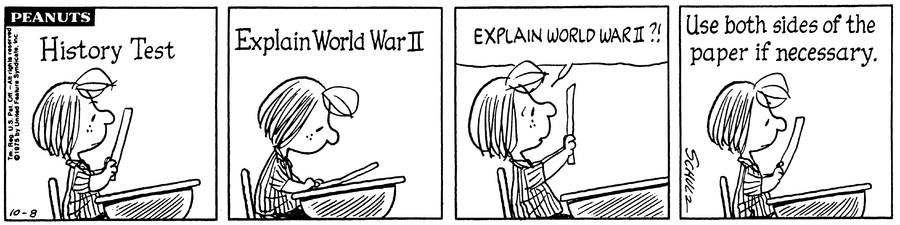
πŸ“š Agora node [[peanuts explain wwii]] (pulled by the Agora)
πŸ“œ File Peanuts - Explain WWII.gif by @rel8 β˜† πŸ“Ž οΈπŸ”— ✍️


πŸ“š Agora node [[pii]] (pulled by the Agora)
πŸ“œ File PII.md by @agora@botsin.space β˜† πŸ“Ž
πŸ“š Agora node [[radijo musikii]] (pulled by the Agora)
πŸ“œ File radijo musikii.md by @flancian β˜† πŸ“Ž οΈπŸ”— ✍️
πŸ“œ File radijo-musikii.md by @patterning β˜† πŸ“Ž
πŸ“œ File stoa-test-2/radijo-musikii.md by @agora β˜† πŸ“Ž
πŸ“œ File stoa-test/radijo-musikii.md by @agora β˜† πŸ“Ž
πŸ“œ File radijo-musikii.md by @anonymous@doc.anagora.org β˜† πŸ“Ž ✍️
πŸ“œ File radijo musikii.md by @an_agora@twitter.com β˜† πŸ“Ž
πŸ“š Agora node [[ramesses ii]] (pulled by the Agora)
πŸ“œ File ramesses ii.md by @flancian β˜† πŸ“Ž οΈπŸ”— ✍️

ramesses iiΒ§

πŸ“š Agora node [[richard iii]] (pulled by the Agora)
πŸ“œ File Richard III.md by @agora@botsin.space β˜† πŸ“Ž
πŸ“œ File Richard III.md by @an_agora@twitter.com β˜† πŸ“Ž
πŸ“š Agora node [[samuel edward konkin iii]] (pulled by the Agora)
πŸ“œ File samuel edward konkin iii.md by @flancian β˜† πŸ“Ž οΈπŸ”— ✍️

Samuel Edward Konkin IIIΒ§

πŸ“š Agora node [[world war iii]] (pulled by the Agora)
πŸ“œ File world-war-iii.md by @neil β˜† πŸ“Ž οΈπŸ”— ✍️

World War IIIΒ§

πŸ“š Agora node [[wwii]] (pulled by the Agora)
πŸ“œ File WWII.md by @agora@botsin.space β˜† πŸ“Ž